

Introduction: Cutting Through the AI Noise
If you have tried to keep up with artificial intelligence this year, you know the feeling. New models drop every week. Companies announce breakthroughs daily. It is hard to tell what matters and what does not. The AI information landscape has grown so fast that even experts struggle to stay on top of it. In fact, 17 expert forecasts on AI reshaping the news in 2026 predict that audiences will soon skip traditional websites entirely and rely on AI summaries instead. That is how fast things are changing.
Relying on the wrong sources can cost you time and money. You might miss a key trend that changes your industry.

Or you might chase a fad that goes nowhere. That is why knowing where to find trustworthy information is so important.
This article is different. We have done the hard work for you. We have curated a list of the top AI websites by category. These are the sites that professionals actually read to stay informed. Whether you need the latest OpenAI news, in-depth research papers, or practical guides, you will find a reliable source here.
We looked at factors like editorial quality, update frequency, and real-world reputation. The result is a set of recommendations you can trust. No fluff, no hype. Just the best tech websites that deliver value every day.
Many of the best tech blogs now cover AI as their main topic. But not all are equal. Some focus on breaking news, others on deep analysis. Some cater to developers, others to business leaders. This list covers all those angles so you can pick what fits your needs.
If you want a daily dose of clear AI updates without the noise, we suggest The AI Newsletter Worth Reading.
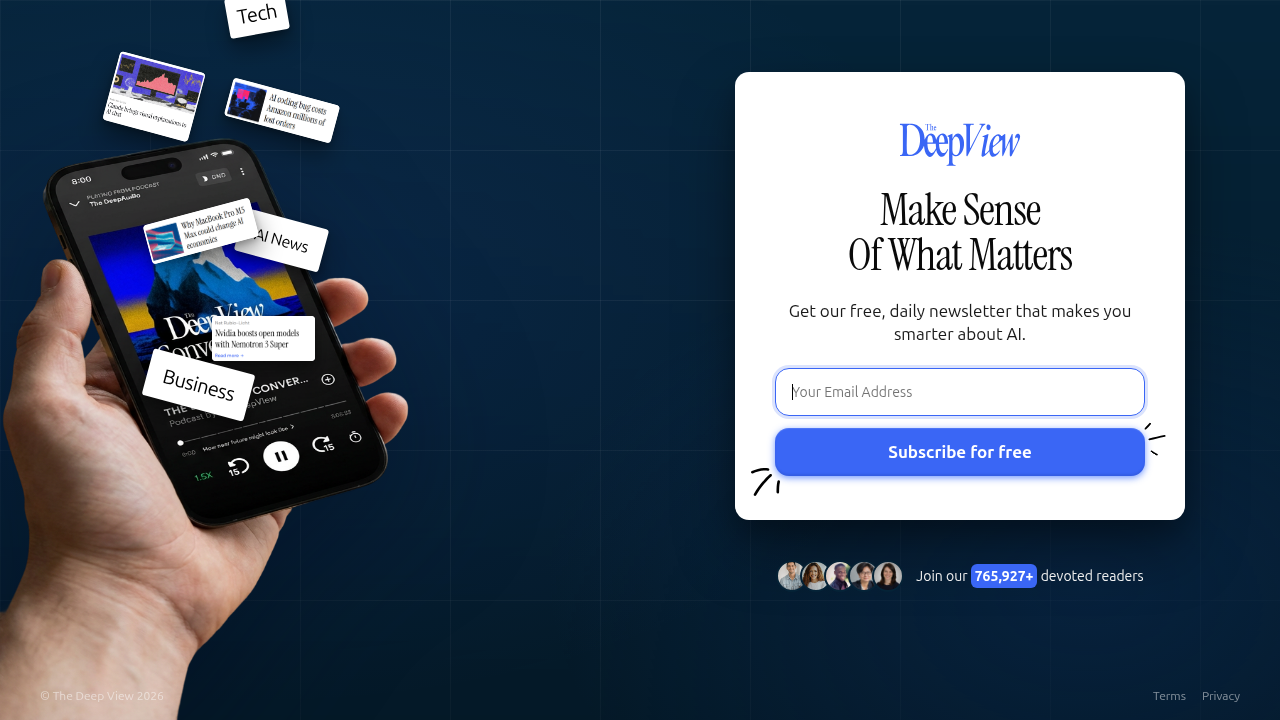
It gives you a concise overview of the most important developments each day.
But before we dive into the full list, it helps to have a broad overview of AI trends in 2026 so you understand why these sources matter. Let us start with a quick look at the landscape.
1. AI News Aggregators: Your Daily Signal Amid the Noise
Staying on top of the AI world in 2026 is like drinking from a firehose. New models launch daily. Companies post updates every hour. Research papers pile up faster than you can read their abstracts. That is exactly why AI news aggregators have become essential for professionals who want to stay informed without burning out.
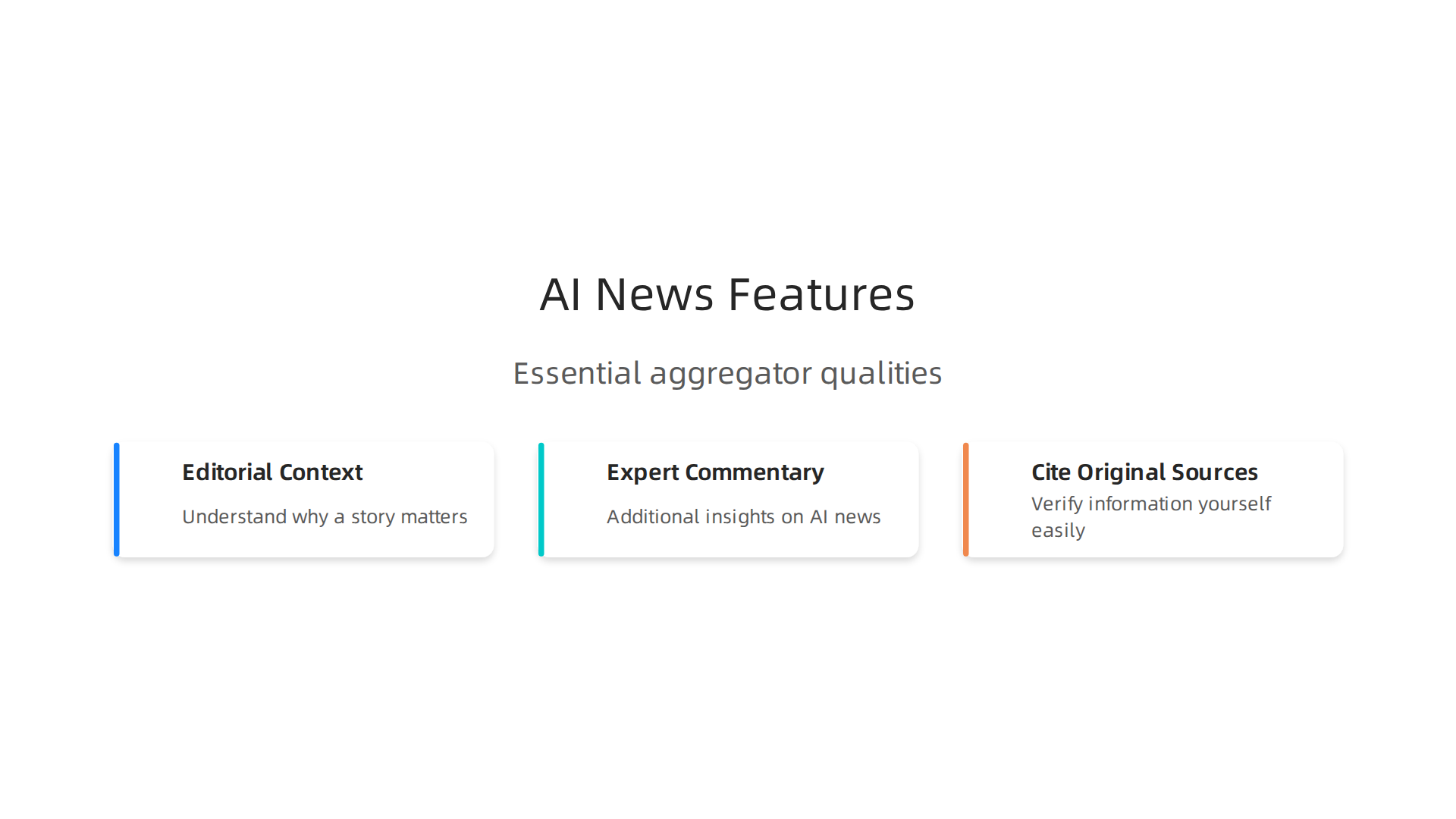
The best aggregators do more than just collect headlines. They add editorial context and expert commentary that help you understand why a story matters. They also cite original sources so you can verify the information yourself.
This matters because a 2026 report from NewsGuard found that many high-quality news sites block AI chatbots, making it harder to get reliable information through automated tools. A good human-curated aggregator cuts through that problem.
Two aggregators stand out in 2026 for different reasons. First, TechCrunch AI focuses on breaking tech news and startup developments.

It is fast, accurate, and covers the biggest announcements the same day they happen. But for a more curated daily dose, The Deep View offers a short, human-edited newsletter that summarizes the most important AI stories with context. You can get clear daily AI updates from The Deep View Newsletter delivered straight to your inbox every weekday. It takes about five minutes to read and saves you hours of scrolling.
When choosing an aggregator, look for ones that clearly disclose their curation biases and link back to original reporting. That transparency builds trust and helps you decide how much weight to give each story. If you struggle with data overload generally, you might find value in learning how to turn data overload into strategic insight in the information society.
The bottom line: AI news aggregators are your first line of defense against information fatigue. Pick one that prioritizes editorial judgment over clicks, and you will always know what actually matters in AI.
2. In-Depth Research & Analysis Hubs: Understanding the ‘Why’
News aggregators tell you what happened. But to make smart decisions about AI, you need to know why it happened and what it really means. That is where in-depth research and analysis hubs come in. These are the top AI websites for professionals who want to move past headlines and understand the deeper story.
Two heavyweights lead this category in 2026. MIT Technology Review publishes detailed, editorially rigorous articles
that break down complex AI breakthroughs into understandable insights. Their writers interview the lead researchers behind major papers, giving you direct access to the thinking that drives innovation. arXiv blogs (like the official arXiv blog and community summaries) act as a bridge between raw academic research and practical understanding. They highlight the most important preprints and explain their significance before the findings hit the mainstream.
Why do these sources matter for your strategic decisions? Because they prioritize accuracy over speed. A fast headline might get the facts wrong. A well-researched analysis from a hub like MIT Technology Review or the Stanford HAI AI Index has been vetted by editors and often peer reviewed. The International AI Safety Report 2026, for example, is a comprehensive review that synthesizes findings from hundreds of experts. It gives you a reliable picture of where AI risks and capabilities really stand.
These hubs also add context that aggregators cannot. They ask questions like: How does this new model compare to previous ones? What are the real world limitations? Who funded the research and what biases might exist? When you read a piece from a top analysis website, you come away with more than a fact. You get a framework for thinking about the trend.
For busy professionals, the key is to mix these deeper sources into your regular reading. Spend five minutes on a news aggregator for awareness. Then invest fifteen minutes on one in-depth article from a trusted research hub. That combination keeps you both informed and truly knowledgeable.
If you want a broader overview of where the entire AI field is heading, our guide on the world of AI in 2026 covers the major technologies, trends, and what comes next. It is a great complement to the daily deep dives you get from these research hubs.
But not all valuable AI knowledge comes from formal research hubs. Some of the most practical insights come straight from the people building and using AI every day. Community-driven platforms are where practitioners share ground truth: the real world wins, the frustrating failures, and the workarounds that never make it into polished papers.

Reddit communities like r/MachineLearning and Hacker News are goldmines for real world implementation experiences. On any given day, you will find engineers comparing deployment costs of different models, discussing unexpected bugs in production, or sharing tips on fine tuning that saved them weeks of work. The best AI communities to join in 2026 often highlight these subreddits as essential starting points because the discussions are unfiltered and current. Hacker News, with its voting system, surfaces the most thoughtful technical debates and links to emerging projects before they hit the mainstream.
Twitter/X lists and LinkedIn groups let you curate insights from leading AI engineers and researchers. By following the right people, you get a feed of preprints, hot takes, and practical commentary. LinkedIn groups focused on AI engineering or responsible AI offer more structured conversations with a professional tone. These platforms move fast. A new technique can be debated, tested, and critiqued within hours.
But here is the catch. Community content is fast, but it is not always accurate. Anyone can post, and excitement often outpaces evidence. A viral post about a breakthrough might miss critical limitations. That is why you always need to cross-reference with official sources. For example, if a user claims a new API change, verify it on the actual product documentation or company blog. Our guide on how to use tech companies websites for accurate market research walks you through that verification process step by step.
The key is to use communities as a signal, not a final answer. They point you to what is worth investigating. Then you dig deeper with official sources and research hubs. To make this easier, you might consider a curated daily update that does the filtering for you. The Deep View Newsletter delivers clear, verified AI news straight to your inbox each day, saving you time while keeping you in the loop with both community buzz and verified facts.
4. Official AI Labs and Company Blogs: First-Hand Updates from the Source
For the most important updates, you will want to go even closer to the source. The official blogs from AI labs and companies give you the purest signal available. When you want to know exactly what OpenAI, DeepMind, Meta AI, or Google AI is working on right now, these are the top AI websites for getting announcements straight from the teams building the technology. No middleman. No speculation. Just the facts as the companies want you to see them.
OpenAI’s blog is where you will find every new model release, safety update, and research breakthrough first.
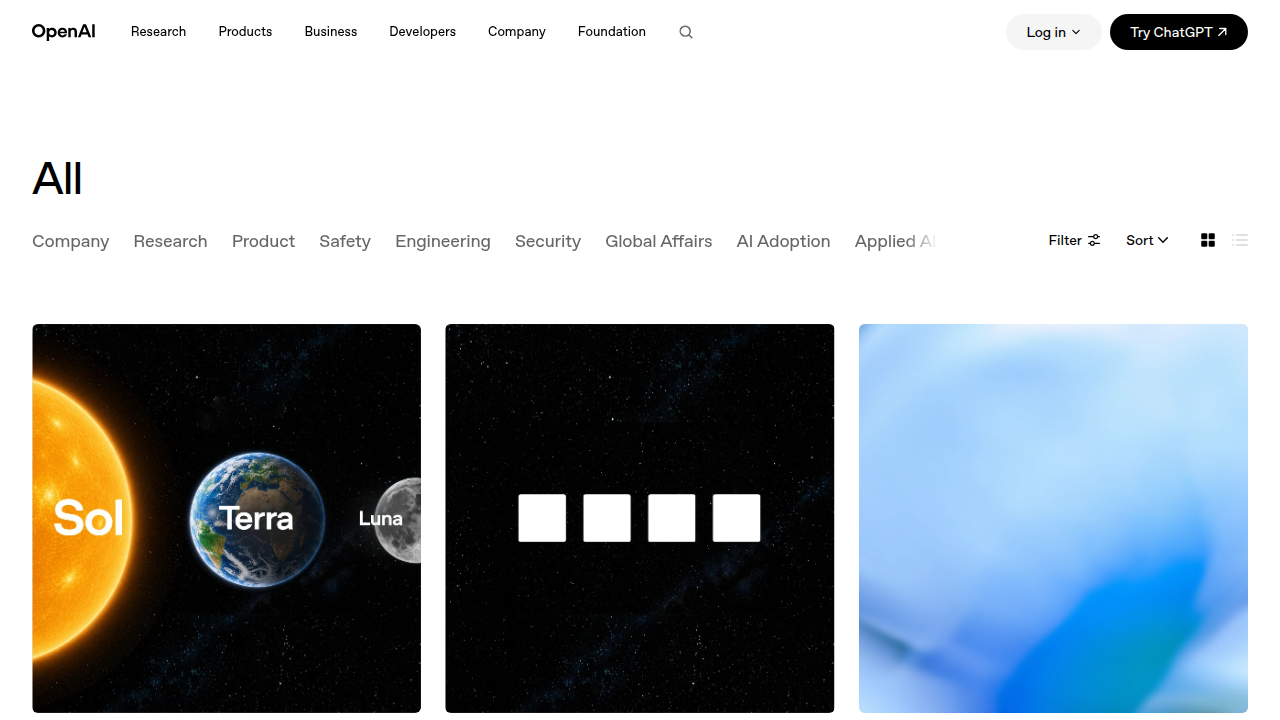
If you follow OpenAI news, this is the only place to get the full technical details behind each launch. Similarly, DeepMind’s blog dives into their latest reinforcement learning wins and scientific discoveries. Meta AI shares open-source models, computer vision advances, and natural language processing breakthroughs. Google AI publishes everything from TensorFlow updates to cutting-edge research papers. These are among the best tech blogs for staying current with what the industry leaders are actually building.
These official sources are authoritative for company-specific innovations. When a lab announces a new capability, you can trust the technical claims because the engineers themselves wrote them. For anyone researching the best tech websites to track AI progress, these blogs are essential daily reads.
But here is the catch you need to remember. Official blogs are not impartial. Every post is filtered through the company’s perspective. They highlight wins and downplay failures. They frame results in the most flattering light. That is why you should always pair what you read on official blogs with independent analysis.
How to get the full picture. After reading an announcement, check how independent researchers and the community are reacting. Look for replication attempts, benchmark comparisons, and critical takes. Tools that help you discover related research papers can be incredibly useful here. You can use specialized AI tools for scientific literature review to find independent papers that validate or challenge the claims in official blog posts. This balanced approach keeps you informed without being misled. You get the first-hand updates from the source, plus the broader context from the research community. If you want to deepen your understanding of how different AI models compare, our guide on the world of AI in 2026 covers the major technologies and trends shaping the field right now.
5. Industry Reports and Data Portals: Metrics That Drive Decisions
You can read all the blogs and newsletters you want. But nothing beats hard data when you need to make a real decision. That is where industry reports and data portals come in. These are the top AI websites for finding numbers that actually back up the trends everyone is talking about.
Every year, organizations like Stanford HAI, NVIDIA, and research groups publish massive reports packed with statistics. These are not guesses or opinions. They are surveys, market analyses, and investment numbers collected from thousands of companies and users worldwide.
The State of AI 2026 report from Vention breaks down market size, investment trends, and industry dynamics. According to the report, global AI software spending is projected to reach $174 billion in 2025 and grow to $467 billion by 2030. That is the kind of number that helps you justify a budget request or validate a new product idea.
Stanford HAI’s 2026 AI Index Report is another cornerstone. It tracks research and development, technical performance, responsible AI, and economic impact. One standout finding from the report shows generative AI tools were valued at $172 billion annually by early 2026, with the median value per user tripling between 2025 and 2026. When you need a data-backed answer to "is AI actually delivering value?", this report gives you the receipts.
NVIDIA’s State of AI report adds a practical layer. Based on over 3,200 survey responses from industries like financial services, healthcare, retail, and manufacturing, it shows how companies are actually using AI to drive revenue and cut costs. In 2026, 42% of respondents said optimizing AI workflows was their top spending priority. These are not projections. They are real answers from real decision makers.
Data portals from Stanford HAI and McKinsey go even deeper. They offer interactive dashboards where you can filter by industry, use case, or geography. You can pull benchmark statistics on AI investment, patent filings, hiring trends, and more. If you are researching the best tech websites for market intelligence, these portals are invaluable.
How you should use these resources. Start with the annual reports to get the big picture. Then dive into the data portals for specific numbers that relate to your industry or project. Use the statistics to validate assumptions in your business case. Look for gaps or growing segments that might represent new opportunities. For a broader view of how these data points connect to the wider landscape, our overview of the world of AI in 2026 puts the trends in perspective with the major developments happening right now.
Industry reports and data portals are not flashy. But they are the most reliable sources for cutting through hype and making decisions you can stand behind. They deserve a permanent spot on your list of top AI websites for serious research.
If you want to stay current with daily AI updates without digging through dozens of sources every morning, The Deep View Newsletter delivers clear, curated insights straight to your inbox. It is a practical way to keep your finger on the pulse alongside these deeper annual reports.
6. Podcasts and Video Channels: Learning AI on the Go
Reading reports is great when you have time at your desk. But some of the best learning happens when you are driving, walking, or doing chores. That is where podcasts and video channels shine.

These multimedia sources let you absorb deep AI knowledge without staring at a screen. They turn passive time into productive learning time. And they make complex topics feel approachable.
Lex Fridman Podcast is probably the most famous AI podcast out there. Fridman hosts long-form conversations with the biggest names in AI research, robotics, and philosophy. His interviews with people like Yann LeCun, Geoffrey Hinton, and Sam Altman are basically master classes. You get their unfiltered thinking on where AI is headed and what keeps them up at night.
Two Minute Papers on YouTube is completely different but just as valuable. This channel breaks down complex research papers into short, visual summaries. The host shows you the key results, explains the method in plain language, and shows video demonstrations of what the AI can do. It is perfect for understanding breakthroughs without reading the full technical paper.
Yannic Kilcher offers another great video approach. He reads through cutting-edge papers and explains them step by step. His commentary adds context about why a paper matters and how it connects to other research. If you want to understand the technical side of AI in a visual way, his channel is one of the best tech websites for in-depth learning.
These sources work well together. Listen to the Lex Fridman Podcast during your commute. Then watch Two Minute Papers or Yannic Kilcher on your lunch break to see the actual technology in action. The combination of conversation and visual explanation helps concepts stick.
Many active learners also turn to top AI communities to discuss what they have learned from these shows. You can find recommendations for the best episodes and deep discussions on platforms like r/MachineLearning or the DigitalOcean community where practitioners share their takeaways from recent podcasts and videos.
If you want to go a step further, our guide on how to use AI to drive business growth connects the ideas from these shows to real-world business outcomes. It helps you turn podcast insights into actual strategies.
Podcasts and video channels are not just entertainment. They are essential tools on your list of top AI websites for staying sharp. Mix them into your weekly routine and you will be amazed at how much you learn without even trying.
7. AI Newsletters and Niche Substack Publications: Curated Deep Dives
Podcasts give you big ideas over a full hour. But sometimes you just want a quick, written update each morning. You want to scan it in under five minutes and get back to work. That is where AI newsletters and Substack publications come in. They send curated knowledge straight to your inbox

so you do not have to hunt for it yourself.
Newsletters act like a personal filter for your brain. They read through hundreds of sources every day. Then they serve you only the signal, not the noise. That is a huge time saver when you are trying to stay on top of the top ai websites without spending hours searching.
Substack has become a favorite home for independent AI analysts. These writers are not tied to big media companies. They offer unique perspectives on topics like AI policy, open source releases, and applied machine learning. Their analysis is often sharper because they dig deep into one specific area instead of covering everything superficially.
One of the most popular curated newsletters in 2026 is The Deep View. It sends daily AI updates straight to your inbox. Subscribers get a clear breakdown of what happened, why it matters, and what to watch next. Many professionals rank it among the best tech blogs for staying informed without feeling overwhelmed by too much information.
If you want variety, try mixing a few newsletters together. For a fast daily digest, Techpresso covers AI news in about five minutes. For engineers who love quick bullet points, TLDR AI ships free weekday editions. For deep policy and safety analysis, Import AI on Substack is excellent. According to recent comparisons of best AI news sources, these options rank among the best tech websites for different learning styles.
The trick is to pick two or three that match your interests. Choose one for broad coverage, one for technical depth, and one for policy or business angles. That gives you a balanced view without the clutter.
For more context on how these newsletters fit into the bigger picture, our overview of the world of AI in 2026 connects daily insights to broader technology trends.
Newsletters are a low effort, high impact habit. Set aside five minutes each morning to read one. You will stay ahead of the curve without fighting through a hundred tabs. And if you want a single newsletter that covers the essentials, the AI Newsletter Worth Reading sends you clear daily updates so you never miss what matters in AI.
Summary
This article cuts through the flood of AI coverage and recommends the most reliable websites and channels by category so you spend less time chasing noise and more time on useful signals. It explains why aggregators, deep research hubs, community forums, company blogs, data portals, podcasts, and newsletters each play a distinct role in staying informed. You learn which sources are best for breaking news, which provide vetted analysis, where practitioners share real-world fixes, and how to get first-hand updates from labs like OpenAI and DeepMind. The piece stresses verification—pair company posts with independent analysis—and shows how to mix quick daily digests with longer, evidence-based reads. It also highlights practical habits (pick 2–3 newsletters, use an aggregator, read one deep piece weekly) so you can turn information into strategic insight. After reading, you’ll know which sites to follow for different needs and how to build a balanced, low-noise AI information routine.