
Introduction: Navigating the AI Assistant Revolution
You have probably noticed how fast AI coding tools have taken over software development. In 2026, about 85% of developers use AI tools regularly, and 62% rely on at least one AI coding assistant in their daily workflow. Those numbers come from real industry surveys. And the market data matches. The AI code assistant market in the US is worth USD 1.66 billion and is expected to reach USD 5.12 billion by 2033. The broader artificial intelligence market is even bigger, projected to hit USD 3.5 trillion by 2033.
With so many options on the market, picking the right ai assistant for developers has become a real challenge.

A new tool seems to pop up every week. Each one promises better autocomplete, smarter debugging, or faster deployments. Some act like a doctor ai for your codebase, diagnosing problems you did not see. Others help you scale artificial intelligence across your entire development pipeline. A few even work as an artificial intelligence detector to flag risky code before it ships. How do you separate what works from what is just hype?
AI is transforming many areas of technology, from how businesses use images to how they build software. That is why this guide focuses on what actually helps you ship better code.
We put together a structured framework for evaluating and selecting AI assistants. Our approach combines market data, expert opinions, and hands on experience from real development teams. The goal is to give you actionable recommendations, not just a list of buzzwords.
We start by looking at where the AI assistant market stands today. Then we walk through the specific criteria that matter for professional software development. And we back every recommendation with data from trusted sources.
If you want to stay on top of these fast moving trends, you can get free daily AI updates delivered to your inbox. Subscribe Free to The Deep View Newsletter for clear and simple insights.
Let us jump into the current landscape of AI assistants for developers.
The Evolution of AI Assistants for Developers
AI assistants for developers did not appear overnight. They have gone through a major transformation in just a few years. If you started coding before 2020, you probably remember autocomplete that guessed the next word. That was useful, but it was not smart. Today, AI assistants handle multi-step code generation, debugging, and even whole feature creation from natural language prompts. The leap is huge.
The turning point came with the launch of GitHub Copilot in 2021.

It was the first mainstream tool that could write whole functions based on a comment. Developers quickly saw the potential. After Copilot, open-source models like CodeLlama and StarCoder gave teams more control. They could run AI locally, customize it, and avoid vendor lock-in. Cloud IDEs like GitHub Codespaces and Gitpod made it easy to use AI without setting up heavy infrastructure.
Fast-forward to 2026. The market has exploded. According to industry research, about 85% of developers now use AI tools regularly, and 62% rely on at least one AI coding assistant in their daily workflow (Itransition). The U.S. AI code assistant market alone is valued at over USD 1.66 billion and is expected to reach USD 5.12 billion by 2033 (SNS Insider). That growth reflects real demand. Tools are no longer generic. They specialize.
In 2026, you can find AI assistants built specifically for security audits, for domain-specific frameworks, or for cloud-native development. Some tools even act like a doctor ai for your codebase, diagnosing bugs and suggesting fixes. Others serve as an artificial intelligence detector, flagging risky patterns before they reach production. The competition is pushing every vendor to focus on a niche. Agentic AI, where assistants act autonomously on multi-step tasks, is growing at 119% CAGR (Firstline Software). This is a big shift from the simple autocomplete days.
The evolution has also changed how teams scale artificial intelligence across their pipeline. Developers no longer just write code with AI. They use AI for testing, reviewing pull requests, generating documentation, and even predicting deployment failures. Integration is deeper.
If you want to stay on top of these fast-moving trends, you need a reliable source. The same way AI is transforming how businesses use images, it is reshaping development. Get free daily AI updates delivered to your inbox. Subscribe Free to The Deep View Newsletter for clear, simple insights you can actually use.
Key Criteria for Choosing an AI Assistant
With so many options on the market in 2026, picking the right ai assistant for developers can feel overwhelming. Every tool claims to boost productivity, but the best choice depends on your specific needs. Instead of chasing feature lists, start with your own evaluation criteria. That advice comes from a recent buyer’s guide that recommends running a two-week pilot on real proprietary code before committing (Kilo).
Here are the key criteria to consider.
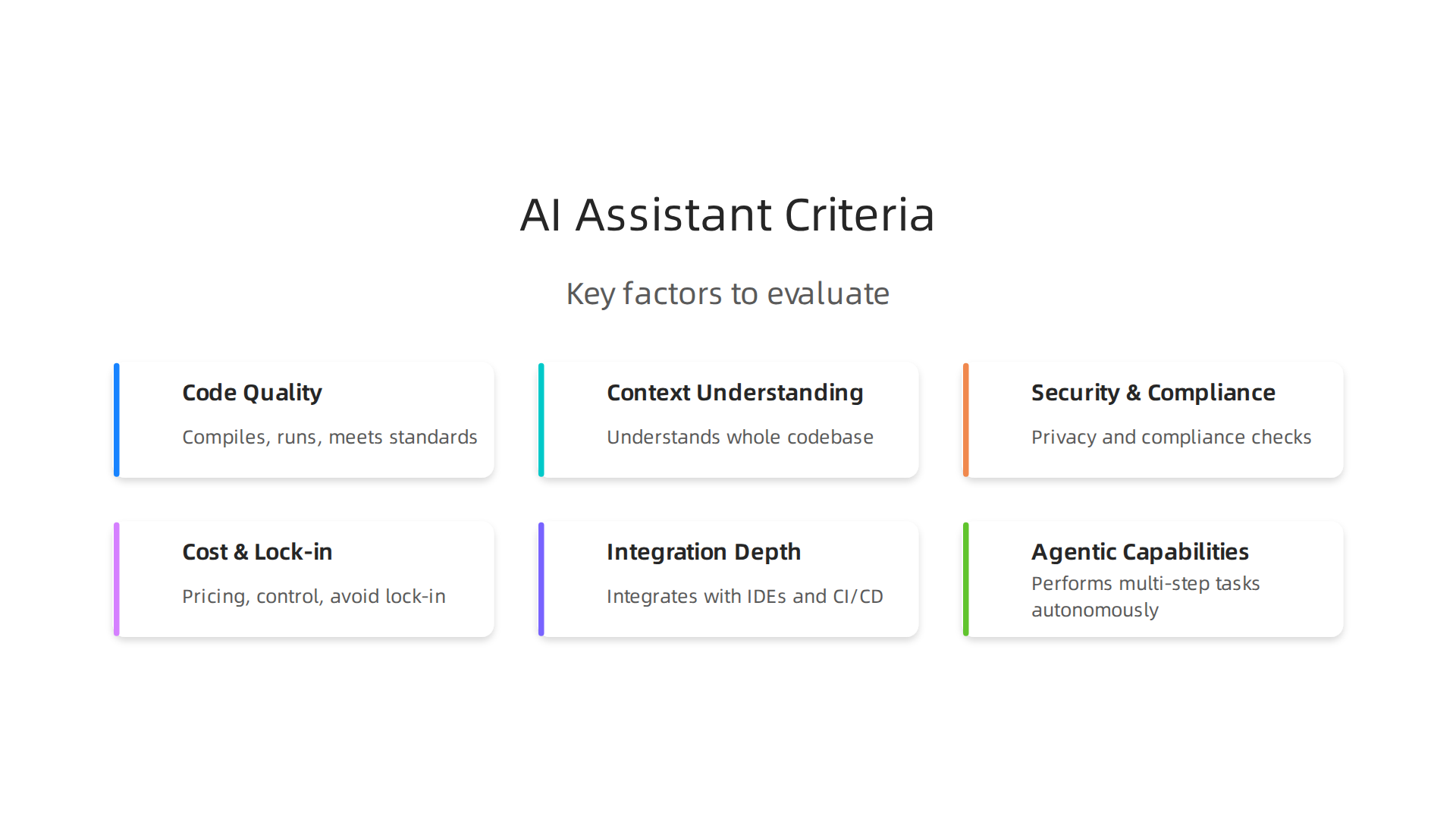
Code quality and accuracy. The generated code must compile, run, and meet your standards. Look for tools that score high on correctness and offer clear explanations for suggestions. Some assistants act like an artificial intelligence detector, flagging patterns that could lead to bugs before they cause trouble.
Context understanding. A good assistant understands your whole codebase, not just the open file. It should support multi-file edits and adapt to your coding style. According to a 2026 guide, context is king in software development (Security Journey). If a tool cannot see the big picture, it will produce generic suggestions that do not fit your project.
Security and compliance. Enterprise buyers need to check data privacy, SOC 2 compliance, and how the tool handles sensitive code. The best platforms let you run models locally or in a private cloud. This is where a doctor ai approach helps: the tool diagnoses security gaps before they reach production, keeping your deployments safe.
Cost and vendor lock-in. Pricing models vary widely. Some charge per seat, others per usage or token. Open-source options like CodeLlama give you more control and avoid long-term contracts. You should also consider how easy it is to switch tools later. Locking into one vendor can slow down innovation and increase costs over time.
Integration depth. The assistant should fit into your existing pipeline: IDEs, CI/CD, code review, and deployment. Tools that offer deep integration save time and reduce friction. As teams look to scale artificial intelligence across their workflow, integration becomes a top priority for efficiency.
Agentic capabilities. In 2026, many assistants can handle multi-step tasks autonomously. They can write code, test it, and fix issues without human help. If your team needs that level of automation, look for tools with strong agentic performance (MightyBot). This is a growing trend that separates basic helpers from true productivity partners.
When you evaluate these criteria, you will find that the right choice brings clarity ai to your decision making. No single tool is perfect for everyone. That is why testing on your own code matters.
If you want to keep learning about how AI is reshaping development, read our article on how artificial intelligence with images is transforming business in 2026. It shows how AI extends beyond code into broader business applications you can apply today.
And if you want to stay current on the latest AI trends without the noise, Get Free Updates from The Deep View Newsletter. It delivers clear daily insights you can actually use.
Top AI Assistants and Tools in 2026
Now that you know what to look for, let’s look at the top players. The market is crowded, but a few tools stand out in 2026. I have compared them based on real-world tests and user reviews to help you pick the right ai assistant for developers.
Here is a quick overview of the most popular options.
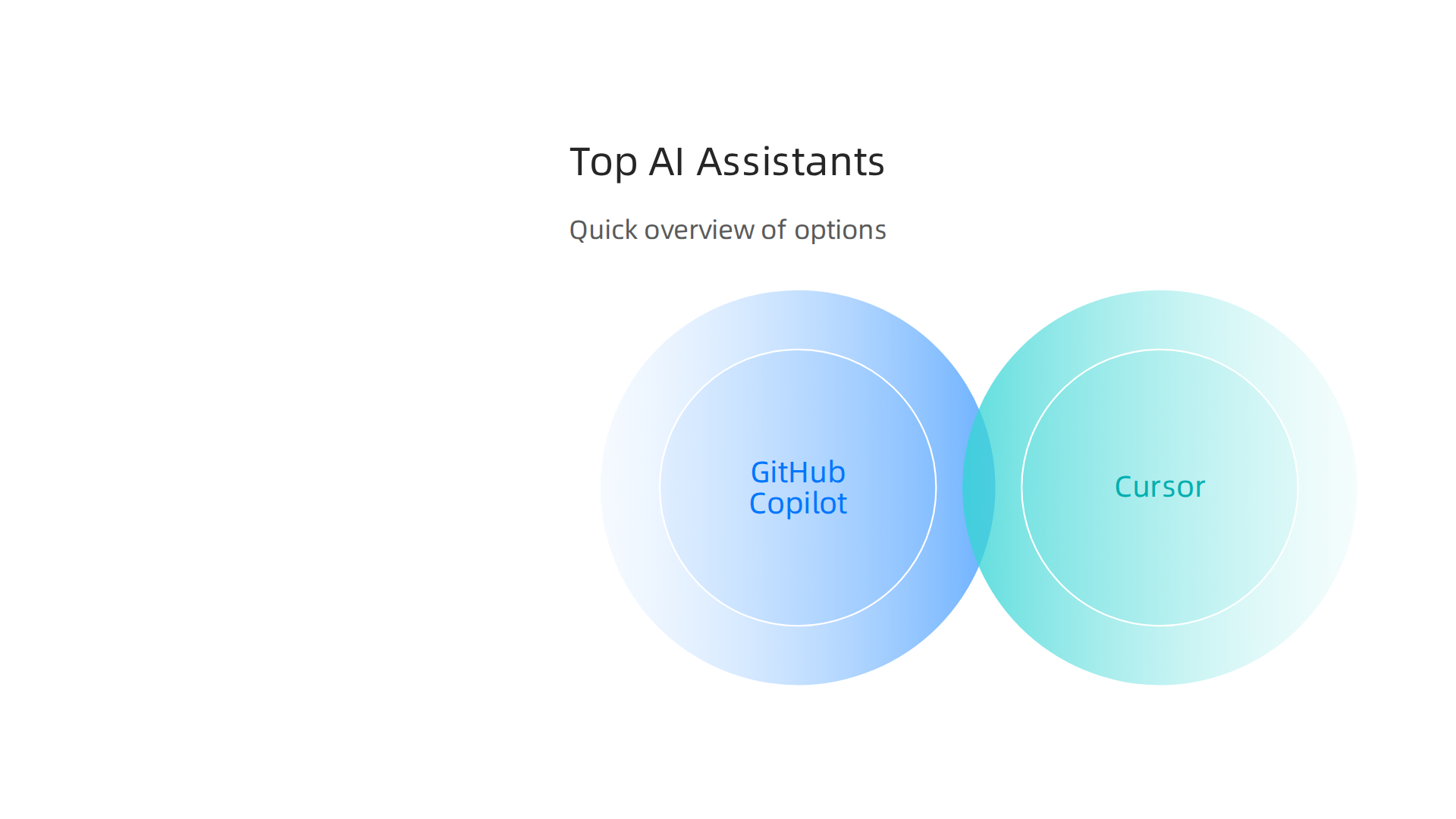
GitHub Copilot is still the most widely used assistant. It works inside many IDEs and supports multiple languages.
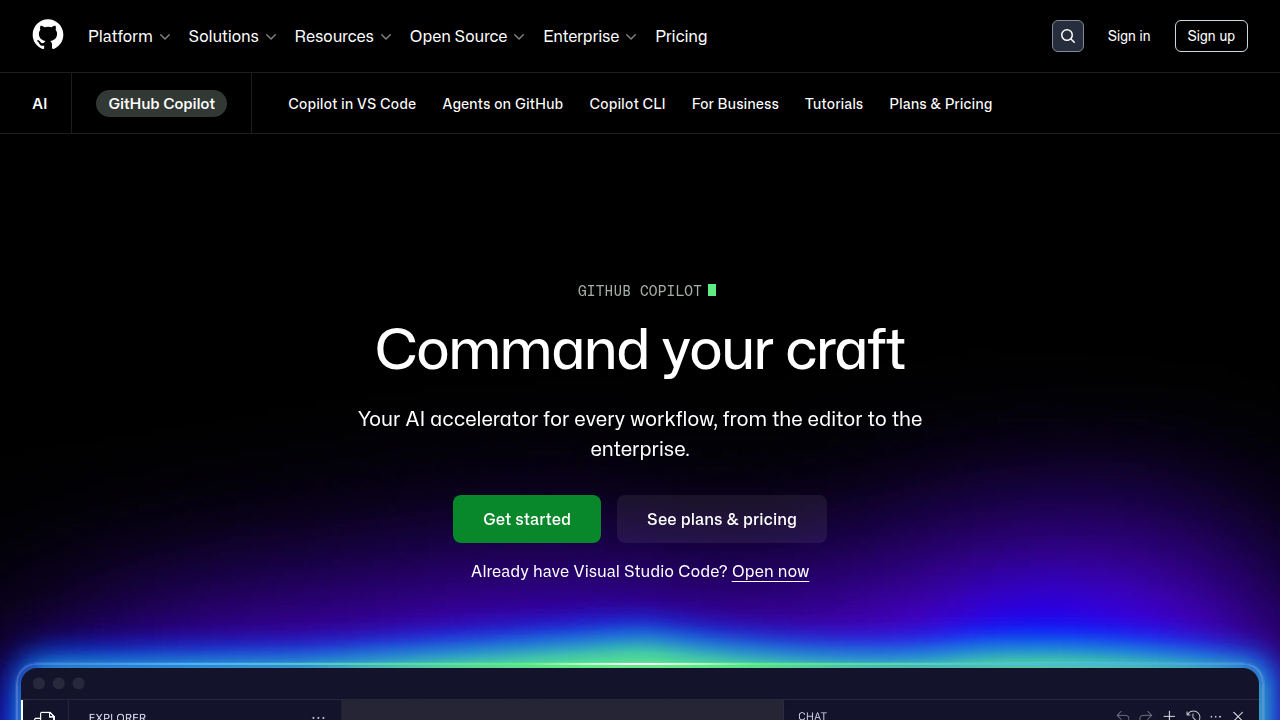
Its latest version understands your entire project context, not just the file you are editing. A 2026 comparison shows it offers strong code quality and deep GitHub integration (Local AI Master). For teams already using GitHub, this is a natural fit. Pricing is around $10 to $39 per user per month.
Cursor has grown fast in 2026. It is an AI-native editor built on VS Code. The big difference is its context awareness. Cursor can read your whole codebase and make suggestions that fit your project structure. According to a detailed review, it excels at deep code understanding and multi-file edits (Seedium). This makes it great for full-stack developers and data scientists working on complex projects. It costs about $20 per month.
Tabnine focuses on privacy and personalization. You can run it completely on your own computer or in a private cloud.

That is a big plus for security-conscious teams. Tabnine learns your coding patterns and adapts to your style over time. A 2026 guide ranks it highly for teams that need to keep code safe (GuptaDeepak). It starts at $12 per month for individuals.
Amazon CodeWhisperer is free for individual developers. It works best inside AWS services and supports Java, Python, and JavaScript.
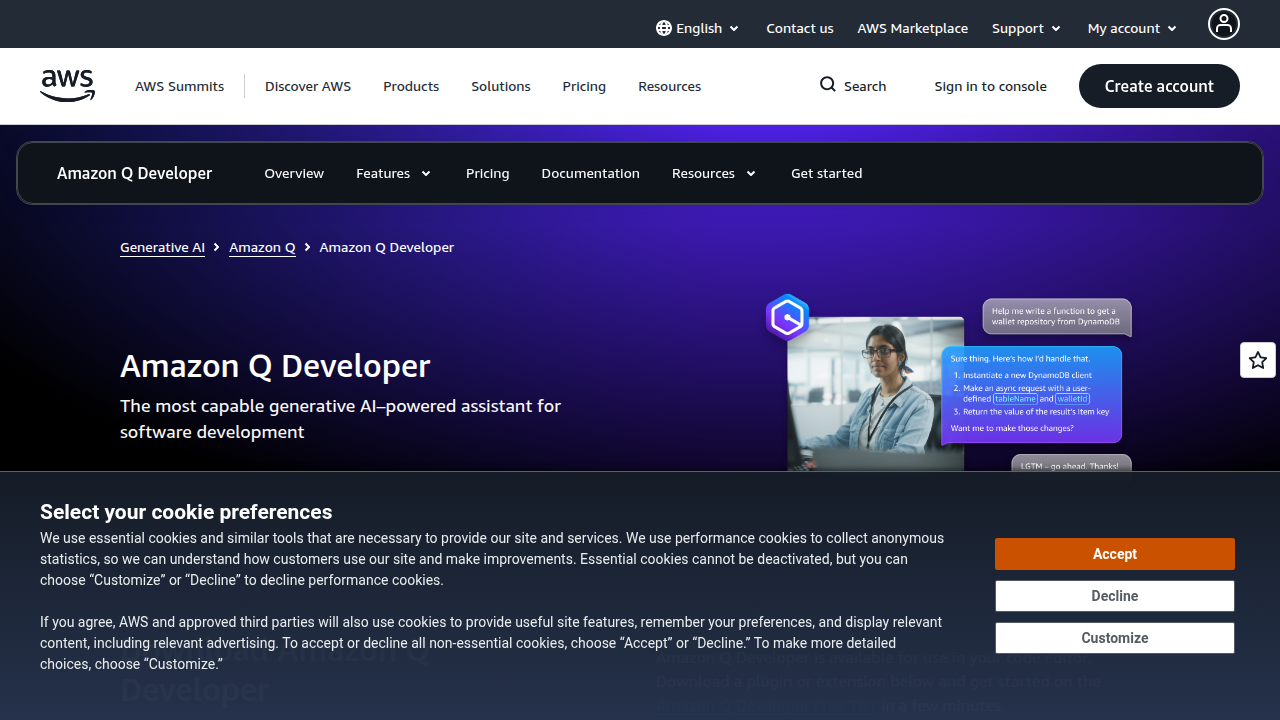
If your team builds on AWS, this tool saves a lot of time. It also scans your code for security vulnerabilities, acting like an artificial intelligence detector for common bugs. A comparison from 2026 notes its tight integration with the AWS ecosystem (Castelis).
JetBrains AI is built right into JetBrains IDEs like IntelliJ and PyCharm. It offers code completion, refactoring help, and test generation. Teams that already use JetBrains will find this seamless. The assistant understands your project structure and can suggest contextually relevant fixes.
Open-source options like Code Llama and StarCoder are also worth a look. They give you full control over your data and avoid vendor lock-in. You can run them locally or on your own servers. The trade-off is that they need more setup and may not match the top commercial tools for raw accuracy.
| Tool | Best for | Starting Price |
|---|---|---|
| GitHub Copilot | General use, GitHub teams | $10/month |
| Cursor | Deep codebase context | $20/month |
| Tabnine | Privacy and personalization | $12/month |
| Amazon CodeWhisperer | AWS-based projects | Free |
| JetBrains AI | JetBrains IDE users | Included or $10/month |
Emerging players like Windsurf and Claude Code are also getting attention in 2026. Windsurf focuses on lightweight, fast suggestions. Claude Code excels at complex reasoning tasks and works well for debugging.
The best choice gives you clarity ai in your workflow. Test a few on real code before deciding. That is the only way to know which tool matches your style.
If you want to keep learning, check out our guide on how artificial intelligence with images is changing business in 2026. It shows how AI helps in areas beyond coding.
And to get clear daily AI updates you can trust, Get Free Updates from The Deep View Newsletter.
Integrations and Ecosystem Compatibility
Picking the right ai assistant for developers is only half the battle. The other half is making sure it fits smoothly into your existing workflow. A tool that works in isolation won’t help your team move faster. You need something that plays well with everything you already use.
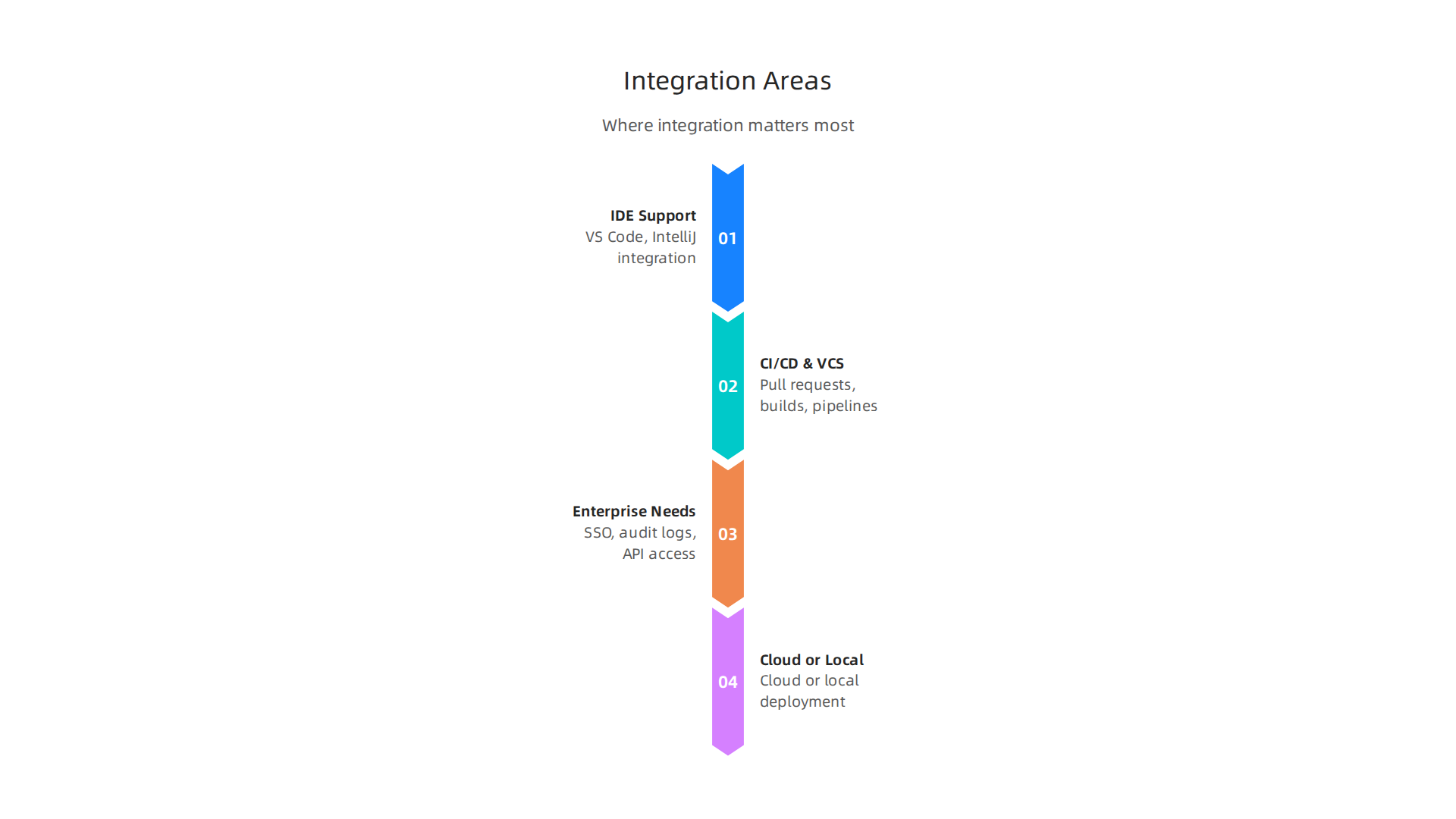
Let’s talk about the key areas where integration matters most.
IDE and Editor Support
Every developer has a favorite editor. Whether you live in VS Code, IntelliJ, PyCharm, or Vim, your assistant needs to be there. Most top tools in 2026 cover all the major IDEs, but it is worth checking before you commit. For example, JetBrains AI is built right into IntelliJ and PyCharm. Cursor is a whole editor built on VS Code. GitHub Copilot works inside many editors through extensions. According to a 2026 guide from LeadDev, the best tools embed themselves deeply so you never have to switch windows to get help (LeadDev). That seamless feel makes a big difference in daily use.
CI/CD and Version Control
Code does not live on your machine alone. It goes through pull requests, builds, and deployments. Your AI assistant should be part of that pipeline. Many tools now check code automatically during pull requests. They can spot bugs, suggest fixes, and even enforce your team’s style rules (Reclaim). For teams using GitHub, Copilot integrates directly with Actions and pull requests. Cursor works well with Git workflows because it understands your whole codebase history. If you are using Jenkins or GitLab CI, some assistants offer plugins or API access to hook into those systems. A 2026 report from Cortex highlights that automated E2E test generation from user sessions is becoming a key feature, and it depends on tight CI/CD integration (Cortex).
Enterprise Requirements
For larger teams, integration goes beyond just code. You need features like single sign-on (SSO) so everyone can log in securely with company credentials. Audit logs let you see who used the assistant and what suggestions were accepted. API access lets you build custom workflows or connect the assistant to your own tools. Some tools even let you fine-tune the model on your company’s codebase. That way, the assistant learns your specific patterns (Augment Code). These enterprise features help you scale artificial intelligence across your organization without losing control. If security is a priority, look for tools that offer self-hosted options or private cloud deployment. Tabnine and Code Llama are strong here.
Cloud or Local-First?
Another big choice is whether the assistant runs in the cloud or on your machine. Cloud-based tools like GitHub Copilot or Amazon CodeWhisperer are easy to set up and always up to date. They work great if your internet is reliable and you are comfortable with code leaving your device. Local-first tools like Tabnine can run entirely offline. That is a must for teams with strict data policies. Some tools, like JetBrains AI and Cursor, offer both modes. The best choice depends on your team’s rules and your comfort level.
Having clarity ai in your toolchain means knowing exactly how each piece fits together. Before you pick an assistant, map out your development pipeline. Then test the tool against that map. For a broader look at how AI is shaping business tools, check out our article on how artificial intelligence with images is transforming business in 2026.
Want to stay current on all these trends without the noise? Get Free Updates from The Deep View Newsletter and get simple daily insights on AI and tech.
Real-World Impact and Productivity Gains
So does using an ai assistant for developers actually make you faster? The short answer is yes. But the real story is a bit more interesting.
Let’s look at the numbers. A 2026 report from Trigi Digital found that developers using AI coding assistants report an average productivity boost of 31.4% compared to traditional methods (Trigi Digital). That is not a small jump. And according to developer benchmarks from Larridin, healthy ROI on AI coding tools lands around 2.5 to 3.5 times the investment, with top teams hitting 4 to 6 times (Larridin). Those are real savings in time and money.
The improvements show up in a few key areas:
- Faster code writing. Autocomplete and inline suggestions cut down typing time.
- Fewer bugs. Tools that spot issues before you commit save hours of debugging later.
- Lower onboarding time. New team members can ask the assistant questions instead of interrupting senior devs.
But the benefits are not just about speed. There are big qualitative wins too. Developers report higher satisfaction because they spend less time on boring tasks and more time on creative problem solving.

They can focus on design and architecture instead of boilerplate code. That mental shift is huge for team morale.
Pitfalls to watch out for.
Here is the thing. Not everyone sees those gains. A 2026 article from ShiftMag notes that 92.6% of developers now use AI tools, but productivity gains still hover around 10% for many teams (ShiftMag). Why? Because adoption alone is not enough.
The biggest risks come from three places:
- Over-reliance. When developers blindly accept AI suggestions without thinking, code quality drops.
- Technical debt. AI can generate code that works now but is hard to maintain later.
- Security risks. AI tools can introduce vulnerabilities if you do not review the output carefully.
The trick is to use the assistant as a partner, not a crutch. Treat its suggestions like a first draft. Review everything. Test thoroughly.
For a broader look at how artificial intelligence with images is changing business workflows, check out our article on AI image generation trends.
If you want to keep learning about these shifts without the noise, you can Get Free Updates from The Deep View Newsletter and get simple daily AI insights straight to your inbox.
Challenges and Considerations for Adoption
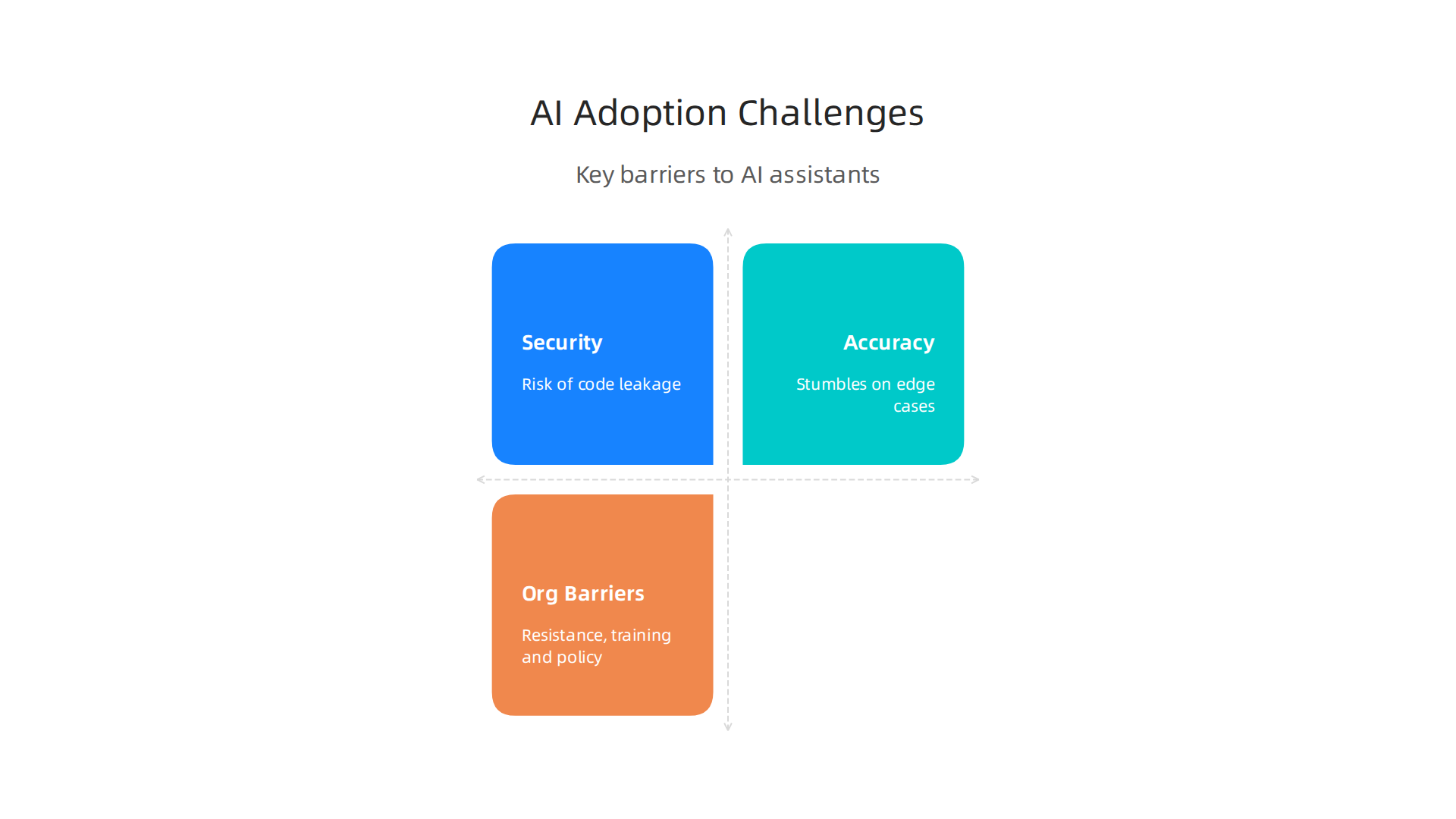
So the productivity gains are real. But adopting an ai assistant for developers is not as simple as installing a plugin. Teams run into serious challenges around security, accuracy, and people issues.
Knowing these ahead of time makes the transition much smoother.
Security concerns that keep leaders up at night
Here is the big one. When you paste proprietary code into an AI tool, where does that code go? Many cloud-based assistants send data to external servers. That creates real risk of code leakage. An article from Security Journey explains that you need to carefully evaluate how a tool handles your codebase before committing to it.
There is also the problem of hallucinated vulnerabilities. AI can suggest code that compiles fine but has hidden security holes. And IP ownership is a legal gray area. If the AI was trained on open source code, does the output belong to you? These questions do not have simple answers.
The AI Coding Assistant Buyer’s Guide from Kilo recommends running a two-week pilot on real proprietary code before making any decisions. This lets you test how the tool handles your specific security needs.
Accuracy and reliability are not guaranteed
AI assistants excel at common coding patterns. But they stumble on edge cases. Give an ambiguous prompt, and you might get code that looks right but is wrong. Legacy code is another trouble spot. Tools trained on modern frameworks do not always understand older systems or custom libraries.
Non-English comments in your codebase can also confuse the model. If your team uses another language for documentation, the AI might miss key context. That leads to bad suggestions.
Gartner projects that by 2026, 90% of enterprise software engineering teams will use AI coding assistants, but the defining pattern is that code gets generated faster than teams can verify it. Speed without verification is not real productivity.
Organizational barriers are the hardest to fix
Even the best tool fails if your team does not want it. Some developers resist AI because they worry it will replace them. Others do not trust the output. Training costs add up quickly, and building a policy around AI use takes time.
The key is to start small. Run a pilot. Set clear rules. Make sure everyone understands that the AI is a partner, not a replacement. Teams that scale artificial intelligence adoption carefully get better results than those that rush in.
Adopting an ai assistant for developers is a people and process change, not just a tech upgrade.

For a broader look at how AI is changing business workflows across different domains, check out our piece on how artificial intelligence with images is transforming business in 2026.
Want to keep learning about AI trends without the noise? Get Free Updates from The Deep View Newsletter and get simple daily insights straight to your inbox.
Summary
This article guides developers and engineering leaders through selecting and adopting AI assistants for software development in 2026. It explains how these tools evolved from simple autocompletion to multi-step, agentic systems that can write, test, and fix code, and it outlines the market context and growth drivers. The piece presents practical evaluation criteria—code quality, context awareness, security, cost, integration depth, and agentic capabilities—and compares leading options like GitHub Copilot, Cursor, Tabnine, CodeWhisperer, JetBrains AI, and open-source models. It also covers integration points (IDEs, CI/CD, enterprise features), real-world productivity data, common pitfalls like over‑reliance or security leaks, and organizational barriers to adoption. Readers will learn how to run a short pilot on proprietary code, map tool fit to their pipeline, and choose the right balance of cloud vs. local deployment to protect data and maximize ROI.