
Why this handbook matters now
Getting a job in technology today feels very different than it used to. In 2026, the tech world is changing faster than ever. New jobs pop up, and old ones change what they need. This can make it hard to know how to prepare for interviews. Are your skills still good enough? What new things do companies want? This can leave job seekers feeling unsure and a little lost.
For example, companies are looking for more and more skills in artificial intelligence (AI). A report from Dice shows that in July 2026, about 79% of U.S. tech job postings asked for AI skills. This means knowing about AI training and new tools is super important now. Other reports show that companies are hiring tech leaders very quickly, especially for roles in software engineering, and technical interviews are happening much more often than before 2026 State of Tech Hiring.
This fast pace can feel overwhelming. You might be wondering how to keep up with all the new ideas, like the latest in AI, or how to show you have the right skills. Companies are looking for people who can fit into these new roles right away. This means your interview preparation needs to be sharp and up-to-date. Understanding how AI works and how it is changing different jobs is a big step. If you want to dive deeper into the basics of AI, check out our guide on Artificial intelligence explained a clear guide for thinking humans.
This tech interview handbook is here to help you. It’s a practical guide, like a playbook, that gives you real steps to get ready for today’s tech interviews. We’ll show you what companies are really looking for in 2026. This includes how to talk about your AI knowledge, how to prepare for technical tasks, and how to make a great impression. You will learn what skills matter most and how to show them off. We want to help you feel confident and ready to land your next great tech job.

If you are a professional needing to keep up with AI trends daily, consider getting The AI Newsletter Worth Reading. It offers clear daily AI updates to help you stay informed.
2026 Tech Hiring Snapshot: Where the Jobs Actually Are
It’s clear that the tech world is moving fast. So, where are the actual jobs in 2026? What kinds of skills are companies really looking for today? Understanding this helps you use our tech interview handbook to get ready in the best way possible.
Let’s look at the main areas that are hiring a lot:
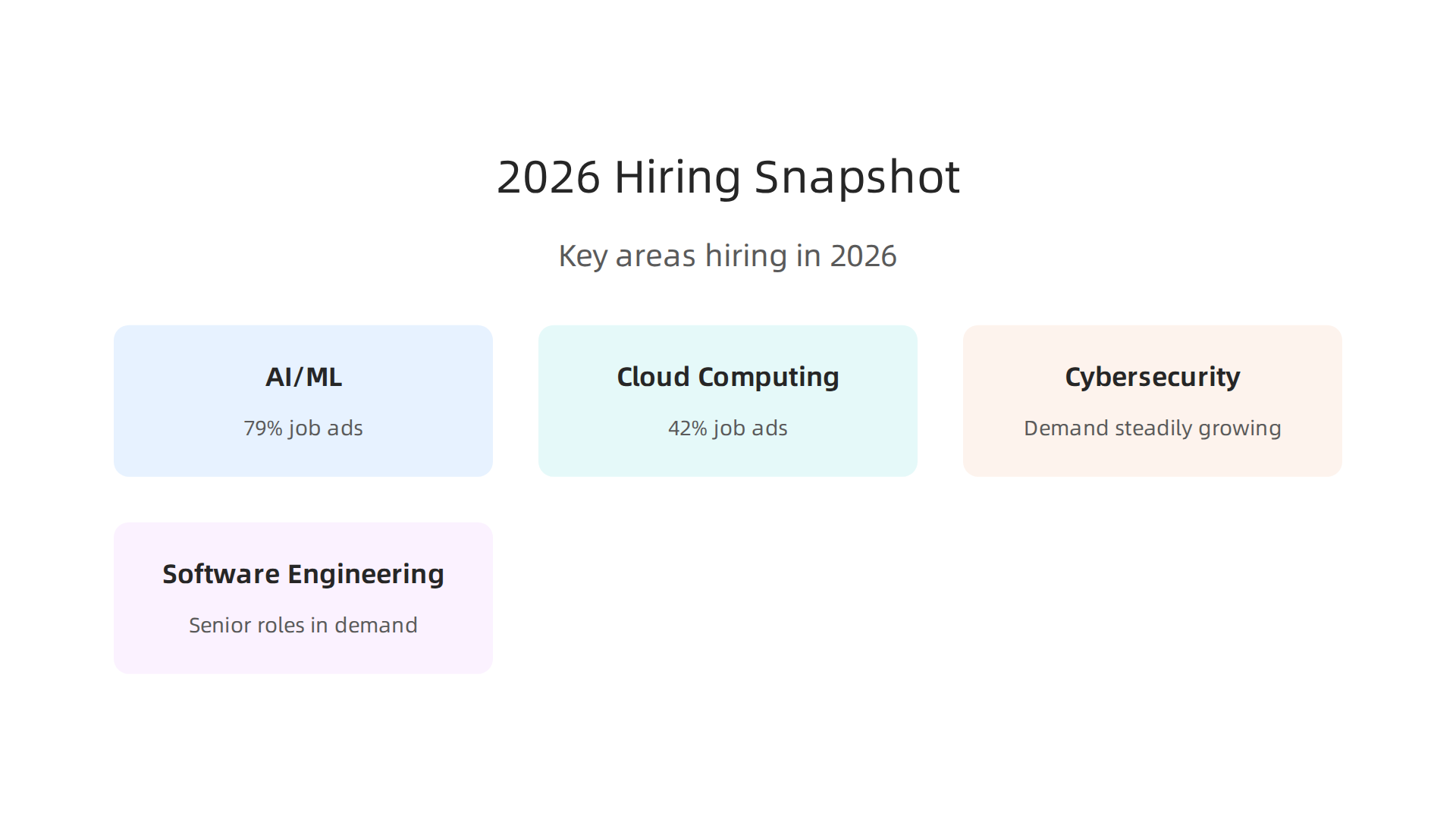
- AI and Machine Learning (AI/ML): This is the biggest news. More and more jobs need AI skills. A report from Dice showed that by July 2026, about 79% of U.S. tech job ads asked for AI skills. This number went up from 75% in June 2026 Tech Jobs Report – Dice. It’s not just for AI-specific jobs either. AI skills are now needed in almost every tech role, like design, security, and even regular software engineering. One study found that the demand for AI Agents grew a lot in many different job types in Q3 2026 State of Tech Hiring — Q3 2026. This trend of needing more AI skills is expected to continue growing through 2026 2026 State of Tech Talent Report.
- Cloud Computing and Platforms: Cloud skills are still very important. Almost 42% of all tech job ads needed knowledge of at least one big cloud platform, according to research looking at nearly 1 million job postings between 2025 and 2026 What Nearly 1 Million Job Postings Reveal About the Tech Tools U.S. Employers Want Most. Companies want people who know how to use these powerful online tools to store data and run programs.
- Cybersecurity: With so much tech, keeping things safe online is a huge job. Demand for security skills, especially those related to AI, continues to grow. Keeping up with new tools and threats is key. If you want to know more about how new tech shapes areas like cybersecurity, read about R&D Technology Trends 2026: Reshaping AI, Quantum, Cybersecurity, and Biotech.
- Software Engineering: This area remains a core part of the tech world. Senior and staff engineers are still in very high demand, especially at companies that focus on cloud services or AI. However, there’s a shift: companies are being more careful when hiring for mid-level roles, often preferring smaller, more focused teams 2026 Software Engineering Hiring Report – Recruits Lab.
What does this mean for job seekers like you? Well, the kinds of jobs available and what companies want has changed quite a bit since 2023-2025. Many companies plan to hire more temporary workers in the second half of 2026 to fill these important roles 2026 Tech and IT Hiring and Job Market Outlook. This means your resume and your skills for the tech interview need to show you can handle today’s tools, especially if you have strong AI training. Learning about these new areas and showing how you can fit into a lean team will give you a big advantage.
This tech interview handbook will guide you through preparing for these specific needs, helping you highlight the right skills to get hired in 2026. Mastering computing innovation for today’s market is a big step towards success. You can learn more about this in our guide on Mastering Computing Innovation for Business Success in 2026.
Moving from the big picture, it’s time to dig into the exact jobs and skills that matter most today. Your tech interview handbook needs to help you prepare for specific roles. In 2026, it’s not just about knowing how to code. It’s about knowing what to code and why.
Which Roles & Skills Actually Move the Needle (and How to Prioritize Learning)
Companies are looking for people who can not only do the job but also bring real value. This means focusing on core technical skills and also "people skills" that help teams work better.
Core Technical Skills: Going Deeper Than the Surface
While software engineering is still key, some specific roles are especially hot.
- AI/Machine Learning Engineers: These are the people who build and train the smart systems. They need strong ai training and often understand complex ideas, like those found in advanced textbooks on artificial intelligence a modern approach prerequisites. They turn data into helpful predictions and automated tasks.
- Data Engineers: Before AI can do its magic, someone needs to get the data ready. Data engineers build the systems that collect, clean, and store huge amounts of information, making it useful for AI.
- Platform Engineers: These roles ensure that all the fancy AI and software tools can run smoothly and safely. They build and manage the underlying systems and services.
Actually, demand for skilled tech workers is so high that many tech leaders are planning to hire even more aggressively in the second half of 2026 2026 Technology job market: In-demand roles and hiring trends.
Beyond Code: Soft Skills and Domain Knowledge
It might surprise you, but what you say and how you work with others can be just as important as your coding skills.
- Communication: Can you explain complex tech ideas simply to someone who doesn’t understand code? Can you listen to what others need?
- Problem-Solving: When things go wrong, can you figure out why and find a good solution? This isn’t just about fixing bugs, it’s about thinking clearly.
- Teamwork: Most projects are group efforts. Being a good team player means sharing ideas, helping others, and working together to reach a goal.
- Adaptability: The tech world changes fast. Companies want people who can learn new tools and ways of working quickly.
- Domain Knowledge: This means understanding the business area you’re working in. For example, if you’re building software for a bank, knowing about finance helps you create better tools.
Hiring managers in 2026 are really focused on getting the best people. In fact, 60% of them say improving the quality of hire is their top goal New Research: The 2026 State of Tech Hiring — What AI Means for …. This means they want well-rounded candidates.
How to Prioritize Learning
With so much to learn, how do you decide what’s most important?
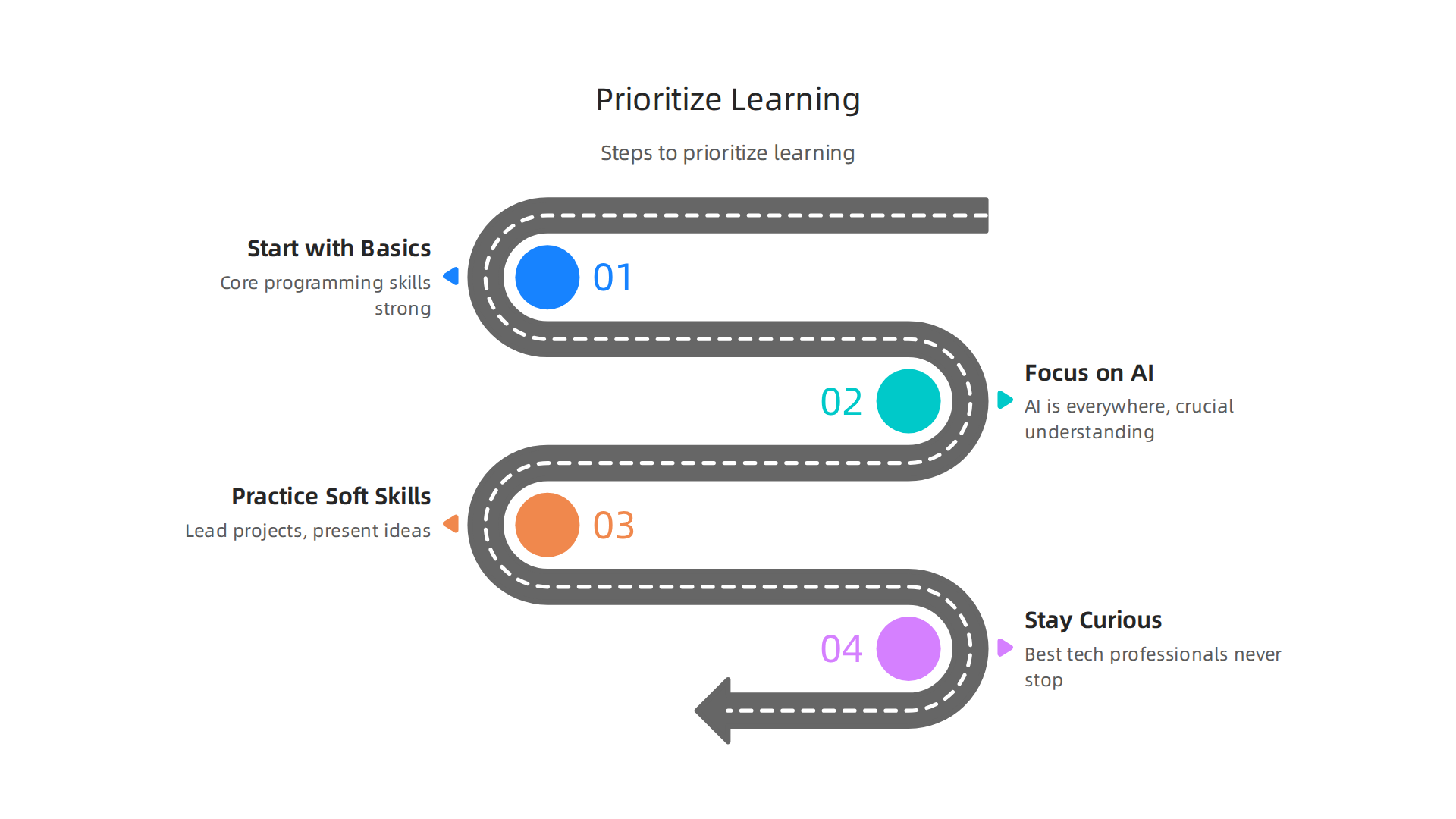

- Start with the Basics: Make sure your core programming and computer science skills are strong.
- Focus on AI: As we’ve seen, AI is everywhere. Even if you don’t become an AI engineer, understanding how it works and how to use AI tools is crucial. Many people get strong ai training through bootcamps or advanced programs like an artificial intelligence omscs degree.
- Practice Soft Skills: Look for chances to lead small projects, present ideas, or work in teams. These experiences will make your resume shine.
- Stay Curious: The best tech professionals never stop learning. Keep up with new trends and tools.
The goal of this tech interview handbook is to help you connect your skills to what companies really need.
To keep up with the fast-moving world of technology, especially AI, you need reliable and timely information.
Get clear daily AI updates from The AI Newsletter Worth Reading.
You’ve learned about the skills companies want. Now, let’s talk about how companies check for those skills. Knowing the different types of interviews you might face is a key part of staying updated and being ready. Your tech interview handbook should prepare you for what’s ahead in 2026.
Interview Formats in 2026: What to Expect (and How to Train)
Interview formats in 2026 are not always what they used to be. Companies have changed how they interview to find the best talent, even for people working from home or in a mix of office and home.
Here are the common steps you might go through:
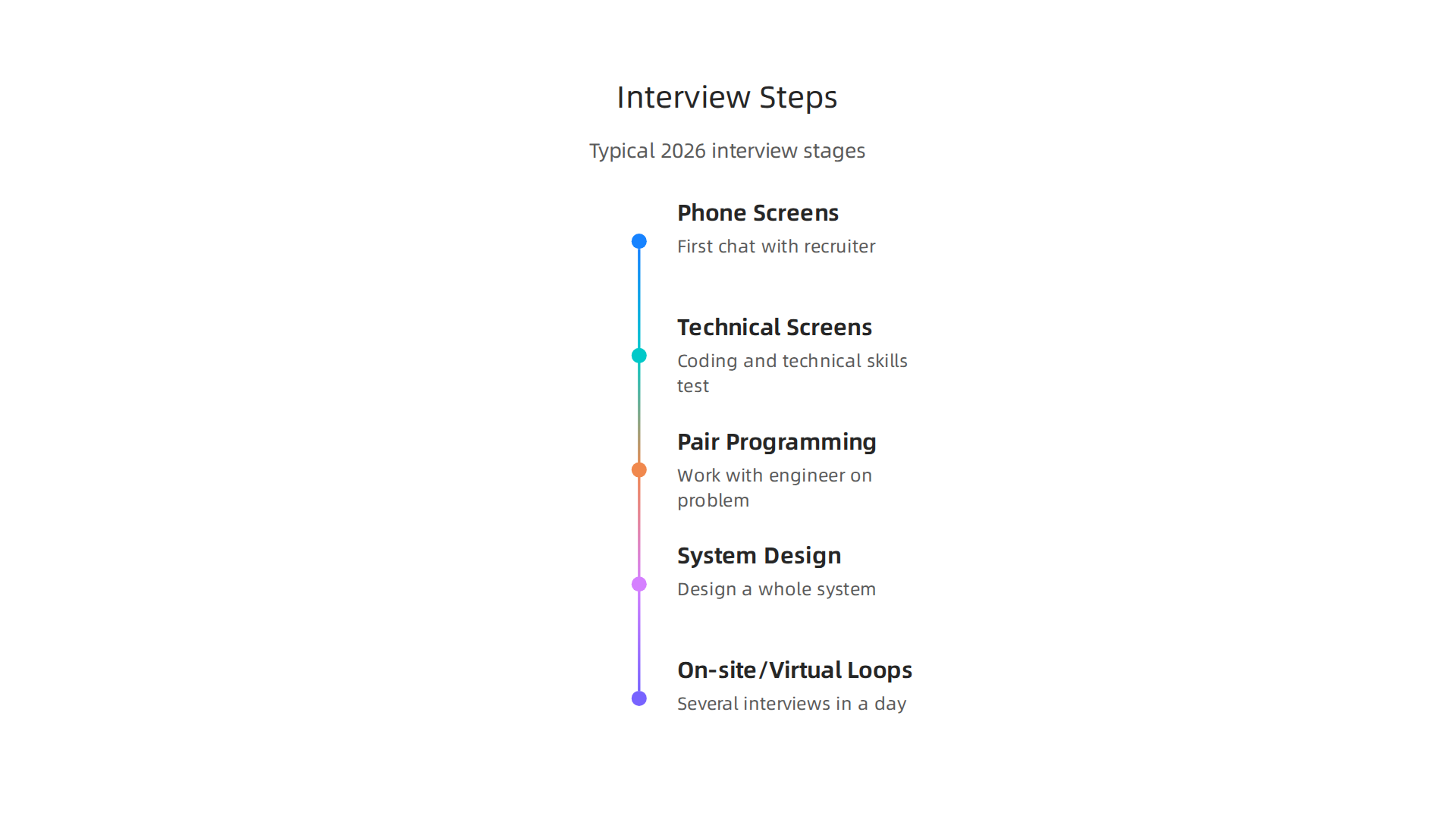
- Phone Screens or Recruiter Calls: This is often the first chat. A recruiter will call to ask about your work history, what kind of job you’re looking for, and your pay expectations. It’s a quick way for them to see if you’re a good fit before moving forward.
- Technical Screens: This is where your coding and technical skills are put to the test.
- Live Coding: You’ll be asked to solve a coding problem while someone watches, often sharing your computer screen. It’s not just about getting the right answer. Interviewers want to see how you think and solve problems. Some places even let you use AI tools during these sessions Take-Home vs Live Coding in 2026: Which Engineering Assessment ….
- Take-Home Projects: You get a task to do on your own time, usually with a time limit like a few hours. These projects are great for showing how you organize your code, how clean it is, and how you handle all the little details What Coding Interviews Look Like in 2026 | Ambitology. Some people in hiring even think these paid take-home tests do a better job of showing real-world work ability than live coding sessions Technical Interview Guide for Software Developers 2026.
- Pair Programming: In this type of interview, you work together with an engineer from the company on a coding problem. It’s similar to live coding but focuses more on how well you work with others. This kind of session can show how good you are at working in a team and talking through problems, which are very important skills for 2026 workplaces How to Interview Engineers for Impact: 2026 Methodology – Pin.
- System Design Interviews: If you’re going for a more senior job, you’ll likely be asked to design a whole system. This could be something like building a new social media site or a large AI service. It tests your ability to think about big problems, how things will grow, and how different parts of a system fit together. Because AI is so important now, you might even get questions about designing systems for machine learning or new generative AI tools 3 ways AI has changed FAANG interviews in 2026 – Formation.
- On-site or Virtual Loops: This usually means you’ll have several interviews one after another in a single day. This can happen at the company’s office or completely online through video calls. It’s often a mix of coding challenges, system design discussions, and questions about your past experiences and how you handle work situations. Many companies now combine online tests with these longer interview days HackerRank SWE Guide 2026.
How Companies Are Adapting for Remote and Hybrid Hiring
In 2026, many companies hire people who work from anywhere, not just from their office. This means interviews have become very good at happening over video calls. Using screen sharing for coding tasks is normal. Companies also use online tools to check your skills and look at projects you’ve done before. The main goal is still to find out if you have the right skills and if you will be a good fit for the team, no matter where you live. This makes showing good communication skills and being able to work well on your own more important than ever.
To get ready for these different kinds of interviews, it helps to build a strong understanding of how AI works. Getting a good grasp of artificial intelligence basics can help you answer questions about new AI challenges in the tech world.
Technical Interviews: Practical Prep for Coding and System Design
So, you know about the different kinds of interviews you might face in 2026. Now, let’s talk about how to get really good at them. Think of your preparation as building your very own strong tech interview handbook. It’s all about practicing the right way so you feel ready for anything.
Getting Ready for Coding Interviews
Coding interviews are a big part of getting a tech job. You’ll need to solve problems using code, sometimes with someone watching, and sometimes on your own as a take-home task. To do well, you need to practice often and smartly.
Here’s how you can prepare:
- Practice Regularly: It’s like training for a sport. You can’t just practice once and be ready. Try to solve many problems, starting with easier ones and then moving to harder ones. Some experts suggest solving 15-20 problems per topic to build a strong base, focusing on the top five important topics first.
- Use the Right Tools: There are many websites that offer coding problems. Platforms like LeetCode are popular choices for practicing, as they provide many problems and even sort them by company and topic. Other platforms, like SkillFlow, offer adaptive practice and AI feedback, which can really help you learn faster. You can find many options for best coding interview sites to help you get ready.
- Think Out Loud: When you practice live coding or pair programming, it’s important to explain what you’re doing. Interviewers want to know how you think, not just the final answer. They might even ask "why this?" or "what’s the complexity here?" to understand your reasoning better, which is a key part of how tech interviews have changed in 2026 according to one report What Actually Changed in Tech Interviews in 2026.
- Do Mock Interviews: Practicing with a real person, or even an AI tool, can make a huge difference. Mock interviews help you get used to the pressure and get feedback on your skills. Studies show that doing at least two practice interviews can make you much better at real ones. Platforms like Pramp offer free peer-to-peer mock interviews, where you can practice with other people trying for jobs. Interviewing.io also lets you practice with engineers from top companies How to Rock the Coding Interview – Tips That Helped Me ….
Mastering System Design Interviews
If you’re looking for a more senior role, system design interviews are super important. These interviews ask you to design a whole system, like building a new app or a service. It’s not about writing code, but about planning how everything works together.
Here are some ways to prepare:
- Understand the Big Picture: System design questions test how you think about large, complex problems. You need to consider how a system would handle many users, how it would grow, and how all its parts connect.
- Learn Frameworks: There are common steps to follow when designing a system. These steps usually include understanding the problem, thinking about how many users it will have, choosing the right parts (like databases or servers), and talking about trade-offs (what you gain versus what you lose with different choices).
- Know About AI in Design: In 2026, AI is everywhere. This means you might get questions about designing systems that use machine learning or new generative AI tools. For example, you could be asked to design a system for recommendations or for training AI models. The bar for passing these interviews is higher now, and you’re expected to think about things like cost and how to operate these systems System Design Interview Prep & Questions (2026 Guide). If you need to boost your foundational knowledge, looking into artificial intelligence academic resources can be a great starting point for advanced topics like these.
- Practice Common Problems: Companies like Google often ask candidates to design well-known services like YouTube or Google Maps in 45-minute sessions Google System Design Interview: What Changed, What They …. Practicing these types of problems will help you get comfortable with the process.
Preparing for technical interviews takes time and effort. But with a solid plan, a good tech interview handbook, and lots of practice, you can walk into any interview feeling confident.
Staying up-to-date with the rapid changes in AI and technology is also crucial for your interviews and career. To get clear daily AI updates directly to your inbox, consider subscribing to The AI Newsletter Worth Reading.
If you’re aiming for roles in Artificial Intelligence (AI) or Machine Learning (ML) in 2026, there’s a special way to prepare. Beyond coding and system design, you need to show what you can actually build and how you think about real-world problems. This part of your tech interview handbook is all about showing, not just telling.
Building and Presenting Reproducible Demos and Model Showcases
For AI and ML jobs, companies want to see your projects in action.

It’s not enough to just write code; you need to show how your models work and what they can do. This means having demos and showcases that anyone can understand and even try out.
Here’s how to make your projects shine:
- Make it Easy to Use: Your projects should be easy for hiring teams to evaluate quickly. This means they need to be "reproducible." Tools like Docker Compose can help make sure your project runs the same way on any computer, which is a key part of building an ML portfolio that gets you hired in 2026.
- Show, Don’t Just Tell: Live demos are very powerful. You can include a link to a working version of your project or even a short video (like a GIF) showing it in action. Projects with a live demo link or a GIF tend to impress recruiters more than those without them, according to a guide on 10 AI Portfolio Examples That Impress Recruiters (2026).
- Create a Strong Portfolio: Experts suggest having 3 to 5 projects in your portfolio. Each project should show off a different skill and aim for quality over quantity. A good portfolio often includes a mix of different types of AI projects, like data analysis, machine learning, deep learning, and even new generative AI tools. These projects should be deployed with live links, and the code should be clean and well-organized. You can learn more about how to build an AI portfolio in 2026 that helps you stand out.
- Write Clear Readmes: Every project needs a clear README file. Think of it as a quick guide for your project. This file should explain:
- The Problem: What real-world problem does your project solve?
- Your Approach: How did you try to solve it? What tools or methods did you choose and why?
- Architecture Diagram: A simple picture showing how different parts of your system connect, like how data flows from beginning to end.
- Results: What did your project achieve? Show numbers, like how much faster something became or how accurate your model is. It’s also good to talk about honest failure cases, as this builds trust. A good README with these details is crucial for an AI & Machine Learning Engineer Portfolio Guide (2026).
These steps help create a strong tech interview handbook for AI roles, focusing on practical showcases.
Technical Storytelling: Translating Research into Product Narratives
In AI/ML interviews, it’s not enough to just talk about the technical details of your model or the advanced ai training methods you used. You also need to be good at "technical storytelling." This means explaining your complex research or project work in a way that shows its value to a product or business.
Here’s how to do it:
- Focus on the Outcome: When you talk about a project, start with the result and its impact, not just the technical terms. For example, instead of saying "I fine-tuned a model," say "I built a support-ticket sorting system that made response times 35% faster." This shows you understand how your work helps the business.
- Use the Problem-Approach-Result-Impact (PARI) Formula: This is a great way to tell your project stories.
- Problem: What was the challenge or need?
- Approach: How did you use AI or ML to solve it?
- Result: What happened? What were the key findings or improvements?
- Impact: How did this help the users, the team, or the company?
- Show Your Evaluations: Don’t just give one number for accuracy. Show how you tested your project. Things like confusion matrices, success rates, speed, and cost numbers help prove your project’s value. Being transparent about how well your project works, and even when it doesn’t work perfectly, shows you’re a careful and trustworthy engineer. Preparing for this kind of discussion is part of a strong Machine Learning Interview Prep Guide.
- Understand Foundational Knowledge: To tell these stories well, you need a strong grasp of the basics. This might involve looking into
artificial intelligence academic resourcesor understanding theartificial intelligence a modern approach prerequisitesto truly understand the "why" behind your technical choices. Having this deep understanding helps you explain trade-offs and decisions clearly. - Map Your Experience: Look at the company’s products and what AI problems they are solving. Then, connect your own projects and experiences to their needs. This shows you’ve done your homework and can fit right in, which is part of preparing for AI engineer interview questions and answers (2026 guide).
By mastering both your project showcases and your storytelling, you’ll be much better prepared for any AI or ML job interview in 2026. It makes your personal tech interview handbook a powerful tool for success.
Moving from just showing your technical skills, the next important step in your tech interview handbook is learning how to talk about your impact. This is key for behavioral, product, and leadership interviews, especially in AI and Machine Learning roles in 2026. Here, companies want to see not only what you built but also how your work made a real difference to users or the business.
Behavioral, Product & Leadership Interviews: Communicating Impact
When you get to the behavioral part of an interview, it’s about sharing your past experiences in a clear and powerful way. Interviewers want to hear stories that show how you handle challenges, work with others, and lead projects.
Here’s how to tell your stories well:
-
Use the STAR or SCAR Method: These methods help you tell a complete story about your past work.
- STAR:
- Situation: Set the scene. What was the problem or challenge?
- Task: What was your specific job or goal in that situation?
- Action: What steps did you take to solve the problem or reach the goal?
- Result: What was the outcome of your actions? What did you achieve?
- SCAR: Some people prefer SCAR, which adds an ‘C’ for ‘Challenge’ after ‘Situation’ to really highlight the difficulty.
- Situation
- Challenge
- Action
- Result
For AI and ML roles, you need to make sure your project stories show both your deep technical skills and your leadership abilities. Preparing for behavioral interviews, including project stories, is a vital part of your overall Machine Learning Interview Prep (2026 Guide).
- STAR:
-
Show Your Leadership and Product Judgment: Companies look for more than just coding skills. They want people who can lead, make smart decisions, and think about the bigger picture.
- Cross-Functional Leadership: This means showing how you worked well with different teams, like designers, product managers, or sales, to bring your AI ideas to life. Did you help others understand complex
ai trainingconcepts? Did you get everyone on the same page? - Product Judgment: This is about understanding the user and the business needs. When you built something, did you think about who would use it and why? Did you consider how it would make the product better or help the company grow? For instance, did you help define what to build next based on customer feedback or market trends? Having a strong grasp of these areas helps you master behavioral tech to unlock strategic business advantage.
- Communicate Impact: Always connect your technical work back to its impact. Instead of just saying "I optimized a model," explain how that optimization led to "faster customer service responses" or "more accurate sales forecasts." Leading with the outcome is more effective than just naming the model you used, as highlighted in an AI & Machine Learning Engineer Portfolio Guide.
- Cross-Functional Leadership: This means showing how you worked well with different teams, like designers, product managers, or sales, to bring your AI ideas to life. Did you help others understand complex
-
Practice, Practice, Practice: Just like technical questions, you should practice your behavioral answers. Do mock interviews with friends or mentors. This helps you get comfortable telling your stories clearly and confidently.
By preparing for these types of interviews, you ensure your tech interview handbook covers all bases. You’ll be ready to show not just what you can do, but how you can lead and create real value.
Staying updated on the fast-changing world of AI is crucial for all these types of interviews.
Get clear daily AI updates from The AI Newsletter Worth Reading.
When you do well in interviews and show how much impact you can make, the next exciting part is getting a job offer. This stage is just as important as the interviews themselves. It is where you turn your interview success into a great start for your career. Your tech interview handbook would not be complete without understanding how to look at offers, ask for what you deserve, and plan your career path.
Offers, Negotiation & Career Pathing: From Offer to Impact
Getting an offer means a company wants you. That is a big deal! But you need to look closely at what they are offering. It is not just about the basic salary. You need to understand the whole package, which we call total compensation.
Understanding Your Offer
Total compensation includes a few key parts:
- Base Salary: This is the cash you get paid every paycheck. It is the most straightforward part.
- Equity: This means you get a piece of the company, usually in the form of stock grants called RSUs. These often become fully yours over a few years. It is important to know how much equity you get each year, not just the total amount over four years. To learn more about this, you can read about how to negotiate equity and RSUs in offers for 2026.
- Signing Bonus: This is a one-time payment when you start the job. Companies often use it to make up for money or stock you might leave behind at your old job.
- Annual Bonus: This is extra money you can earn based on how well you and the company perform. It is usually a percentage of your base salary.
You should always think about all these parts together. For example, a lower base salary might be okay if the equity package is very good. Learning how to negotiate your tech job offer in 2026 means looking at the full picture.
Negotiating Your Offer
Don’t be afraid to negotiate. Most companies expect you to. Here is how to do it smartly:
- Do Your Homework: Before you talk numbers, find out what others in similar roles are paid. Look for data on total compensation for your specific job, company, and location. There are many sources online in 2026 that provide Software Engineer Compensation Benchmarks and Negotiation Strategies for 2026. This data helps you know what is fair.
- Use Data: When you ask for more, base it on your research and other offers you might have. Say something like, "Based on my skills and market data, I was expecting X for total compensation." This approach makes your request strong and clear, as suggested in a Tech Compensation & Equity Negotiation Playbook (2026).
- Be Polite and Confident: Remember, this is a business chat, not a fight. You are showing them you know your worth.
- Ask About Everything: You can negotiate base salary, equity, and even your signing bonus. Sometimes, you can get more vacation time or flexible work arrangements, too.
Planning Your Career Path
Getting a great offer is just the start. Your long-term career path is also very important. Think about where this job will take you.
- Leveling and Growth: Does the company have a clear path for you to grow? Can you move up to more senior roles? For those interested in
artificial intelligence omscsor other advanced studies, consider if the company supports continuous learning. - Role Scope: Will you be working on projects that excite you and help you learn new things? If you want to dive deeper into specific areas like
ai training, check if the role offers those opportunities. For bigger picture thinking, consider how this role helps you mastering computing innovation for business success in 2026. - Skill Investments: What new skills will you gain? How can you keep learning and staying updated? Resources like Artificial Intelligence Academic Resources Your 2026 Roadmap can help you plan your learning journey. Think about how this job helps you achieve your overall career goals and ultimately master your tech systems for strategic business advantage.
By carefully evaluating offers and planning your career, you are not just getting a job. You are setting yourself up for long-term success and impact in the tech world.

Summary
This article is a practical tech interview handbook for 2026 that explains how rapid changes—especially the surge in AI demand—have reshaped hiring, roles, and interview formats. It surveys where the jobs are (AI/ML, cloud, security, platform and data engineering), explains which technical and soft skills hiring teams now value, and shows how to prioritize learning. The guide walks through common interview formats (phone screens, live coding, take-homes, pair programming, system design and loops), gives targeted prep tactics for coding and system design, and details how to build reproducible AI demos and portfolios. It also covers technical storytelling for product impact, behavioral and leadership interview techniques, and practical advice for evaluating and negotiating offers. After reading, you’ll know which skills to emphasize, how to present projects and impact, and how to convert interview success into a stronger offer and longer-term career plan.