

The Problem with Tech Jargon: Why Synonyms Matter
Have you ever sat in a meeting where someone throws around words like "AI," "machine learning," "deep learning," and "neural networks" all in one breath? You nod along, but inside you are not sure if those are the same thing or totally different. You are not alone. The tech world loves its jargon. And in 2026, the pile of overlapping terms is bigger than ever.
This confusion is not just annoying. It can cost your business real money. When decision-makers mix up key terms, they might invest in the wrong tool or miss a strategic opportunity. For example, thinking "automation" and "autonomous" mean the same thing could lead to bad choices. A recent AI in Professional Services Report shows that even in professional services, communication around AI use remains inconsistent. Clients and firms get confused about what is actually being used.
That is where understanding synonym technologies comes in. By learning the exact meaning of terms that sound alike, you can cut through the noise and make smarter moves. This guide gives you clear, simple definitions for the most confusing tech words. It helps you speak with confidence and avoid costly mistakes.

For a deeper look at how the right words improve your work, check out this guide on mastering tech synonyms for clear communication.
And if you want to stay ahead of fast-changing trends, consider subscribing to The AI Newsletter Worth Reading. It delivers clear daily updates straight to your inbox.

What Are Synonym Technologies and Why Should You Care?
Let’s start with a simple example. You hear someone say their company is using "the cloud." But then they also mention "edge computing." Are those the same thing? Not exactly. Cloud computing runs data on remote servers. Edge computing processes data closer to where it’s collected, like on a factory floor or a smartphone. Mixing them up could lead you to invest in the wrong infrastructure.
That is what synonym technologies are all about. This term describes pairs or groups of tech words that sound similar or get used interchangeably but actually refer to different concepts. Think of them as look-alikes that can trip you up if you do not know the difference. Common examples include artificial intelligence (AI) versus machine learning (ML), cloud versus edge, and cybersecurity words like "threat detection" versus "threat prevention." Even quantum computing has its own pair: quantum supremacy versus quantum advantage. Getting these distinctions right matters more than you might think.
Why should you care? Because the words you use shape your decisions. When a team says they need "automation," they might really mean "autonomous systems," which is a much bigger leap. Choosing the wrong tool or strategy can waste time and money. In 2026, with technology trends moving fast, clarity is a competitive advantage. The Wavestone technology trends report for 2026 emphasizes that the real agenda is turning AI into a coherent enterprise capability. You cannot do that if your team cannot agree on basic definitions.
Understanding synonym technologies also helps you spot the tech force driving change. When you know the exact meaning behind each term, you can read news, evaluate products, and talk to vendors with confidence. You stop nodding along and start asking smart questions. For example, if a salesperson says their product uses "machine learning," you can ask whether it’s supervised or unsupervised learning. That one question tells you a lot about what the tool actually does.
If you want to explore more about how AI concepts relate to each other, check out this guide on the types of artificial intelligence. It breaks down narrow AI, general AI, and superintelligence so you can see how they fit together.
In short, synonym technologies are not just about vocabulary. They are about making better choices in a fast-moving world. The clearer your mental map of these terms, the fewer costly mistakes you will make. Next, we will look at specific word pairs that cause the most confusion in business today.
AI vs. Machine Learning vs. Deep Learning: Understanding the Hierarchy
You have probably heard people say "our product uses AI" when it really only uses simple rules. Or they call everything "deep learning" because it sounds smart. This confusion is a perfect example of synonym technologies at work. The words sound similar but live at different levels. Getting the hierarchy right helps you evaluate tools and make better decisions.
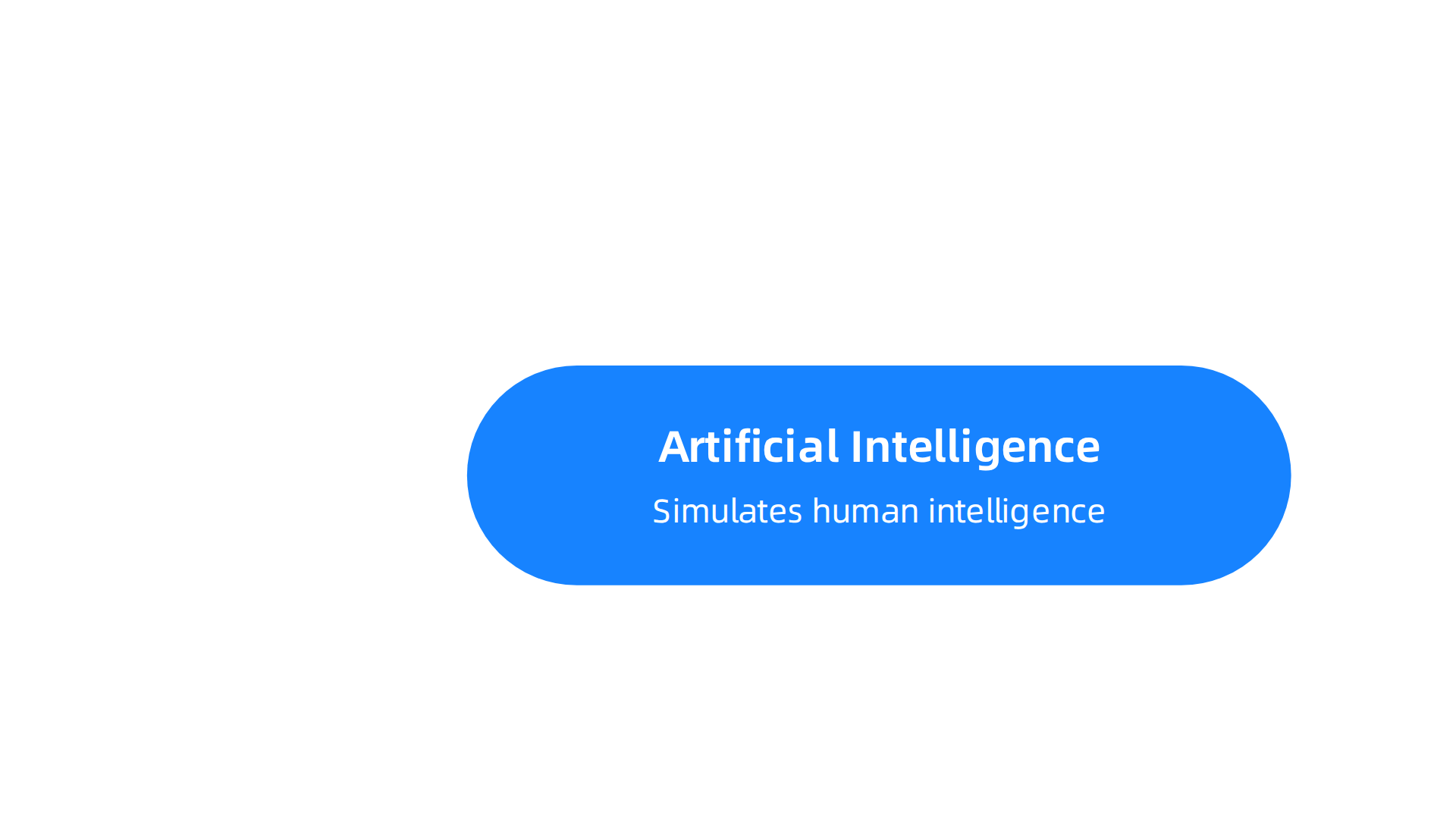
Think of it like a set of nesting dolls. Artificial Intelligence is the biggest doll. It covers any system that simulates human intelligence, like reasoning, learning, or problem-solving. Machine Learning is a smaller doll inside AI. ML is a way to build AI by letting systems learn from data without being explicitly programmed for every step. Deep Learning is the smallest doll, a specialized part of ML that uses multi-layered neural networks to find patterns in huge amounts of data.
If someone says their software is "AI powered," ask whether it uses machine learning or just hand-coded rules. If they say "machine learning," ask if it is supervised, unsupervised, or deep learning. Each step down the hierarchy means more complexity and more data. A recent study on differentiating AI, ML, and deep learning confirms that clear definitions are essential for choosing the right system for your needs.
Why does this matter for your business? Because buying an AI tool is different from building a machine learning model. And building a deep learning system requires specialized hardware and data scientists. If you confuse them, you might spend on the wrong infrastructure or expect results the technology cannot deliver. Understanding the tech force behind each layer lets you ask better questions and evaluate vendors with confidence.
For a deeper look at how these technologies are shaping the market, check out this overview of the world of AI in 2026. It covers the latest trends and what comes next.
Now here is the practical takeaway. The next time you hear a team say they need to "implement AI," pause and clarify. Do they need a simple rule-based system, a machine learning model, or a deep learning network? The answer changes everything about cost, timeline, and team skills. Making this distinction clear is one of the simplest ways to avoid wasting resources.
If you want to stay sharp on these terms as they evolve, The AI Newsletter Worth Reading delivers clear daily updates so you never fall behind.
Real-World Examples Distinguishing AI, ML, and DL
Let’s make this concrete with real examples. Imagine a simple customer service chatbot that only follows fixed rules: if the customer types "order status," it replies with a tracking link. That is AI because it simulates human reasoning, but it does not learn. It is a rule-based system, not machine learning.
Now consider an email spam filter. It is trained on thousands of labeled emails. Over time, it gets better at spotting spam without being told every new trick. That is machine learning. The system learns patterns from data.
Finally, think of a medical imaging tool that detects tumors in X-rays. It uses a deep learning model with many neural layers to analyze every pixel. These models can spot details even experts might miss. This is deep learning, the most complex layer inside ML.
Choosing the right approach matters for your business. If you need simple automation, a rule-based system may be enough. If you need a system that improves with data, use ML. For complex tasks like image or speech recognition, deep learning is often the answer. Understanding these differences will save you time and money.
A detailed study on differentiating AI, ML, and deep learning provides more context on these categories.
To get better at recognizing these terms in the wild, check out this guide to master tech synonyms and avoid costly confusion in your next project.
Cloud, Edge, and Fog Computing: Mapping the Distributed Computing Continuum
You now understand how AI, machine learning, and deep learning form a stack of synonym technologies. The same kind of confusion happens with cloud, edge, and fog computing. These three are often used as if they mean the same thing, but each plays a different role in how data gets processed.
Cloud computing is the layer you probably know best. It centralizes all the heavy lifting in remote data centers run by companies like Amazon, Microsoft, or Google. You send your data up to the cloud, it gets processed, and the result comes back. This works great for big jobs that don’t need instant answers.
Edge computing flips that idea. Instead of sending data all the way to a distant data center, processing happens right where the data is created. Think of a smart camera in a factory. It analyzes video on the spot to spot defects, without waiting for a round trip to the cloud. This cuts delay to milliseconds. Edge computing is essential for self-driving cars, robotics, and any system that must react in real time.
Fog computing sits between cloud and edge. It acts as a middle layer that handles some processing closer to the devices but not as close as the edge itself. Picture a local server in a hospital that collects data from dozens of medical sensors, does initial analysis, and then sends summaries to the cloud. Fog computing helps balance speed and cost when you have many devices.
Why does this matter? Building a tech system means choosing where to run your code. Pick cloud if latency is not critical and you need massive scale. Pick edge when every millisecond counts. Pick fog when you have a large network of devices that need local coordination.

These synonym technologies sound alike, but using the wrong one can waste time and money. Clear communication starts with knowing the difference. For a deeper look at how edge computing enables instant responses, check out this overview of real-time AI in 2026.
Standards organizations are also stepping in to define these terms. The ISO/IEC 23053 standard, for example, provides a unified vocabulary for describing AI systems that use machine learning. That kind of clarity helps everyone from engineers to executives talk about AI system frameworks without confusion.
Staying current with tech terms is a full-time job. Get clear daily AI updates from The AI Newsletter Worth Reading and keep building your tech vocabulary.
Edge Computing vs. Fog Computing: Key Distinctions
Now that you have the big picture, let’s sharpen the difference between edge and fog computing. These two synonym technologies sound almost identical, but their roles are distinct in practice.
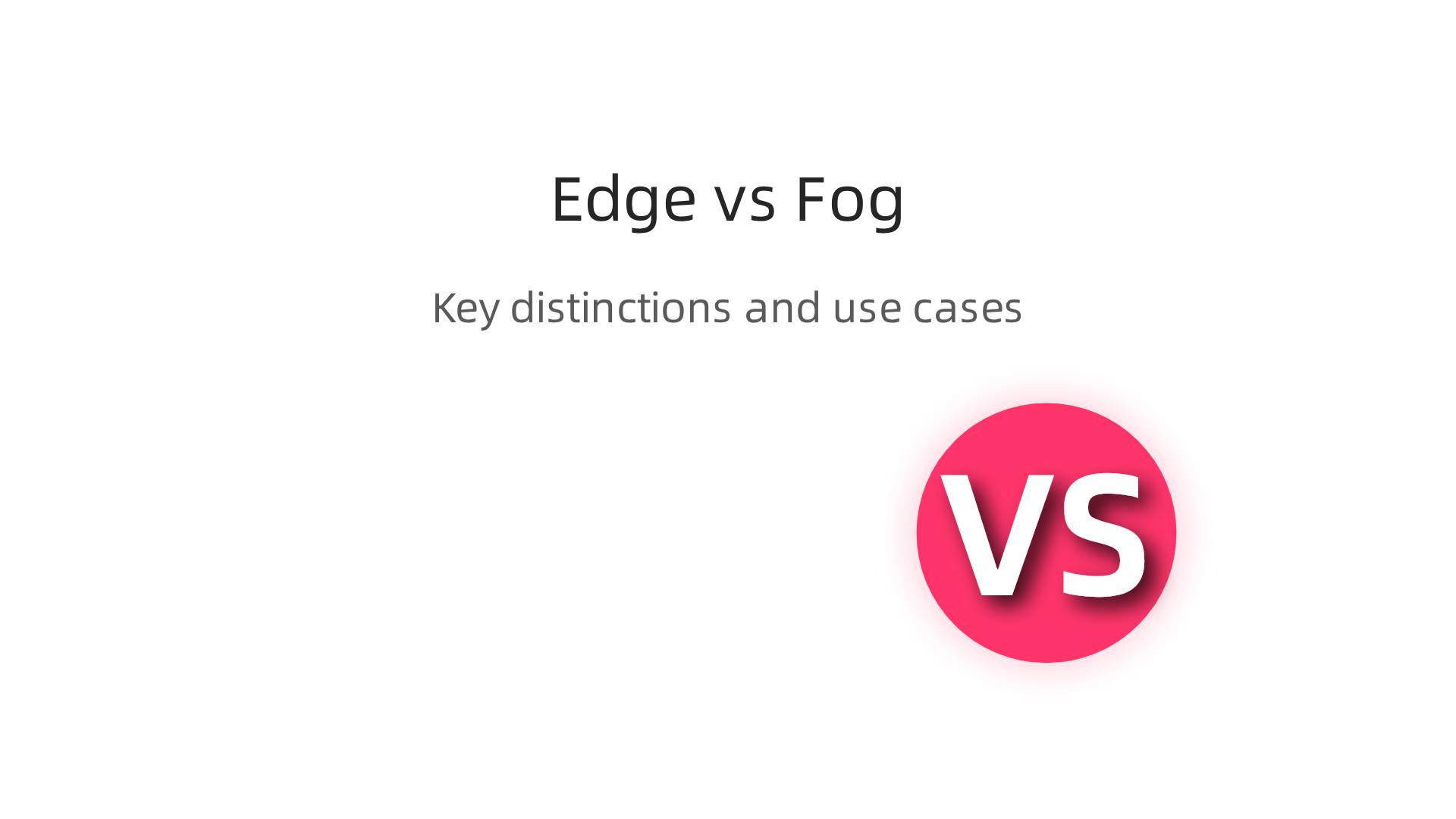
Edge computing is strictly on-device. The actual sensor, camera, or machine runs the analysis itself. This gives you the fastest possible response because no data leaves the device. The trade-off is limited processing power. A small edge device cannot run complex models.
Fog computing aggregates data from many edge nodes before sending it anywhere. Think of a local gateway in a smart building that collects temperature readings from hundreds of sensors. The gateway does some analysis and then passes summaries to the cloud. Fog is still local, but it sits one step back from the edge.
When to use each:
| Use Case | Best Choice |
|---|---|
| Self-driving car braking | Pure edge (must react in milliseconds) |
| Factory with 50 cameras | Fog (aggregate and analyze locally) |
| Wearable health monitor | Edge (privacy and speed) |
| Building-wide sensor network | Fog (coordinate many devices) |
Fog computing adds a tiny bit of latency compared to pure edge, but it handles much larger networks. If you need real-time decisions on every single device, go edge. If you need local coordination across dozens or hundreds of devices, go fog.
This distinction matters because picking the wrong approach wastes compute resources. For more on managing data from many devices, check out how to turn data overload into strategic insight.
Cybersecurity Terminology: Threats, Risks, Vulnerabilities, and Exploits
You hear the words "threat," "risk," "vulnerability," and "exploit" thrown around in cybersecurity meetings. They sound almost the same. But mixing them up can lead to confused strategies and big security gaps.
Don’t treat these as synonym technologies. Each term has a very specific meaning. Using them correctly helps you talk clearly with your team, meet compliance rules, and actually fix problems.
Threat – A threat is anything that could harm your system. It is a potential cause of an unwanted incident. The NIST cyber threat definition describes it as any circumstance or event with the potential to negatively affect your operations. Threats can come from hackers, accidents, equipment failures, or even natural disasters.
Vulnerability – A vulnerability is a weakness in your system. It could be an unpatched software bug, a misconfigured server, or a missing security control. The NIST vulnerability definition calls it a weakness that could be exploited or triggered by a threat. Vulnerabilities exist whether or not anyone has noticed them yet.
Exploit – An exploit is the method an attacker uses to turn a vulnerability into damage. It is the actual step that takes advantage of a weakness. For example, a hacker might use a known exploit to break into a system through an unpatched software flaw.
Risk – Risk brings threat and vulnerability together. It measures how likely it is that a threat will use an exploit on a vulnerability, and how bad the impact would be. The NIST risk definition says risk is a function of threat, vulnerability, and impact. Lower risk means you have controls in place. Higher risk means you need to act.
Understanding these four terms is essential for compliance frameworks like NIST or ISO. Auditors expect you to use the right language. If you call a vulnerability a threat, you might focus on the wrong fix.

To communicate clearly about these distinctions, it helps to master tech synonyms for clear communication. That article breaks down how precise words improve your whole security strategy.
Staying current on cybersecurity language is just one part of keeping up with fast-moving technology trends. For daily, clear updates on AI and broader tech developments, check out The AI Newsletter Worth Reading. It cuts through the noise so you can focus on what matters.
Blockchain, Distributed Ledger Technology, and Smart Contracts: Unraveling the Lexicon
You hear "blockchain" and "distributed ledger technology" used the same way. Many people think they mean the same thing. But using them as synonym technologies can lead to expensive mistakes in your tech strategy.
Let’s clear up the confusion.
Blockchain is a specific type of distributed ledger. Think of it like this: all blockchains are distributed ledgers, but not all distributed ledgers are blockchains. A blockchain organizes data into blocks that are linked together using cryptography. Each block contains a group of transactions. Once a block is added to the chain, you can’t change it without breaking every block after it. This makes blockchain very secure but also slower and less flexible than other options.
Distributed Ledger Technology (DLT) is the broader category. A distributed ledger is a database that is shared across multiple locations, participants, or devices. There is no central authority controlling it. But DLT does not require blocks or chains. Some DLTs use different structures, like directed acyclic graphs, which can process transactions faster and with less energy.
Smart contracts are a different piece of the puzzle. A smart contract is self-executing code stored on a blockchain. It automatically runs when certain conditions are met. For example, a smart contract could release payment to a supplier as soon as a shipment tracking system confirms delivery. No human needs to approve it. Smart contracts make processes faster and remove the need for middlemen.
When you treat blockchain and DLT as the same thing, you might choose blockchain when a different DLT would work better for your needs. Blockchain works well for public systems where trust is low and security is critical. But if you need high speed, low cost, and a permissioned network, a non-blockchain DLT might be the better fit.
Understanding the exact meaning of each term helps you pick the right tool for the job. The same principle of precise language that helps with cybersecurity also applies here. For more on why getting the language right matters for your business strategy, check out how to unlock the true technology meaning for strategic business advantage.
Getting these definitions right is just one step toward making smarter tech decisions. When you stop using synonym for technology terms incorrectly, you build a stronger foundation for every project you take on.
Quantum Computing Terminology: From Qubits to Quantum Advantage
You have probably heard "quantum supremacy" and "quantum advantage" used the same way. People toss these terms around like they mean the same thing. But here is the truth: using them as synonym technologies can confuse your understanding of where quantum computing actually stands today.
Let’s start with the building block. A quantum computer uses qubits instead of regular bits. A classical bit is either a 0 or a 1. A qubit can be 0, 1, or both at the same time thanks to a property called superposition. The National Institute of Standards and Technology has a great explainer on how qubits and superposition work. This ability lets quantum computers explore many possibilities at once, which is why they can tackle problems that would take classical computers years to solve.
Now for the part where people get tripped up.
Quantum supremacy is the milestone where a quantum computer does something that no classical computer could ever do in a practical amount of time. Google hit this in 2019 with their Sycamore processor. It solved a highly specialized problem in 200 seconds that a supercomputer would need thousands of years to finish. But here is the catch: that problem was not useful. It was designed purely to prove the machine could outperform classical computers. This is a clear example of why precision matters when you look for a synonym for technology that actually fits the situation.
Quantum advantage is a different goal. It means a quantum computer solves a real-world problem better than a classical computer. Think drug discovery, financial modeling, or optimizing supply chains. This is the practical prize everyone is chasing. The team at BlueQubit explains the difference well in their piece on quantum advantage and why it matters. Advantage does not require the dramatic "domination" that supremacy demands. A quantum computer could be preferred simply because it uses less energy or gives more accurate results.
The confusion comes from people treating these two ideas as synonyms for technology progress. They are not. Supremacy is a theoretical demonstration. Advantage is a practical application. Getting this distinction right helps you understand real headlines about quantum progress.
Mastering these terms prepares you for the bigger picture of emerging technologies. If you want to keep up with rapid developments like this, there is a daily resource that makes it easy. Get clear daily AI updates from The Deep View Newsletter. And for a broader look at who is leading the race, check out the latest on top quantum computing companies in 2026.
Summary
This article explains how overlapping tech jargon—what the author calls "synonym technologies"—creates confusion that can lead to bad decisions and wasted budget. It walks through the key word-pairs that trip business teams: AI vs. machine learning vs. deep learning; cloud, edge, and fog computing; core cybersecurity terms; blockchain versus distributed ledger technology and smart contracts; and quantum milestones like supremacy versus advantage. For each area it gives clear definitions, real-world examples, and simple rules of thumb so you can ask better vendor questions and choose the right architecture or tool. The guide stresses that precise language drives better strategy, faster evaluation, and fewer costly mistakes. After reading, you will be able to distinguish these commonly conflated terms, spot marketing hype, and make practical choices about infrastructure, security, and AI approaches.