

Introduction
AI is reshaping business faster than any technology before it. In 2026, over 88% of organizations now use AI in at least one business function, according to recent AI adoption statistics. Generative AI adoption has more than doubled since 2023, and tools like genie ai and vast ai have made powerful capabilities accessible to companies of all sizes.
Yet adoption does not automatically mean success. The same data shows that only about one in three companies have moved beyond small experiments to use AI at scale across their operations. Many professionals have access to AI platforms but lack a clear, repeatable strategy for how to actually use AI to drive growth.
That disconnect is what this guide addresses. We will walk through practical, function by function ways to turn AI knowledge into real business results. Whether you are a founder, a marketer, or an operations lead, you will leave with steps you can apply today.
The key is to stop treating AI as a toy or a one time project. Instead, you need a repeatable approach that works across departments.

This guide will show you how to build that approach step by step, from choosing the right AI platforms to measuring what actually works.
For readers who want to stay ahead of the curve, exploring the world of AI in 2026 is a great place to understand the full landscape. And if daily AI insights would help you move faster, The AI Newsletter Worth Reading delivers clear, actionable updates straight to your inbox.

What Does ‘Use AI’ Really Mean?
When someone says they want to "use AI," it can mean a lot of different things. And that is part of the confusion. The phrase is so broad that it loses its meaning.
Here is a simple way to think about it. Using AI sits on a spectrum with three main levels.
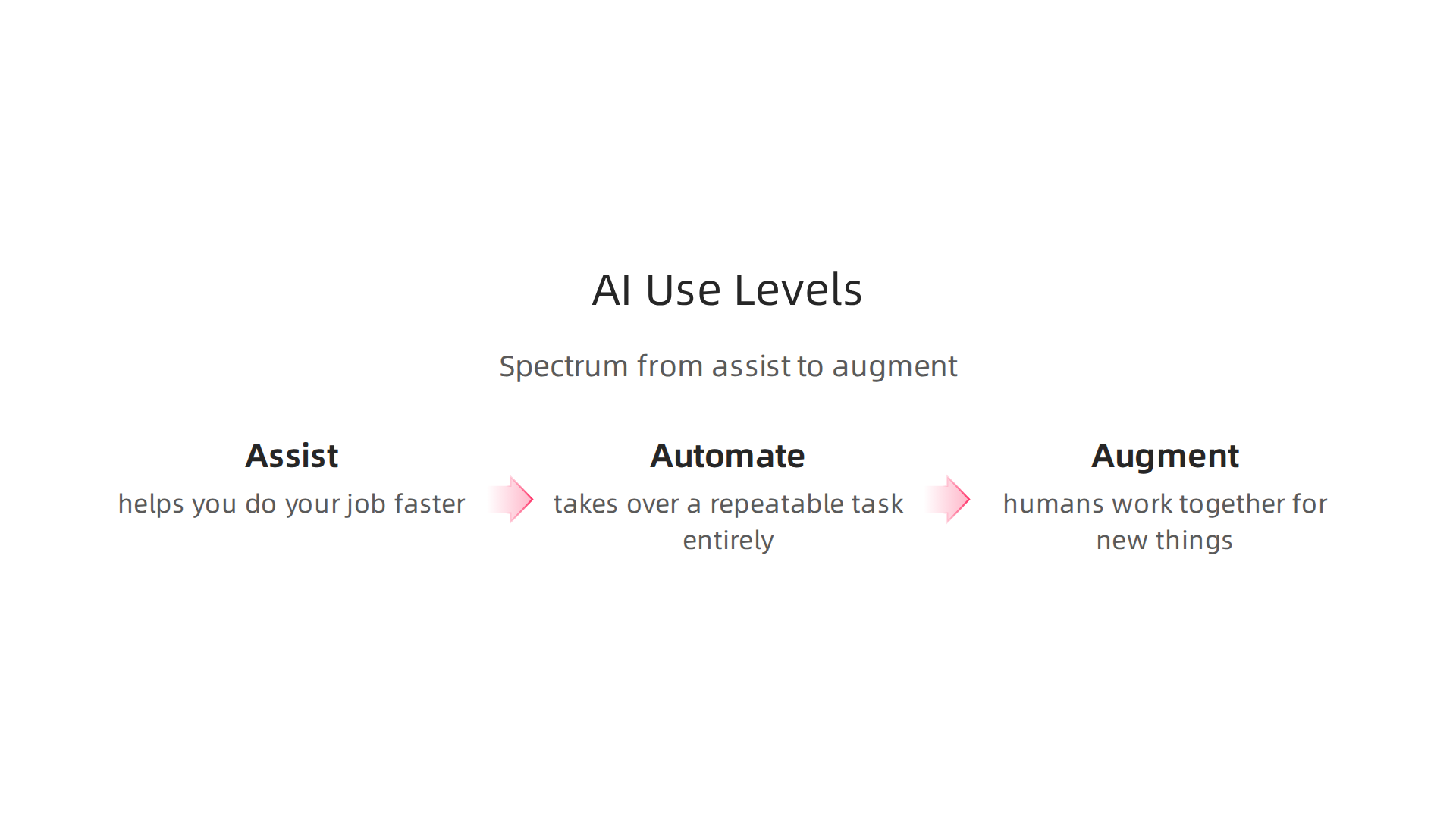
Level one is assist. AI helps you do your job faster. A customer support agent gets suggested replies. A writer gets grammar fixes. The human stays in control. AI just speeds things up.
Level two is automate. AI takes over a repeatable task entirely. Think of automatic invoice processing or chatbots that handle basic customer questions without human help. The goal here is to free up people for higher value work.
Level three is augment. AI and humans work together to do things neither could do alone. A doctor uses AI to spot patterns in medical scans that the human eye might miss. A marketer uses AI to analyze customer sentiment across thousands of reviews. This is where real transformation happens.
The key is that none of these levels starts with technology. They all start with a clear business problem.
You do not start by asking, "Which AI platform should I buy?" You start by asking, "What is the specific, frustrating, repeatable problem in my business that needs solving?"
Many companies skip this step and jump straight to tools like genie ai or vast ai. They buy an AI platform and then look for a problem to use it on. That approach rarely works. In fact, most AI initiatives fail because of predictable barriers like unclear strategy and organizational resistance, not because the technology itself is bad.
The smartest approach is to pick one small, high impact problem first. Map it against the three levels. Decide if you need AI to assist, automate, or augment. Then choose the simplest tool that fits.
If you want to learn more about turning data into a real business advantage, check out this guide on turning data overload into strategic insight. And if you want daily clarity on which AI trends actually matter for your business, subscribe to The AI Newsletter Worth Reading for clear, actionable updates.
The State of AI Adoption in 2026
You hear the phrase "use AI" constantly in 2026. But how many companies are actually doing it? The numbers might surprise you. They are not just high. They are historic.
Eight out of ten organizations now use AI in at least one business function.
According to recent data, 88% of companies report using AI somewhere in their operations. That is up from 78% just a year ago. The technology has moved from experimental to expected in record time.
But adoption is not spread evenly. Some industries are sprinting while others are still walking.
Technology and financial services lead the pack with rates between 78% and 88%. These sectors use AI for everything from fraud detection to code generation. Manufacturing has jumped fast, going from 70% to 77% adoption in just 18 months. Healthcare sits around 62–68%, with diagnostics support and documentation leading the way. Retail and eCommerce hover at 53–60%, using AI for personalization and inventory management. Government and education trail behind due to slower buying cycles and strict rules.
Generative AI alone has exploded. More than 78% of organizations now use generative AI in at least one function, up from 55% the year before. The jump is huge.
Here is the catch. The gap between adoption and real results is wide. Most companies have not moved beyond small experiments. Only about one in three has scaled AI across the enterprise. Even fewer capture real value. Deloitte’s 2026 report shows that just 34% of enterprises are using AI to transform their business models. The rest use it lightly, with little change to how they operate.
Only 6% of companies qualify as true AI high performers. That means 94 out of 100 organizations are leaving money on the table. The barrier is not the technology. It is strategy, skills, and culture.
So adoption is high. But effective use is still rare. That is the real story of 2026.
If you want to stay clear on which AI trends actually move the needle, you need a source that cuts through the noise. Our guide to the world of AI in 2026 technologies trends and what comes next covers exactly that. And for daily updates you can actually act on, The AI Newsletter Worth Reading delivers clear, practical insights straight to your inbox.
Practical Application 1: AI for Content Creation and Marketing
So you want to use AI in your marketing. Great idea. But with hundreds of tools out there, where do you even begin?
The good news is that generative AI has made content creation faster and more accessible than ever. In 2026, you can draft blog posts, create images, and even produce video clips in minutes. The trick is knowing which tools fit your needs and how to keep quality high.
For written content, platforms like Jasper, Copy.ai, and Writesonic help marketing teams turn ideas into polished copy fast.
They can generate everything from social media captions to long-form articles. According to one detailed comparison of AI tools for content marketing, Jasper remains a top choice for teams that need on-brand, long-form writing. For SEO blogs, some tools now build entire posts from keyword research in one click.
Visual content has also changed. AI image generators like Midjourney and Adobe Firefly let you create custom graphics without a design team. Video tools like Runway and Captions make short-form video production much simpler. You can describe a scene and get a usable clip back in seconds.
AI also helps with SEO and personalization at scale. Many tools now include built-in keyword research, SERP analysis, and content scoring. They can tell you if your draft matches what people actually search for. Some platforms even personalize email content for thousands of subscribers based on their behavior. That kind of customization used to take a full team. Now a single marketer can manage it with the right AI stack.
But here is the catch. Without good quality control, AI content can feel flat or off-brand. To keep your voice consistent, you need to train your tools on your existing content and style guides. Many platforms let you set brand rules so every output matches your tone. Always review AI drafts before publishing, especially for facts and nuance. Use editing tools like Grammarly to catch errors and maintain clarity.
If you want to go deeper on AI visuals, our guide to AI image generation market trends and business applications covers what is working right now.
The tools are ready. The skill is in using them wisely.
Practical Application 2: AI for Data Analysis and Decision-Making
Content creation is a great start, but here is where things get really powerful. You can also use AI to understand your business data and make better decisions.
Most companies sit on mountains of data: sales numbers, website traffic, customer feedback, inventory levels. Finding insights in all that information used to require a data analyst who knew SQL and complex spreadsheets. In 2026, anyone on your team can ask a question in plain English and get an instant answer.
AI-powered analytics tools have changed the game. Platforms like HubSpot AI and Salesforce Einstein now include built-in predictive modeling and trend spotting.
According to the guide to the best AI marketing tools for 2026, these tools help teams forecast sales, spot buying signals, and personalize customer journeys automatically. You do not need to guess what comes next. The AI looks at your past data and tells you.
Predictive modeling is one of the most valuable ways to use AI here. Imagine knowing which customers are likely to cancel their subscription next month. Or which product will be your top seller in the next quarter. AI finds those patterns much faster than humans can. It runs thousands of calculations and surfaces the ones that matter.
Anomaly detection is another practical use. AI watches your data constantly. If something unusual happens, like a sudden traffic drop or a spike in support tickets, it sends an alert. This helps you fix problems before they become big issues.
The best part is natural language interfaces. You type or speak a question like "Show me our best selling product last month by region" and the AI builds the chart or table instantly. No training required. This opens up data access to everyone in your organization, not just the tech team.
If you want to go deeper on using data wisely, check out this guide on turning data overload into strategic insight in 2026.
AI for data analysis is no longer a nice-to-have. It is a practical tool that helps you make faster, smarter decisions every day.

Staying current on these changes is easier with the right daily source. The AI Newsletter Worth Reading delivers clear daily updates straight to your inbox so you never miss the next big shift.
Practical Application 3: AI for Customer Service and Engagement
Let us move from analyzing data to connecting with people. Customer service is another area where AI completely changes the game. When you use AI in customer service, the goal is to make customers feel heard and helped quickly. And modern tools make that goal very achievable.
Handling Routine Queries with AI Chatbots
AI-powered chatbots now handle the bulk of routine questions. Think about order status checks, resetting passwords, or asking about business hours. These bots work 24/7 without breaks. They never put a customer on hold. According to the latest guide on AI chatbots in customer service, businesses are automating 80 to 90 percent of these interactions. This frees up your human team for tougher problems.
The key benefits of chatbots for customer service include instant responses and huge cost savings. Customers get answers in seconds instead of minutes. And your support budget goes much further.
Sentiment Analysis for Proactive Outreach
Here is something most people do not know. AI can also read the emotion behind the words. Sentiment analysis tools scan every message for cues. Is the customer writing in frustration? Are they confused? Or are they delighted?
When the AI spots a frustrated customer, it does not just send a standard reply. It can flag that conversation immediately. A human agent can then step in and solve the problem before it gets worse. This turns a potential complaint into a moment of loyalty.
Best Practice: Blend AI with Human Agents
The smartest way to use AI platforms is to let them support your people, not replace them.

Let the chatbot handle the easy stuff. When a query gets too complex or emotional, the AI passes it to a human.
The handoff needs to be seamless. The human agent should have the full chat history so the customer never has to repeat themselves. Research on AI customer service statistics shows this hybrid model actually improves satisfaction scores. You get the best of both worlds: speed and empathy.
IBM’s research on the benefits of chatbots highlights another advantage. This partnership makes human agents happier. They focus on complex, rewarding problems instead of repetitive questions. That leads to less burnout and better outcomes for everyone.
For a deeper look at how top tools make this possible, check out this piece on how AI platforms are empowering B2B leaders.
Practical Application 4: AI for Operations and Workflow Automation
Customer service is just one piece of the puzzle. Behind every great customer experience is a smooth operation running in the background. That is where AI really earns its keep. When you use AI for operations and workflow automation, you transform how your entire business runs.
Smarter Supply Chains and Inventory Management
Picture a warehouse that knows exactly what it needs before you even place an order. That is the power of AI in supply chain management. AI systems look at historical sales data, weather patterns, shipping delays, and even social media trends. They predict demand with surprising accuracy.
This means fewer stockouts and less wasted inventory. Companies using AI for demand forecasting typically reduce inventory costs by 20 to 50 percent. The system also spots bottlenecks in the supply chain before they become problems. If a port closure is coming, your AI reroutes shipments automatically.
Process Mining: Seeing Hidden Inefficiencies
Most businesses have no idea where their time actually goes. Process mining tools use AI to analyze every step in your workflows. They look at your real data, not what you think happens. The results are often eye-opening.
These tools find duplicate steps, unnecessary approvals, and tasks that take way longer than they should. One manufacturer discovered that a simple purchase approval required 14 manual handoffs. The fix saved them three days per order cycle.
Hyperautomation: RPA Meets AI
Robotic process automation (RPA) has been around for a while. It handles repetitive tasks very well. But traditional RPA is rigid. When a process changes, the bot breaks.
Now combine RPA with AI. That is hyperautomation. The AI layer adds intelligence. It can read emails, understand invoices, make decisions, and adapt when workflows shift. The bot does not just click buttons. It understands what it is doing.
A logistics company used hyperautomation to handle their entire shipping workflow. The system reads incoming orders, checks inventory, generates shipping labels, updates tracking, and sends customer notifications. All without human touch. They cut processing time by 85 percent and reduced errors by 90 percent.
Real Efficiency Gains
The numbers speak for themselves. Companies that use AI for operations see measurable results:
- 30 to 40 percent reduction in operational costs
- 50 to 80 percent faster process completion times
- Near-zero error rates on repetitive tasks
The best part? Your team gets to focus on work that actually matters. They stop fighting fires and start improving the business.
To stay current with how ai platforms are reshaping every part of business operations, consider subscribing to The AI Newsletter Worth Reading. It delivers clear daily updates so you never miss the next big shift.
For a broader look at where things are heading, explore this guide to the world of AI in 2026.
Overcoming Barriers to AI Implementation
You have seen how AI can reshape your operations. But the path from knowing what is possible to actually making it happen is full of obstacles. Most businesses face the same predictable challenges when they try to use AI at scale.
Here is what they are and how to get past them.
The Three Biggest Hurdles
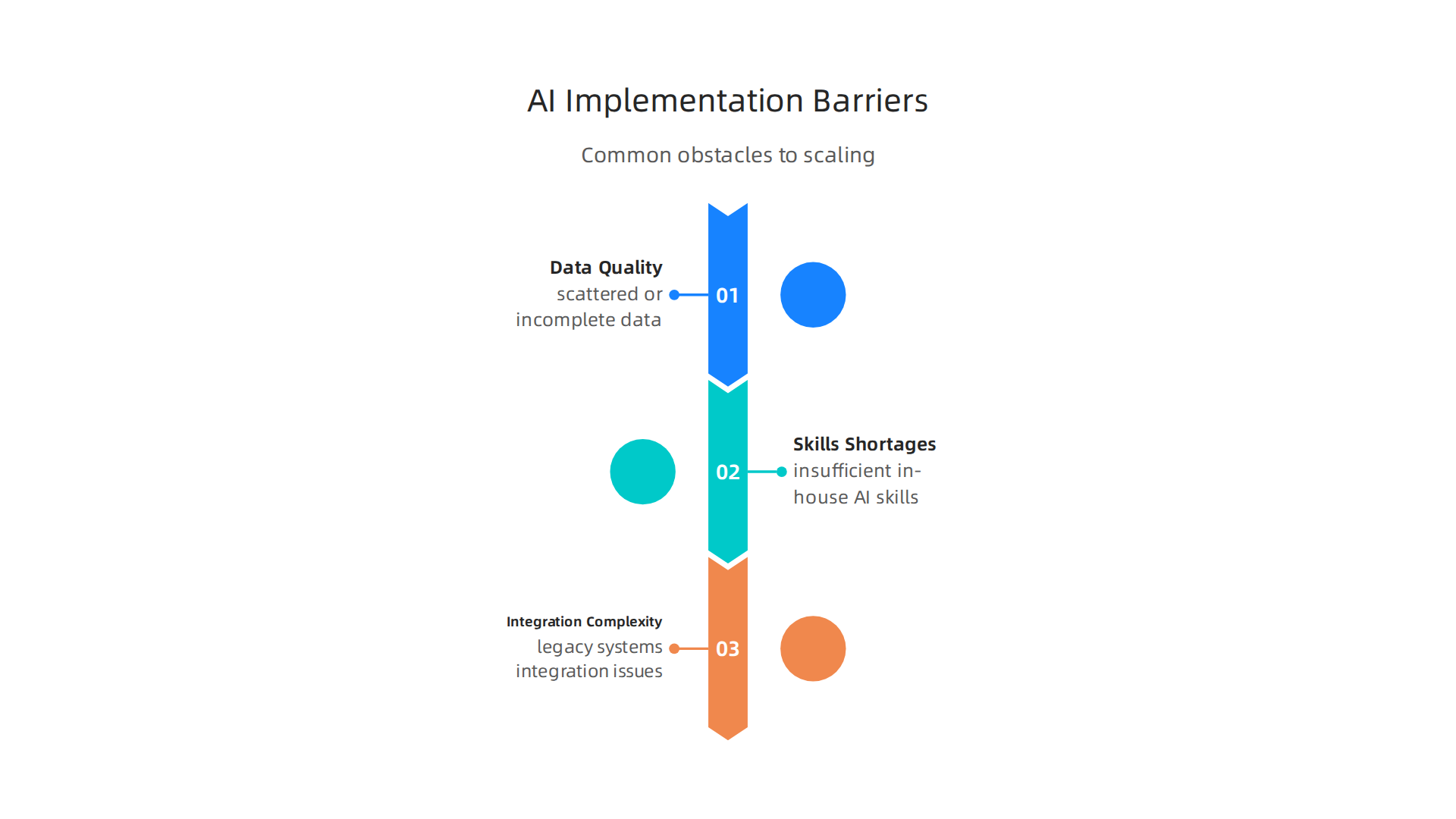
Data quality is enemy number one. AI models are only as good as the data you feed them. When your data is scattered across different systems, full of errors, or just incomplete, your results will not be trustworthy. According to a detailed guide on how to overcome AI implementation challenges in 2026, nearly half of business leaders say data and infrastructure problems are their top concern when deploying AI systems.
Skills shortages come next. Finding people who know how to work with vast ai tools and modern ai platforms is genuinely hard. The same source shows that 42 percent of organizations lack enough in-house generative AI expertise.
Integration complexity is the third major barrier. Your legacy systems were built long before AI existed. Making them talk to each other takes careful planning.
Smart Strategies That Work
Start small. Pick one high value use case with a clear return on investment. Run a pilot. Measure the results. Prove the value before you scale.
Fix your data strategically. You do not need perfect data across the whole company. Focus on the data sets that support your AI roadmap first.
Invest in change management. Your team needs to understand why AI matters and how it helps them. Executive sponsorship is critical here. When leaders model adoption, the rest of the organization follows.
The barriers are real, but they are solvable. Companies that take a measured approach find the payoff is enormous.
For more on how businesses are putting these strategies into action, explore this look at how artificial intelligence with images is transforming business.
The Ethics of AI Use in 2026
As you start to use AI more in your business, a big question comes up: are you doing it the right way? Ethics in AI is no longer a nice to have. It is a must have. In 2026, governments, customers, and employees all expect you to be fair, transparent, and accountable when you deploy AI systems.
New Regulations Are Here
The biggest change this year is the EU AI Act. It came fully into force in 2026 and sets the first comprehensive rules for AI. Systems are grouped by risk level. High risk ones in areas like hiring, credit, and public services must pass strict checks. Other countries have their own rules, but the patchwork can be confusing. According to a resource on AI ethical concerns in 2026, the main worries include bias, lack of transparency, and accountability gaps. If you ignore these, you risk legal trouble and lost trust.
Bias and Transparency Are Real Problems
AI models can pick up old biases from training data. That can lead to unfair decisions in hiring or lending. The “black box” problem makes it hard to explain why a model said what it did. In 2026, regulators want more explainability, especially for high risk uses. You need to know what your AI is doing and why.
Build an Ethical Governance Framework
The best way to stay safe is to set up clear rules before you roll out AI. Start with these steps:
- Create a code of conduct for use AI that includes fairness, privacy, and human oversight.
- Run impact assessments on every new tool or model.
- Make sure a human is always accountable for big decisions that AI helps with.
This is not just about compliance. It builds trust with your customers and team.
Stay Informed as AI Changes Fast
The rules and tools are shifting all the time. Keeping up with daily updates can feel like a full time job. That is where a trusted source can help. For clear daily AI updates, check out The AI Newsletter Worth Reading from The Deep View. It delivers the most important news straight to your inbox so you never miss a thing.
For a broader look at where AI is heading, explore this overview of 2026 AI trends and developments. Ethics is the foundation, but you also need to know what is coming next.
Future Trends in AI Adoption
So now you know how to use AI ethically. But what comes next? The way businesses use AI is changing fast. In 2026, three big shifts are reshaping the landscape: multi-modal AI, edge AI, and agentic workflows.
These trends will decide which companies lead and which fall behind.
Multi-modal AI means models that handle text, images, audio, and video all at once. Instead of feeding a chatbot only words, you can upload a photo, ask a question about it, and get a spoken answer.
This makes AI platforms much more useful across departments. A product designer can show a sketch and get instant feedback. A support team can analyze call recordings and screenshots together.
Edge AI runs models directly on devices like phones or factory sensors instead of sending data to the cloud. This cuts delays, protects privacy, and works offline. In 2026, more manufacturers are moving AI to the edge for real-time decisions. It helps teams use AI in places where internet is slow or security matters most.
Agentic workflows take automation a step further. Instead of just answering questions, AI agents complete tasks on their own. They book meetings, update databases, and trigger supply chain orders. You tell them what to do, and they handle the steps. But this also raises the need for human oversight, which we covered in the ethics section.
Open-source models are another game changer. In 2026, open-source AI is more powerful and cheaper than ever. Small and medium businesses can now build custom tools without huge budgets. They avoid vendor lock-in and can audit the code for safety. This is driving enterprise adoption faster than expected.
With all this growth, AI explainability and trust become even more critical. Regulators and customers want to know how decisions are made. You need to understand your model’s logic before you use AI in high-stakes areas like hiring or finance. As noted in the AI ethics trends for 2026, transparency is now a business requirement, not just a tech goal.
To keep up with all these shifts, you need a clear picture of where the industry is heading. Check out this comprehensive guide to 2026 AI trends for a deeper look at multi-modal systems, edge computing, and the future of intelligent agents.
Summary
This guide explains how to move from experimenting with AI to using it to drive measurable business results. It defines what