
Why CDC artificial intelligence guidance matters for organizations
In 2026, artificial intelligence (AI) is changing everything, especially in public health. Many organizations are quickly adopting AI tools to help them work better and faster.

But with this speed comes challenges. It can be tough to figure out how to use AI wisely, manage it safely, and make sure it does what it’s supposed to do. This is why clear rules and advice are so important.
The Centers for Disease Control and Prevention (CDC) understands this. They are actively using AI to improve public health and protect people from health threats. The CDC’s Vision for AI in Public Health shows how they want to use modern AI to find diseases faster, make tasks easier for staff, and improve how they work every day. Their work with cdc artificial intelligence is part of a bigger plan from the U.S. Department of Health and Human Services to use AI smartly.
For any organization, whether in health or another field, learning from these guidelines is key. When you bring in new AI tools, you need to think about more than just the technology itself. You must also consider how to put it into practice, how to oversee it, and how to know if it’s truly helping. Understanding more about artificial intelligence, its many uses, and how it works can provide a solid foundation for these steps. For a helpful starting point, explore Artificial Intelligence Explained: A Clear Guide for Thinking Humans.
This article will help you understand the important guidance from the CDC about AI. We will show you practical steps your organization can take for:
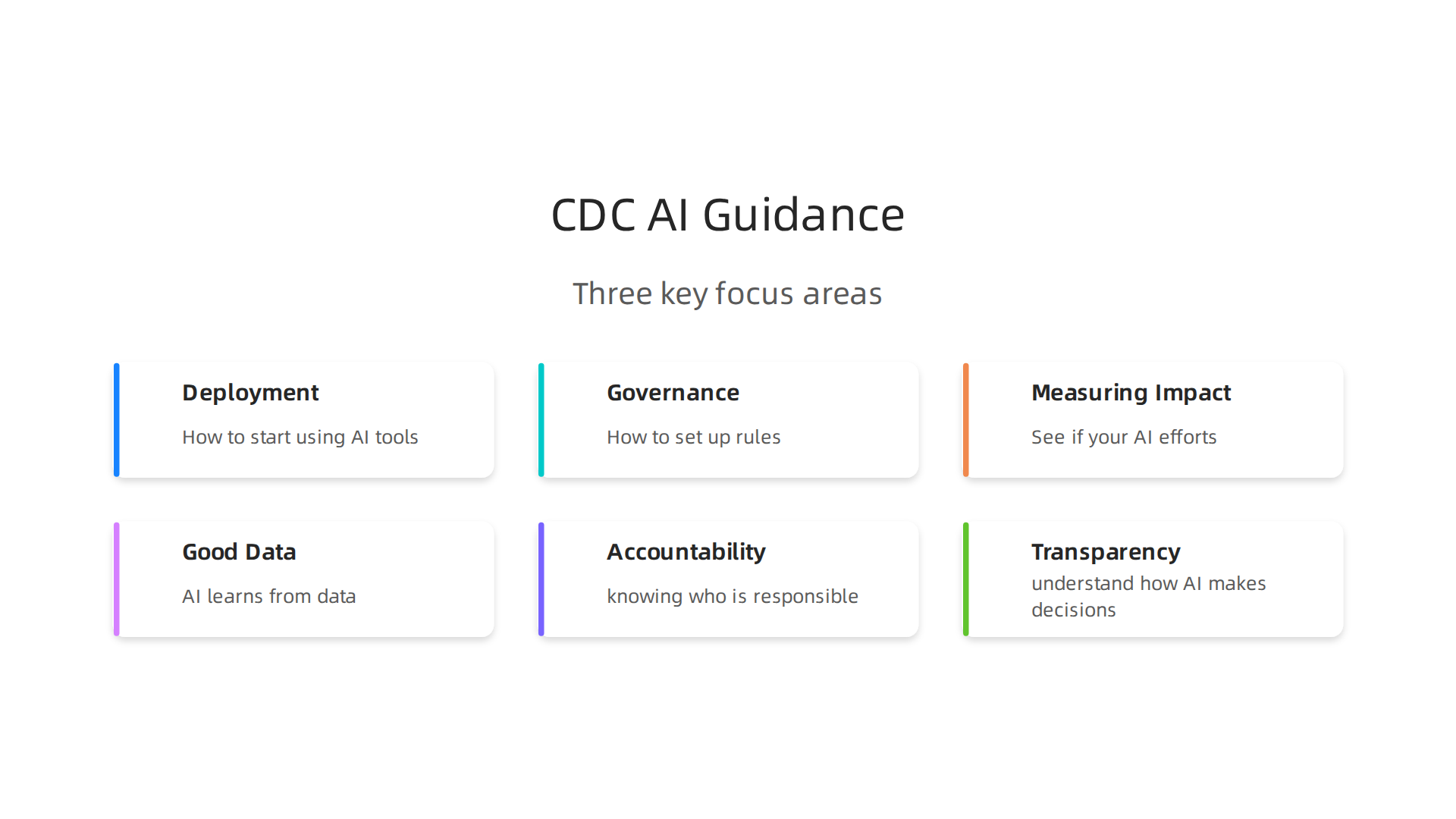
- Deployment: How to start using AI tools in a smart way.
- Governance: How to set up rules and checks to make sure AI is used safely and ethically. This is where topics like AI ethics become very important.
- Measuring Impact: How to see if your AI efforts are really making a difference.
By looking at these areas, you can make sure your organization uses AI in a way that is responsible, effective, and truly benefits everyone.
The AI Newsletter Worth Reading
Stay ahead with daily, in-depth insights into AI and broader technology developments. Get clear daily AI updates from The Deep View Newsletter.
How the CDC (and related agencies) define and frame ‘artificial intelligence’ for public health
To properly use artificial intelligence (AI) in public health, it is very important to agree on what AI actually means. Different agencies, including the Centers for Disease Control and Prevention (CDC), have thought a lot about how to define AI and terms like Machine Learning (ML). These definitions help everyone understand what they are working with and how to set good rules.

Simply put, AI refers to a computer or a computer-controlled machine’s ability to do tasks that we usually think of as needing human intelligence. This can be anything from solving problems to learning from information. The CDC, like other government groups, sees AI as a key tool to make things better. For example, they use AI and ML to improve public health data and technology systems, as noted in their efforts to modernize surveillance data Artificial Intelligence and Machine Learning | Technologies | CDC. One straightforward definition from the CDC itself explains AI as the "ability of a computer or computer-controlled robot to perform tasks commonly associated with intelligent beings" PowerPoint template.
Why do these definitions matter so much? Well, clear definitions are the foundation for everything that comes next.
- For Rules and Laws: When an agency like the CDC uses cdc artificial intelligence, there need to be clear rules about how it’s used. These rules help make sure AI is safe, fair, and trustworthy. Without a clear definition, it would be hard to make laws or policies that truly cover all AI tools.
- For Buying Tools: Imagine trying to buy a new AI tool if you weren’t sure what "AI" really meant. Clear definitions help organizations like the CDC decide which tools they need and ensure they are buying the right technology. The government also puts out guidance, like the official document titled Driving Efficient Acquisition of Artificial Intelligence in Government, to help agencies buy AI tools smartly.
- For Data and Fairness: When we talk about AI in public health, we also talk about "AI ethics." This means making sure AI tools are fair to everyone, don’t have hidden biases, and protect people’s private information. Clear definitions help agencies check that the data used by AI is handled correctly and that the AI’s results are fair and not misleading. This also ties into the bigger goals of responsible AI use and public trust, as outlined in government documents such as M-25-21 Accelerating Federal Use of AI through Innovation Governance and Public Trust.
These definitions also help different agencies work together. When everyone understands what AI means, it makes it easier to share information, build common tools, and collaborate on big public health challenges. Knowing the different kinds of AI can also be helpful for making smart choices. You can learn more about this by checking out the Types of artificial intelligence explained.
Understanding how the cdc artificial intelligence landscape is defined is a crucial first step for any organization looking to responsibly harness the power of AI.
The AI Newsletter Worth Reading
Stay ahead with daily, in-depth insights into AI and broader technology developments. Get clear daily AI updates from The Deep View Newsletter.
Operational applications: surveillance, diagnostics, resource allocation
Now that we understand what artificial intelligence (AI) is and why clear definitions matter, let’s look at how these smart tools are actually used in public health. The cdc artificial intelligence efforts, along with those of other health organizations, focus on making real improvements in everyday health operations. We’re talking about things like watching for diseases, helping doctors find problems, and making sure resources go where they are needed most.
How AI Helps with Surveillance
One big way AI is helping is through "surveillance." This means keeping a close eye on health data to spot problems early. Imagine AI as a super-smart watchman for public health. It can quickly look through huge amounts of information, like reports from hospitals or even social media posts, to find signs of an outbreak sooner than humans could.
For example, AI can help in several ways:
- Early warning systems: AI can find unusual patterns that might mean a new disease is starting to spread Artificial Intelligence-Enabled Early Warning Systems for National …. This helps health officials act fast.
- Tracking disease spread: It can map how a disease is moving and predict where it might go next, making it easier to plan responses.
- Checking interventions: AI helps see if health programs, like a new vaccine drive, are working as planned Integrating Artificial Intelligence in Disease Surveillance and ….
AI makes disease surveillance much faster and more accurate, helping leaders make better choices during health crises Harnessing artificial intelligence for enhanced public health surveillance: a narrative review – PubMed.
AI in Diagnostics and Triage
AI is also becoming a helpful assistant to doctors and nurses.
- Better diagnosis: AI can look at medical images, like X-rays, to find tiny problems that a human eye might miss. This can lead to earlier diagnosis of serious conditions. Some AI models have shown high accuracy in finding diseases like chronic kidney disease and diabetes Empowering public health: Leveraging AI for early detection … – PMC.
- Smart triage: Triage is about deciding which patients need help most urgently. AI tools can help sort patients based on their symptoms, making sure those who are very sick get attention quickly. This can be super useful in busy emergency rooms or during a big health event.
- Real-time monitoring: For people with ongoing health issues, AI can help monitor their health at home and alert doctors if something changes, allowing for quicker care.
Helping to Allocate Resources
Another key use for AI is in managing resources. Public health agencies often have limited staff, medicines, or equipment. AI can help them use what they have wisely.
- Predicting needs: AI can predict where a disease might hit hardest or where there will be a greater need for hospital beds or medicine. This helps officials send resources to the right places at the right time. The World Health Organization (WHO) has noted how AI can help with risk modeling and efficient vaccine logistics Artificial Intelligence in public health: A case study.
- Optimizing staffing: It can help schedule health workers more effectively, making sure there are enough people where they’re needed.
- Emergency response: During emergencies, AI can quickly analyze situations to guide decisions on how to deploy help, saving precious time.
Challenges and What AI Needs to Work Well
While AI offers many good things, it also has its challenges. For cdc artificial intelligence systems to work well, some important things must be in place.
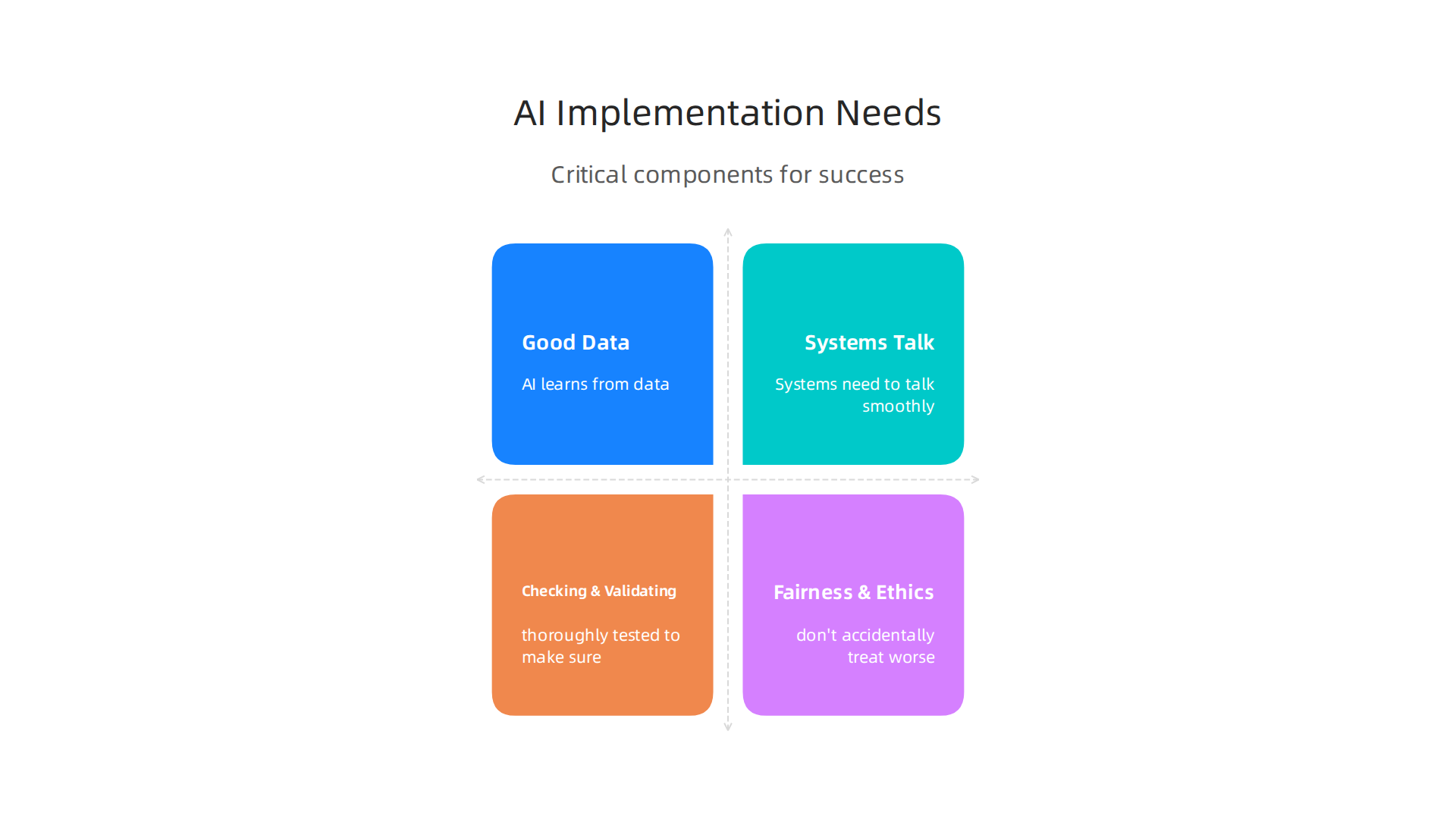
- Good Data is Key: AI learns from data. If the data is bad, incomplete, or unfair, the AI will make mistakes or biased decisions. Think of it like cooking: you can’t make a good meal with bad ingredients. Data quality is super important for AI in public health public-health-ai-handbook.pdf. It must be complete, correct, and current.
- Systems Must Talk to Each Other: Different health systems often use different computer programs that don’t easily share information. For AI to work best, these systems need to be able to talk to each other smoothly, which we call "interoperability."
- Checking and Validating AI: Before an AI tool is used widely, it must be thoroughly tested to make sure it works correctly and fairly for everyone. This is called "validation." After it’s being used, it also needs to be watched closely to ensure it keeps performing well and doesn’t develop new issues over time Artificial Intelligence for Public Health Surveillance: Promises, Pitfalls, and …. Regular checks are a must.
- Fairness and Ethics: Just like we talked about before, it’s vital to make sure AI tools are fair and don’t accidentally treat some groups of people worse than others. This involves careful checking for biases in the data or the AI’s learning process. This focus on AI ethics is a big part of making sure these powerful tools help everyone.
Working through these challenges helps ensure that cdc artificial intelligence tools are not just smart, but also safe and helpful for all. Learning how AI works and its many uses helps us understand its potential, but also how important it is to use it wisely. If you’re interested in how AI is changing other industries, you might also want to read about how artificial intelligence with images is transforming business in 2026.
Using AI tools wisely is very important. After all, these smart systems impact public health for everyone. That’s why we need clear rules and ways to manage them, which we call "governance." This helps make sure AI works safely, fairly, and correctly, especially when public organizations like the CDC use it.
Governance, ethics, and risk management for AI in public organizations
Good governance means having a clear plan for how AI is used, checked, and managed. It makes sure that powerful tools like cdc artificial intelligence help people without causing new problems. It’s all about trust and making sure AI serves the public good.
Here are the main parts of good AI governance:
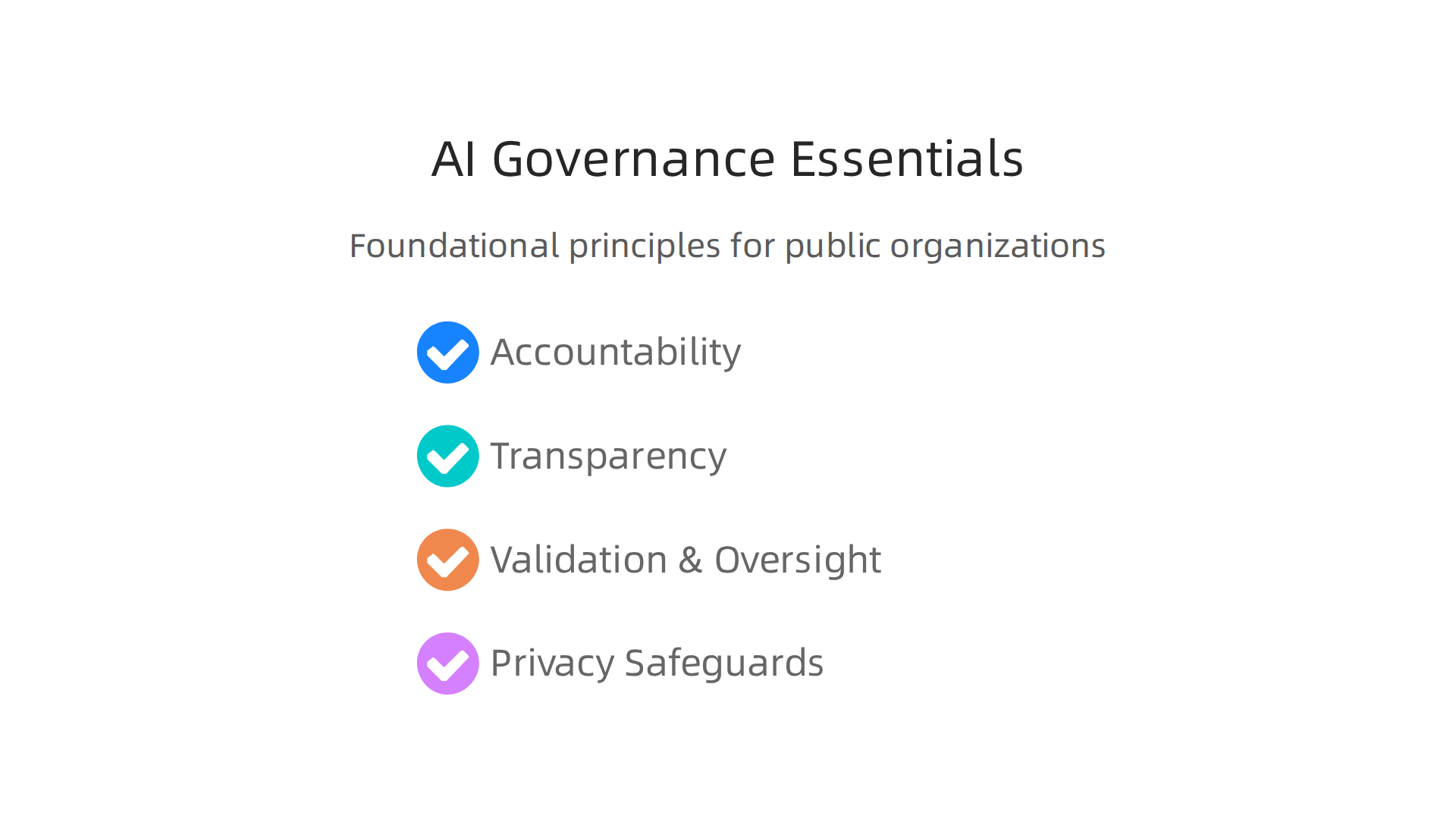
- Accountability: This means knowing who is responsible if an AI system makes a mistake or has a problem. Public organizations need clear roles and responsibilities so that someone is always in charge of how AI systems work AI Governance in the Public Sector. It’s like having a captain for a ship.
- Transparency: People should be able to understand how an AI system makes its decisions, at least in a general way. This doesn’t mean sharing secret code, but explaining the logic. Being open about how AI works helps build trust. The US government also has guidance for using AI, stressing transparency and public trust M-25-21 Accelerating Federal Use of AI through Innovation Governance and Public Trust.
- Validation and Oversight: We talked about checking AI tools before. Governance means this testing and checking never stops. AI systems need to be watched closely, even after they start being used, to ensure they keep working well and don’t become unfair over time. This includes making sure AI follows its goals ARTIFICIAL INTELLIGENCE: An Accountability Framework for Federal Agencies and Other Entities.
- Privacy Safeguards: AI often uses lots of data, including personal health information. Governance makes sure this data is protected. Strong rules are needed to keep people’s private information safe and only use it in ways that are allowed and ethical.
Having a strong approach to AI ethics helps make sure that these tools benefit everyone. For more on combining smart technology with human skill, check out our guide on Mastering AI and Human Capabilities.
CDC Guidance and Following the Rules
The CDC’s work with artificial intelligence doesn’t happen in a vacuum. It follows guidance from larger groups like the U.S. Department of Health and Human Services (HHS) and even the White House. For example, the White House has put out rules about the safe and trustworthy development of AI for all federal agencies to follow Safe, Secure, and Trustworthy Development and Use of Artificial Intelligence. These rules help make sure that cdc artificial intelligence systems are built and used in ways that are fair, secure, and helpful for people.
The CDC also has its own vision and strategy for using AI to improve public health, which aligns with these larger government policies CDC’s Vision for AI in Public Health. This means:
- Following the law: All AI tools must meet legal standards, especially concerning privacy and fairness.
- Ethical use: Beyond just legal, AI should be used in ways that are morally right and benefit all parts of society equally. This is a big part of AI ethics.
- Managing risks: Public organizations must look at possible problems or harms that AI could cause and plan how to prevent them. This is often called risk management.
- Public trust: All efforts are made to keep the public’s trust in how these powerful tools are used for their health.
This focus on good governance and careful risk management is what helps cdc artificial intelligence tools be effective and trusted. It’s a continuous effort, making sure AI serves people in the best way possible.
If you want to keep up with the latest in AI, get clear daily updates from The AI Newsletter Worth Reading.
Bringing AI tools into public organizations like the CDC is not just about having good rules. It’s also about the hands-on work of making sure these tools fit smoothly into daily tasks. This means carefully choosing the right AI, helping people learn how to use it, and ensuring everyone is ready for the changes it brings. This process is called integration.
Getting the Right AI Tools: Procurement and Vendor Checks
When the CDC or any public group wants to use new cdc artificial intelligence tools, they must first buy them. This buying process is called procurement. It’s like shopping for a very important tool for a big job. In 2026, buying AI needs careful thought. It’s not just about the price, but about how well the AI works, how safe it is, and if it fits with the group’s goals.
Here’s how they make smart choices:
- Understanding Needs: First, they figure out exactly what problem the AI needs to solve or what task it should do better. For example, does it need to help track diseases faster or make health data easier to understand?
- Checking Vendors: Next, they look at different companies that sell AI tools. They need to find vendors that are trustworthy and have tools that truly help. A good start is often to try a small AI project first to gain experience, as suggested in The 2026 AI Procurement Playbook for Technology Sourcing Leaders.
- Evaluation Criteria: When checking out AI tools, public organizations look at many things. They use a checklist to see if the AI:
- Is safe and protects private information.
- Works accurately and without unfairness.
- Can connect easily with their existing computer systems.
- Can grow as their needs change.
- Is easy to understand for the people who will use it.
- Follows all the rules about ai ethics.
This helps them compare different options. One helpful resource is an AI Vendor Evaluation Checklist & Comparison Criteria, which focuses on things like data handling, security, and responsible AI behavior.
Making Changes Easy: Change Management and Training
Bringing new AI tools into a big organization can be tricky. People are used to doing things a certain way, so introducing new tech means guiding them through a change. This is called change management. It’s about helping staff feel comfortable and skilled with the new tools.
Here are key steps for smooth change:
- Talk About It: Leaders need to explain why the new AI is being used and how it will help everyone. When people understand the "why," they are more likely to accept the change.
- Training and Learning: Staff need proper training on how to use the new cdc artificial intelligence tools. This might include workshops or simple guides. These efforts help build up their capacity to work with AI. Many guides suggest using workshops, prompt libraries, and leadership modeling to drive AI adoption, according to Resources — Guides, Articles & Research.
- Building Skills (Capacity Building): Beyond basic training, organizations focus on helping staff get better at using AI over time. This might mean offering ongoing learning opportunities. For example, some guides help leaders assess team skills and plan for upskilling existing staff for the AI era, as detailed in The CPO’s Guide to AI Procurement 2026. This helps ensure that the people who work at the CDC can truly master their workflow with AI powered productivity tools. For a broader understanding of how these systems work, you can read our guide on artificial intelligence explained.
- Support Systems: Having help available for questions or problems is very important. This way, if someone gets stuck, they can quickly find a solution.
By taking these steps, public organizations make sure that AI tools are not just bought, but actually used well. This careful planning means cdc artificial intelligence can truly help improve public health in 2026 and beyond.
After bringing new cdc artificial intelligence tools into play and helping everyone learn how to use them, the next big question is: are they actually working? To answer this, organizations need to measure the results of their AI projects.

This means looking at how much good the AI does and if it’s worth the money spent. It’s often called measuring impact and ROI, which stands for Return on Investment.
What to Measure: Setting Clear Goals
Before an AI project even starts, leaders decide what success looks like. They set clear goals that can be measured. These are often called Key Performance Indicators or KPIs. For example, if the CDC uses AI to track diseases, a KPI might be:
- Faster Answers: How much quicker can the AI spot a new health problem compared to old methods?
- Better Health: Is the AI helping more people get well or preventing more illnesses?
- Saving Money: Is the AI making tasks cheaper to do, or saving healthcare costs in the long run?
- More Efficient Work: Is the AI helping staff finish tasks faster or with less effort?
These goals help public organizations like the CDC see if their investment in cdc artificial intelligence is paying off. For example, AI can improve how quickly diseases are tracked, how widely they spread, and how well plans to stop them work.
How to Measure: Collecting Data and Checking Results
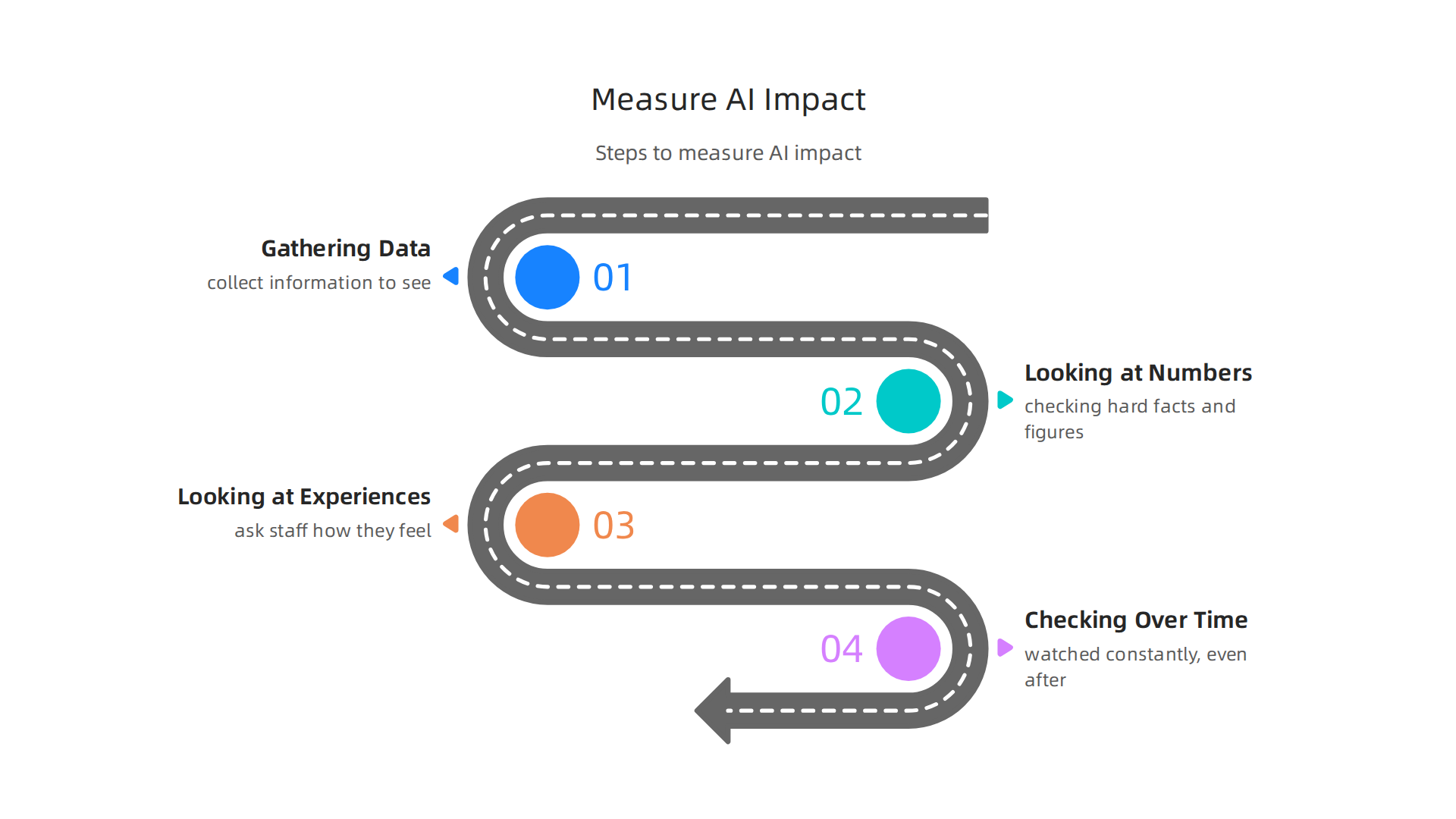
Measuring how well AI works involves a few important steps.
-
Gathering Data: Before using AI, you need to collect information to see how things are working without the AI. This is called setting a "baseline." Then, while the AI is in use, you keep collecting new data. This helps you compare the "before" and "after." Collecting and organizing data is a key first step in using artificial intelligence in public health to improve outcomes for everyone, as explained in a guide on Artificial Intelligence in Public health.
-
Looking at Numbers (Quantitative Analysis): This involves checking hard facts and figures. For instance, counting how many cases of a disease were correctly found by the AI, or how much time was saved on a task. AI can make disease surveillance more efficient and accurate by helping with data collection and predicting outbreaks faster.
-
Looking at Experiences (Qualitative Analysis): Sometimes, numbers don’t tell the whole story. You might ask staff how they feel about using the AI. Is it easy? Does it make their job better? This helps understand the human side of the impact.
-
Checking Over Time (Monitoring and Validation): It’s not enough to check AI just once. AI tools need to be watched constantly, even after they’ve been deployed. Things like how well they perform, if they remain fair, and if their understanding of data changes over time must be checked regularly. This helps make sure the AI keeps working right and doesn’t start making mistakes or showing unfairness. It’s crucial to conduct post-deployment monitoring and pre-deployment validation to ensure AI systems are reliable.
By carefully collecting and checking all this information, public organizations can truly understand the impact of their AI projects. This helps them improve current tools and make smart choices about future investments. If you’re looking for more ways to understand how AI can improve business outcomes, explore our guide on how to use AI to drive business growth with practical applications in 2026.
Keeping up with how AI is changing the world of public health and business can be a big job. For daily, clear updates on these kinds of developments and more, consider signing up for The AI Newsletter Worth Reading.
After learning about measuring AI impact, it helps to look at real-world examples. These show us what made projects with cdc artificial intelligence successful and what caused problems. By understanding these stories, leaders can make smarter choices when planning their own AI projects.
What Worked Well: Success Stories
Many groups have used AI in public health and learned valuable lessons. Here are some common things that led to success:
- Clear Start and Good Data: Projects that began with very clear goals and made sure their data was clean and correct often did best. For example, if the goal was to find a certain disease faster, the AI needed good data about that disease to learn from. Making sure data is good from the start is called having strong "data quality" and is key for any AI project, as noted in a handbook on public health AI.
- Constant Checking: Successful AI projects didn’t just set up the AI and forget it. They kept checking how it was doing over time. This helped them fix problems early and make sure the AI stayed fair and accurate. Tools like the Deployable AI Index help measure these factors.
- Listening to People: Getting feedback from the people actually using the AI, like doctors or health workers, made a big difference. When staff felt the AI helped them and was easy to use, they were more likely to use it well. A great example of large-scale success is when a major health service gave AI tools to over 500,000 staff, helping them save a lot of time each day, as reported in news about NHS Rolls Out AI to 505000 Staff, Saving 43 Minutes Daily.
What Went Wrong: Common Problems
Not every AI project is a smooth ride. Some common issues popped up:
- Bad Data In, Bad Data Out: If the data used to train the AI was wrong or missing information, the AI would give bad answers. This is a big problem, especially for
cdc artificial intelligencewhere accuracy is super important. - Unfairness (AI Ethics): Sometimes, AI tools were not built carefully enough and ended up being unfair to certain groups of people. For example, an AI might work better for one age group or background than another. This is a serious concern for
ai ethicsand needs to be prevented by design. Thinking about Assessing Fairness in AI-enabled Public Health Surveillance is very important. - Not Training Staff: If workers weren’t properly taught how to use the new AI tools, they might not use them at all, or use them incorrectly. This means the investment in AI didn’t pay off.
What Leaders Should Do
Based on these lessons, here are simple tips for leaders planning to use AI:
- Start with a Strong Plan: Know exactly what you want the AI to do and how you will measure if it’s working.
- Focus on Data Quality: Make sure the information you feed the AI is correct, complete, and fair. Bad data is often the biggest cause of AI failure.
- Think About Fairness: Always consider
ai ethicsfrom the very start. Work with experts to make sure your AI treats everyone equally. - Keep Watching and Learning: AI tools need to be checked regularly and improved over time.
- Train Your Team: Teach your staff how to use the AI tools well. Their input is priceless.
- Partner with the Right People: Look for help from groups like the
national science and technology councilor experts inartificial intelligence harvard business reviewwho understand how to make AI work in real life. Learning to combine technology with human knowledge is key to making the most of these new tools, as explored in articles about mastering AI and human capabilities.
Summary
This article explains why CDC guidance on artificial intelligence matters for any organization adopting AI, especially in public health. It defines how agencies like the CDC frame AI and machine learning, shows concrete operational uses—surveillance, diagnostics, and resource allocation—and highlights the infrastructure needed for those systems to work well. The piece also walks through governance: accountability, transparency, validation, privacy and ethical safeguards, and how federal guidance shapes CDC practice. Practical steps for procurement, vendor evaluation, and change management are covered so teams can buy the right tools and get staff up to speed. Finally, the article outlines how to measure impact with KPIs, collect baselines, and monitor systems over time, and it shares lessons from successes and failures to help leaders avoid common mistakes when deploying AI.