
Why AI Policy Matters Now: Stakes, Speed, and Societal Impact
Imagine a fast-moving train. Now imagine trying to make rules for that train while it’s going at top speed and changing directions all the time.

That’s a bit like what’s happening with artificial intelligence, or AI, in 2026. AI tools are getting smarter and more powerful very quickly. This means we need new rules and guides, called public policy and governance frameworks, to make sure AI helps everyone in a good way. The government, for example, is already looking at a National Policy Framework for AI to help manage this growth.
However, many businesses and even parts of the government find it tough to keep up. They struggle to understand what the new rules mean and how people feel about AI. Some people are excited, but others might feel like saying, "I hate artificial intelligence" because they worry about fairness or jobs. It’s a big challenge to make sure AI is used in a "responsible ai" way, respecting everyone and keeping things safe. In fact, government agencies are working on speeding up the responsible use of AI by creating new guidelines and risk management practices, as seen in the Accelerating Responsible Use of Artificial Intelligence at GSA document.
This article is here to help you make sense of it all. We will bring together the latest "ai policy" trends, ideas for how to use AI responsibly, and what the public thinks. Our goal is to give you clear information so you can make smart choices about AI. We want to show how we can build "human centered ai" that benefits society while keeping risks in check. If you want a basic understanding of what AI is, you can read our guide on Artificial Intelligence Explained.
Staying on top of these fast changes can be hard. If you want daily updates and deeper insights into AI and other tech trends, you can sign up for The AI Newsletter Worth Reading.
Global AI Policy Landscape: Key Regimes and Regulatory Models
The need for smart rules for AI isn’t just a local problem; it’s a worldwide one. Different countries are trying different ways to create their own "ai policy" to make sure AI helps people and businesses safely. This global push aims to shape how AI is used everywhere.
One common way to make rules is called a risk-based approach.
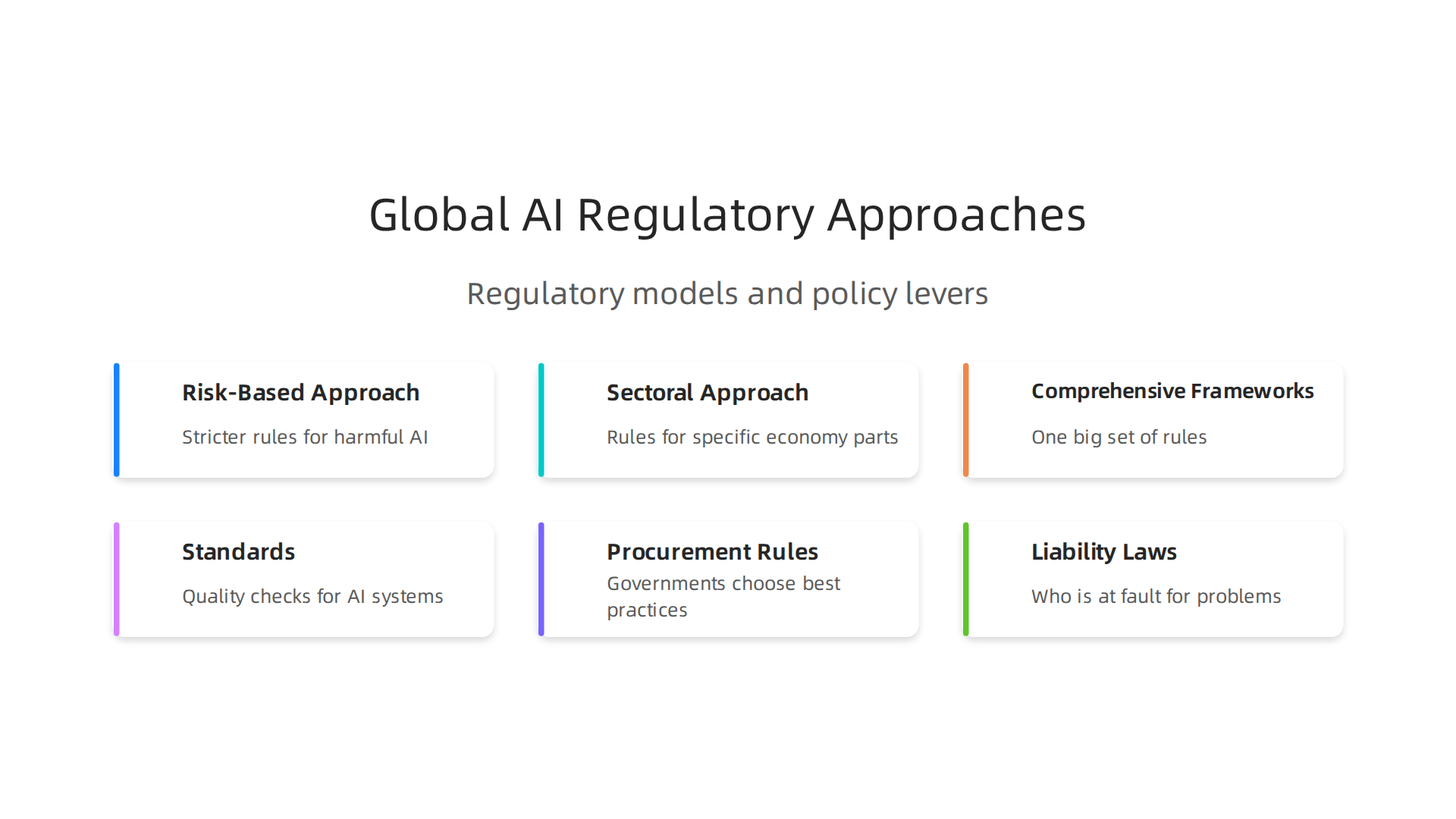
This means that the rules are stricter for AI systems that could cause more harm. For example, an AI used in a hospital for surgery would have much tougher rules than an AI that suggests movies you might like. The United States government, for instance, focuses on managing risks for "high-impact AI" to ensure its responsible use across federal agencies Accelerating Federal Use of AI through Innovation, Governance, and Public Trust. They also use frameworks like the Artificial Intelligence Risk Management Framework to guide how AI is developed and used.
Another approach is sectoral, where rules are made specifically for certain parts of the economy, like farming or healthcare. This allows rules to fit the unique needs and dangers of each area. For example, the Department of the Interior has its own AI Strategy to guide its use of AI tools. Some countries might also go for comprehensive frameworks, which try to cover all kinds of AI with one big set of rules. This can make things clearer but might not fit every situation perfectly.
Governments also use different tools, or "regulatory levers," to manage AI. These include:
- Standards and Certifications: These are like quality checks. Companies might need to show their AI meets certain agreed-upon standards before they can use it.
- Procurement Rules: This is how governments decide which AI tools to buy. They might choose tools that follow the best practices for "responsible ai."
- Liability Laws: These rules decide who is at fault if an AI system causes problems. If an AI makes a mistake that leads to harm, these laws help figure out who should take responsibility. For example, many experts agree that the organization deploying AI is responsible for what its AI agents do, as highlighted in the AI Liability Inflection: Enterprise Accountability in the Age of AI report. Building strong accountability is vital for creating trust in these systems Advancing accountability in AI.
For businesses that work in many countries, these different rules can be tricky. A company might have to follow one set of "ai policy" rules in Europe and another set in the United States.

This can make it hard to move data and AI services across borders. Businesses need to understand these different rules to make sure their "human centered ai" efforts are legal and ethical everywhere they operate. If you’re looking to understand more about how businesses can best use AI, explore how to gain a Mastery of AI and Human Capabilities for 2026 Business Advantage.
The challenge is to create rules that are strong enough to protect people but flexible enough for AI to keep growing and helping us. While some might feel like saying, "I hate artificial intelligence" due to worries about these complex rules, careful global coordination of AI policy is essential for building a future where AI benefits everyone.
When we talk about the big picture of global AI rules, one very important question always comes up: Who is to blame when AI doesn’t work right? This is all about accountability and responsibility. It means figuring out who has to answer for problems caused by artificial intelligence.
Figuring Out Who Is Responsible
As AI tools become more common, countries and businesses are setting up new rules for who is responsible if something goes wrong. This is called an "emerging liability framework." Many experts agree that the company or group that uses the AI is usually responsible for what it does. This is a key part of any good AI policy. For example, if an AI system in a self-driving car makes a mistake, the company that put the car on the road would likely be held responsible, not just the AI itself. This idea is also backed by reports that look at how AI liability works for companies today Does Artificial Intelligence Escape Accountability?.
The Need for Clear Records: Auditability and Transparency
To know who is responsible, we need to understand how an AI system makes its decisions. This is where auditability expectations and transparency mandates come in.
- Auditability means that we can look back at an AI’s actions and understand why it did what it did. It’s like having a clear trail of breadcrumbs for every decision.
- Transparency means that the AI’s workings are clear and easy to understand, at least to those who need to check them. This helps make sure the AI is fair and trustworthy.
Governing bodies, like the U.S. Government Accountability Office, have even created frameworks to help federal agencies ensure their AI systems are accountable. These frameworks focus on good management, proper data use, and careful monitoring of AI systems ARTIFICIAL INTELLIGENCE: An Accountability Framework for Federal Agencies and Other Entities. Good AI governance means having clear audit trails and control over AI systems to prevent problems like privacy breaches or bad data, as highlighted in guides for company boards AI Governance Principles for Boards.
What Companies Should Do: Corporate Responsibility
For businesses, being responsible with AI isn’t just a good idea; it’s becoming a requirement. This means putting in place "corporate responsibility best practices." Companies need to think about how their AI affects people and build systems that are fair and safe. This includes:
- Setting up internal rules: Having clear guidelines for how AI is developed, tested, and used. This is part of a strong AI governance framework.
- Making sure AI is ethical: Thinking about the impact of AI on people and making choices that respect human values. The National Telecommunications and Information Administration (NTIA) has put out reports on what AI accountability means for policy NTIA Artificial Intelligence Accountability Policy Report ….
Regulators are looking closely at how companies use AI. They are defining a "duty of care" for those who use AI. This means companies have a responsibility to be careful and make sure their AI tools don’t cause harm. This is all about making sure AI is responsible ai and supports human centered ai. If you’re looking to understand more about how AI works in a simple way, check out this Artificial Intelligence Explained: A Clear Guide for Thinking Humans.
Practical Steps for Product Teams
If you’re on a product team working with AI, what can you do right now to avoid legal and reputation problems?
- Build in controls: Design your AI systems so you can track how they make decisions.
- Test, test, test: Thoroughly test your AI to find and fix problems before they happen.
- Be clear: Make sure users know when they are interacting with AI and what its limits are.
- Get feedback: Listen to users and quickly fix any issues they report.
By doing these things, product teams can build trustworthy AI. This helps reduce risks and shows that they are committed to responsible use. Nobody wants to feel like saying "I hate artificial intelligence" because of bad experiences. Good ai policy and clear accountability will build trust and help AI benefit everyone.
Staying on top of these fast-changing rules and best practices can be tough. But knowing what’s new in AI every day is key.
The AI Newsletter Worth Reading
The AI Newsletter Worth Reading is a great way to get clear, daily updates on AI. It can help you understand all the new rules and trends.
As artificial intelligence grows, the way it is managed is changing a lot. At first, many rules about AI were just suggestions. Companies could choose to follow them or not. But now, things are becoming much stricter. We are moving from friendly guidance to real laws and rules that everyone must follow. This means that AI policy is turning into something companies must deal with, not just think about.
One of the biggest examples of this change is the EU AI Act. This set of rules from Europe is now fully in force as of August 2, 2026. This means companies using AI in Europe must follow strict guidelines. For example, they need to be open about how chatbots work and label content made by AI. This also means that the European Commission now has the power to give out fines if companies do not follow these rules EU AI Act Compliance Tracker 2026 — Every Milestone, Live …. This date, August 2, 2026, is a big moment for AI regulation. The AI Office and other groups in Europe are now in charge of making sure these rules are followed AI Act | Shaping Europe’s digital future.
More and more, simply saying your AI is good is not enough. You need proof. This is where certification and official standards come in. For instance, the UK Accreditation Service has given BSI the first official approval to check if companies’ AI systems meet the international standard called ISO/IEC 42001:2023. This is a big step for making sure AI is trustworthy and responsible AI worldwide BSI achieves first UKAS accreditation for AI management …. Other countries are doing similar things. Korea plans to launch its own system this year to make sure AI products and services are reliable and safe Korea to Launch Unified AI Safety Certification System This Year. Even in Canada, efforts are being made to develop programs to assess AI management systems RAI Institute Launches First-of-Its-Kind AI Certification Pilot with Standards Council of Canada.
For companies, this means they must start tracking these changes now. 2026 is a key year with many rules taking full effect. Companies need to make sure their AI systems are designed to be transparent and auditable, meaning we can see how they make decisions. This helps ensure that AI supports human centered AI goals, focusing on fairness and safety for people. Otherwise, poorly managed AI could lead to frustrations where people might say "I hate artificial intelligence." To succeed, businesses should think about how to use these new rules to their advantage, like by focusing on Mastering AI and Human Capabilities for Business Advantage. This will help them stay competitive and avoid problems.
Staying on top of these fast-changing rules and best practices can be tough. But knowing what’s new in AI every day is key.
The AI Newsletter Worth Reading is a great way to get clear, daily updates on AI. It can help you understand all the new rules and trends. The AI Newsletter Worth Reading
Keeping up with all the new AI rules is important, but these rules don’t just appear from nowhere. They often come from what regular people and communities think and worry about. Public feeling plays a big role in shaping AI policy.
People have real concerns about artificial intelligence, and these worries guide what governments focus on. Here are some of the main things people think about:
- Privacy: Many people are worried about AI systems collecting too much personal information. They want to know their data is safe and not being used in ways they didn’t agree to.
- Fairness and Bias: There’s a fear that AI might be unfair or show favoritism if it’s trained on biased data. This could lead to unfair results in things like hiring or getting a loan. Making sure AI is "responsible AI" means it treats everyone fairly.
- Jobs: People often wonder if AI will take away their jobs. This concern can lead to strong feelings, sometimes even making people say "I hate artificial intelligence" because they worry about their future.
- Watching and Control: Some people worry about AI being used for surveillance or control, especially by governments or big companies. They want to make sure AI serves people, not the other way around.
These worries show up in surveys again and again. For instance, a 2025 global study found that 70% of people believe AI regulation is needed Trust, attitudes and use of artificial intelligence. And in North America, about 90% of people in Canada and the United States think AI needs to be regulated Public perspectives on bridging the AI trust gap. This strong public opinion pushes lawmakers to create clear AI policy.

When people speak up, politicians listen. This means that public feelings directly shape what laws are made and how they are designed. For example, laws often focus on making AI more transparent and giving people the right to know when they are interacting with AI, like chatbots. In fact, more than 70% of Americans want the choice to talk to a human instead of an AI in important areas like healthcare or government services Americans strongly support regulations on AI. These are examples of human centered AI principles becoming part of the law.
For companies, this means how you talk about AI is super important. You need to show that you understand these public concerns. Instead of just talking about how great your AI is, explain how you’re making it safe, fair, and private. Companies should focus on showing their commitment to responsible AI practices. This helps build trust and can prevent people from having strong negative reactions. Being open and clear about how AI works and how it benefits people can reduce backlash and help everyone feel more comfortable with this new technology. Learning about how AI actually works can help you better understand and explain it. To get a clear explanation, you can read more about Artificial Intelligence Explained.
Now, let’s look at where these rules about artificial intelligence, or AI policy, will make the biggest splash. Certain areas feel the pressure more than others because they deal with very important things in people’s lives. These are called "sectoral hotspots" because the rules there are getting very strict. We’re talking about healthcare, finance, and public services.
Healthcare: A Matter of Trust and Life
In healthcare, AI can do amazing things, like help doctors find problems earlier or make new medicines. But because it deals with people’s health and very private information, the rules are extra tough. People want to know that AI tools are safe and work well. They need to show real benefits for patients, not just work well technically, according to findings from the National Commission into the Regulation of AI in Healthcare National Commission into the Regulation of AI in Healthcare – GOV.UK.
The big challenges here are making sure AI is super accurate, completely safe, and that patient data stays private. For example, by 2026, many countries are working on new ways to make sure AI in healthcare is governed well White Paper on AI Healthcare Governance – UNPAN. Leaders in healthcare need to set up clear guidelines, do lots of checks to ensure ethical use, and always have human experts watching over what AI does. This is all about making sure we have responsible AI that is truly human centered AI.
Finance: Keeping Money Safe and Fair
When AI helps with money, it touches everyone. It can help banks spot fraud or decide who gets a loan. But if AI makes mistakes or is unfair, it can cause big problems for people’s finances. This means strict AI policy is needed.
A main challenge in finance is handling "model risk." This means understanding and controlling the risks that come from using complex AI programs to make decisions. For example, new guidance on how to manage model risk was updated in 2026 by groups like the Federal Reserve System AI Governance in Regulated Industries — Horizon Scan 001. Companies in finance need strong rules for how they use AI, regular checks to make sure everything is working right, and clear ways to tell customers when AI is involved in a service, as highlighted by the UK’s financial services AI adoption plan Financial Services AI Adoption Plan – GOV.UK.
Public Services: Fairness for All
Governments use AI to make public services better, like managing traffic or helping people find benefits. But using AI here brings up worries about fairness and privacy. People want to trust that these systems treat everyone equally and don’t watch them too closely.
The big challenge is making sure AI helps all citizens fairly and builds trust. It means putting people first when designing AI. Countries like India are already putting out guidelines to encourage good practices and ensure human oversight, especially in sensitive areas India AI Governance Guidelines. Leaders should talk with the public, create clear lines for who is in charge of AI decisions, and use rules that put people’s needs first. This is another area where human centered AI is key.
Learning Across Different Areas
The good news is that these different sectors can learn from each other. For example, how finance companies manage the risks of their AI models could help healthcare, especially with new AI tools that work very fast. Also, the focus on ethical checks in healthcare can show public services how to build trust. All industries must keep a close eye on new AI policy as it develops globally. Companies can use frameworks and guidelines that help them manage AI risks and act responsibly, no matter their industry. Keeping up with these changes is a big job.
Want to stay on top of all the breaking news and deeper discussions in AI?
The AI Newsletter Worth Reading delivers clear daily updates from The Deep View Newsletter, so you’ll always be informed.
To make sure your company is ready, you might want to look at using enterprise AI platforms that are built with these rules in mind. These platforms can help you handle the complex tasks of making sure your AI is safe and fair. You can learn more about how to maximize business impact with enterprise AI platforms.
Keeping up with these changes is a big job, but companies need a clear plan to navigate the world of AI rules. This plan helps them stay compliant, manage risks, and build public trust. It’s about setting up a strong organizational response.
Preparing an Organizational Response: Roadmap for Compliance, Risk, and Public Trust
For any company using AI today, having a clear roadmap for how to handle AI policy is not just good practice, it’s essential. This roadmap should have practical steps to make sure your AI systems are fair, safe, and trustworthy.
A Practical, Phased Roadmap
Think of this roadmap in a few simple steps:
-
Phase 1: Assess What You Have
First, look closely at all the AI you currently use or plan to use. Where is it? How does it make decisions? What information does it use? It’s important to understand the risks each AI system might bring, like being unfair or making mistakes. This phase involves understanding the current AI policy landscape your business operates in, whether that’s in finance or healthcare. For example, some regulatory bodies are setting out new policy statements on the use of AI in regulated firms as early as 2026 to help guide this assessment AI-Governance-Frameworks-Updated-March-2026 – Ramparts. -
Phase 2: Prioritize What Matters Most
Once you know your risks, decide which ones are most important to fix first. Some risks might be bigger or affect more people. Focus on those that could harm your customers, your company’s reputation, or go against new rules for responsible AI. You’ll want to build a strategy that puts human centered AI at its core. -
Phase 3: Put Rules and Tools in Place
This is where you act. Set up clear company rules about how AI should be used. This could mean putting in new checks to make sure AI decisions are fair, training your staff on AI ethics, or using tools that monitor AI to ensure it works as it should. There are useful guides available that offer good practice for organizations using AI Good practice guide for organisations using AI. -
Phase 4: Watch, Learn, and Improve
AI and its rules are always changing. So, you need to keep watching how your AI performs. Get feedback from customers, check if the rules you put in place are working, and be ready to change your plans when new AI policy comes out. This ongoing review ensures your AI stays safe and trustworthy. Learn more about staying ahead by understanding the World Of AI In 2026 Technologies Trends And What Comes Next.
Who Does What? Roles and Governance
Different teams in a company need to work together on this:
- Legal and Compliance Teams: These folks keep an eye on all the new AI policy and laws. They make sure the company follows the rules and avoids legal trouble.
- Product and Engineering Teams: They are the ones building the AI. They need to make sure the AI is built to be fair and safe from the start, following the principles of human centered AI.
- Policy and Ethics Teams: These teams help shape the company’s own rules for AI. They think about what’s right and fair, and how to make sure AI helps people without causing harm.
Measuring Trust: Key Indicators and Feedback Loops
How do you know if people trust your AI? You need to measure it. This can involve:
- Surveys and Feedback: Simply ask customers if they feel comfortable with how you use AI.
- Performance Reviews: Regularly check if your AI is making fair and accurate decisions.
- Public Opinion: Pay attention to what people are saying online and in the news about AI in your industry.
By actively assessing, setting priorities, putting controls in place, and always monitoring, companies can truly embrace responsible AI and build lasting trust with their users and the public. This proactive approach is key in 2026 and beyond.
Summary
This article explains why AI policy is urgent in 2026, describing the high stakes as models get faster and more powerful and governments move from guidance to enforceable rules. It summarizes the main regulatory models—risk‑based, sectoral, and comprehensive—plus the levers regulators use, like standards, procurement, and liability. The piece digs into who is held responsible when AI harms people, why auditability and transparency matter, and what corporate responsibility should look like. It highlights sectoral pressure points in healthcare, finance, and public services, and shows practical steps product teams and organizations can take to reduce legal and reputational risk. The article also covers certification and compliance trends, public attitudes that shape policy, and a phased roadmap for assessing, prioritizing, implementing, and monitoring AI governance. After reading, you’ll understand current AI policy trends and have concrete actions to make your AI systems safer, auditable, and aligned with human‑centered principles.