

Why ‘Framing Tech’ Matters Now
In 2026, the world of technology changes faster than ever before. It feels like new ideas and tools pop up every single day. This can be exciting, but it also means a lot of information. It’s easy to feel lost in all the news and trends.

Many people and businesses struggle with information overload. It’s hard to tell which new "shiny object" is truly important and which is just noise. You might wonder, "Which tech trends should I really care about for my business?" or "How do I know what will actually help us grow?"
This is where understanding "framing tech" comes in. It’s not just about knowing a new piece of matter technology exists. It’s about having a clear way to look at all the new tech out there and decide what really matters for your goals. Just like building a house needs a strong frame, understanding new technology needs a strong framework. This way of thinking helps you sort through everything quickly. Experts agree that a systematic approach to trend analysis is key for understanding fast-changing areas like technology, not just science A systematic approach for integrated trend analysis.
Framing tech gives you a repeatable process. This process helps you take all those small signs of change and turn them into clear decisions for your business. It helps you see how different technologies fit together, almost like building a helpful "tech pack" of ideas. When you can do this, you stop reacting to every new headline. Instead, you can pick out the truly important signals that will make a difference. This method allows you to transform overwhelming data into strategic insight
Turn data overload into strategic insight in the information society 2026.
Learning to frame tech means you can better understand where to put your time and money. It helps you make smart choices, even if you are working with budget technology. By focusing on what truly matters, you can lead your company or career with confidence.
Staying on top of rapidly evolving technology, especially AI, can be challenging. For a clear, daily stream of insights to help you make sense of the tech landscape, consider subscribing to our specialized newsletter.
Get clear daily AI updates from The AI Newsletter Worth Reading.
Core Frameworks for Framing Technology Trends
To really lead with confidence, you need good tools to understand new technology.

This is where different "framing tech" tools come in handy. They are like special glasses that help you see which tech trends are important. Many experts use these frameworks to make sense of the fast-changing world of 2026.
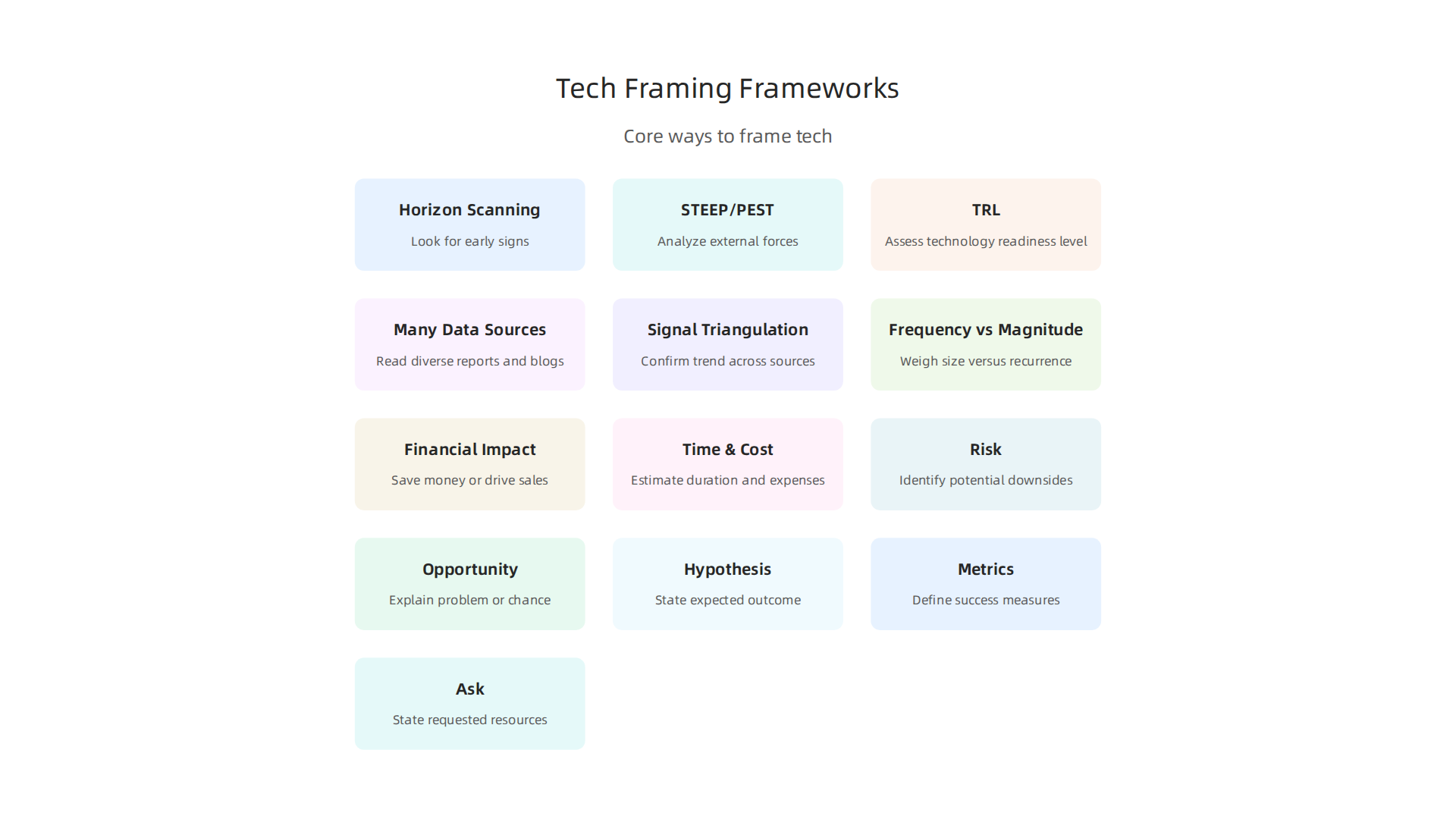
Here are some common ways to frame technology trends:
Horizon Scanning
Imagine you are looking far out into the future, trying to spot anything new coming your way. That’s what horizon scanning does. It’s a way to look for early signs of change in technology, even before they become big news. You look at many different places, like new science papers or small startup ideas. Horizon scanning helps you find "weak signals" which are tiny clues about what might happen next.
This framework is great for asking:
- What new technologies might surprise us?
- When should we start thinking about these new ideas?
It helps businesses understand long-term risks and plan ahead. By spotting things early, you can be ready instead of reacting later. This way of looking ahead helps you get a complete picture of what might be coming, making it easier to plan your next steps. For example, horizon scanning can help you identify future breakthroughs in areas like AI, quantum computing, or biotech, as discussed in R&D Technology Trends 2026: Reshaping AI, Quantum, Cybersecurity, and Biotech.
STEEP/PEST Analysis
Another helpful tool is called STEEP analysis (or sometimes PEST analysis). This framework helps you look at outside forces that affect technology. STEEP stands for:
- Social (how people’s lives and culture change)
- Technological (new inventions and discoveries)
- Economic (how money, jobs, and markets are doing)
- Environmental (changes in nature and our planet)
- Political (government rules and laws)
By looking at these different areas, you can see how they all connect to new tech. For example, a new government rule (Political) might make a certain type of green energy technology (Technological) more popular. Using STEEP helps you put together a whole "tech pack" of information. This method provides a clear way to sort out external factors and their influence on technology trends
Trend Analysis: A Practical Guide to Methods & Strategy.
This framework helps answer questions like:
- Should we invest in this technology right now?
- What are the biggest risks if we use this new tech?
It helps you understand the big picture, even if you are working with budget technology. It also ensures you consider all the important factors, not just the tech itself.
Technology Readiness Levels (TRL)
Sometimes, you might hear about Technology Readiness Levels, or TRLs. This framework helps you understand how ready a new technology is to be used in the real world. It’s like a scale from 1 to 9. A TRL of 1 means it’s just an idea in a lab, while TRL 9 means it’s fully working and proven.
This framework helps answer:
- Is this matter technology ready for us to use now?
- How much more testing or development does it need before we can trust it?
By using these frameworks, you get a clearer picture. You can make smarter choices about which technologies to watch, invest in, or avoid. This structured approach to framing tech gives you a big advantage in a constantly changing world.
How to pick the right framing model for your organization
Now that we know about different tools for framing tech, the next step is to pick the best one for your group. It’s like picking the right tool from a toolbox. You wouldn’t use a hammer to cut wood, right?
First, think about how quickly you need to make decisions and how much work your team can do. If you need quick answers for smaller, everyday tech choices, a simpler way of framing tech might be best. But if you’re looking far into the future for big changes, you might need a more detailed method, like the ones discussed in Frameworks for developing impactful systematic reviews.
Also, think about who will use this information. What do they need to do with it? The results of your framing tech work must be helpful. For example, if you are looking at matter technology for a small project, you might not need a complex report. But for bigger plans, like how a technology strategy board drives deep tech innovation, more details are better.
The goal is to match the tool’s difficulty to what your team can handle and what kind of decision you need to make. This helps ensure that even with budget technology, you get useful insights without wasting time or effort.
Staying updated with the latest in technology is key to picking the right framing model.
Get clear daily AI updates from The AI Newsletter Worth Reading.
Signals vs. noise: methods for identifying high-quality trend indicators
Staying updated with the latest in technology helps you pick the right way of looking at new trends. But it’s not enough to just know what’s out there. Imagine standing in a busy market. There’s a lot of chatter, but you’re trying to hear one important announcement. This is like finding good tech trends. You need to tell the difference between "signals" and "noise." Signals are the truly important trends that will change things. Noise is all the extra, less important information that can distract you.
In 2026, there’s a lot of tech talk. So, how do you find the real gems? It takes a careful approach to Cutting through the noise: Tech signals worth tracking as AI.
Operational techniques for finding signals
To sort through all the information, you can use a few smart tricks:
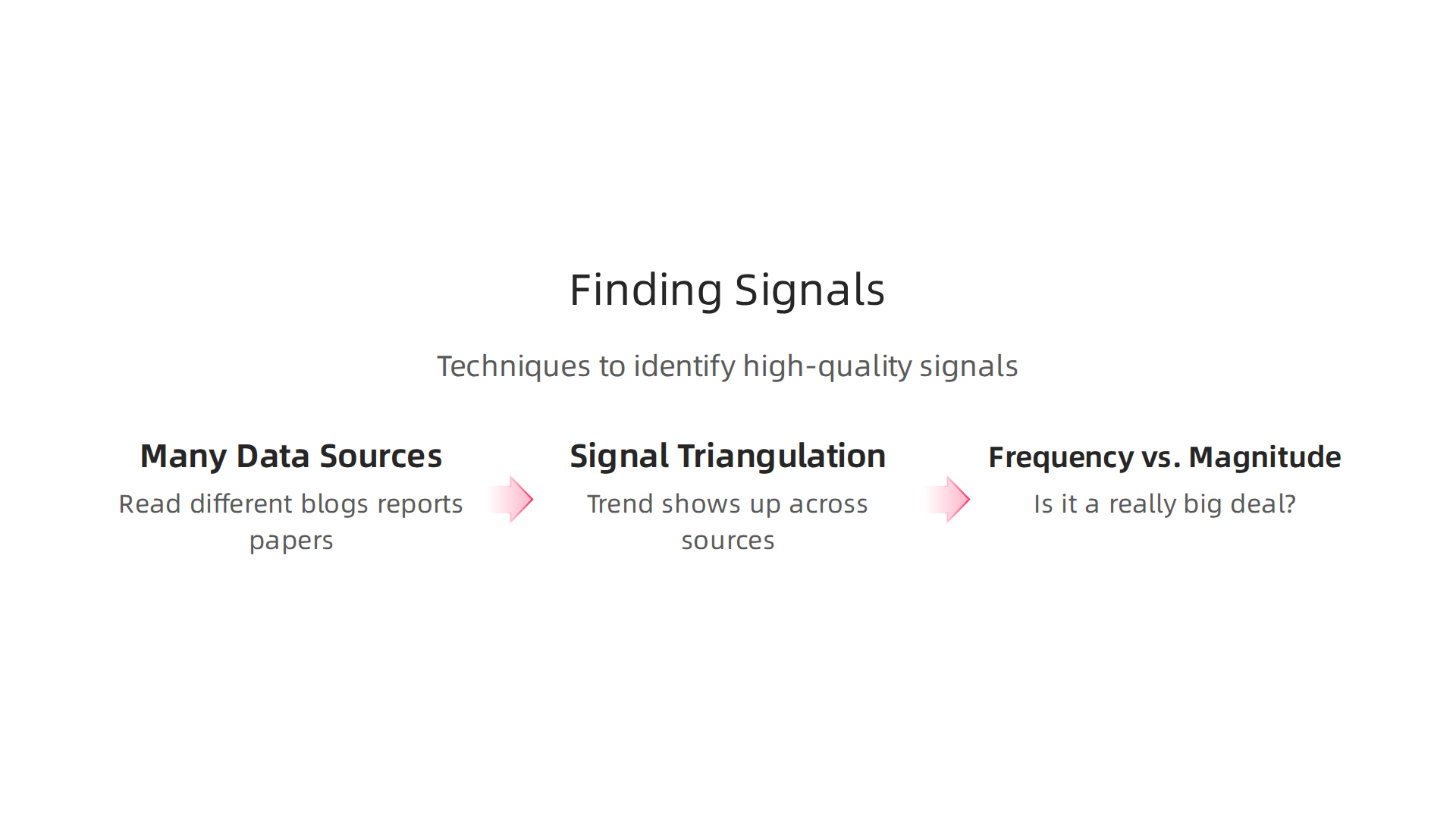
- Look at many data sources: Don’t just get your news from one place. Read different tech blogs, reports, and industry papers. The more places you look, the better chance you have of finding real trends. Think of it like a detective looking for clues everywhere. This helps you get a wider view when you are busy framing tech for your business.
- Signal triangulation: This means seeing the same trend show up in different ways or from different sources. If a new type of
matter technologyis mentioned in an expert report, then also in a news article, and then a major company makes a move related to it, that’s a strong signal. It’s like finding three points to confirm one spot on a map. - Check frequency versus magnitude: Does everyone talk about this tech trend all the time (frequency)? Or is it a really big deal, even if it’s only talked about now and then (magnitude)? Sometimes, a trend that’s always in the news might just be hype. Other times, a quiet but huge change in
budget technologycould have a much bigger effect. It’s important to understand the true impact.
Practical filters for smart choices
Once you think you’ve found a signal, it’s time to check if it’s really useful. We can use some simple "filters" to do this:
- Commercial viability: Can this technology actually make money? Is there a clear need for it that people or businesses would pay for? Even the coolest new tech is just noise if no one can sell it or use it to help their business grow.
- Technical maturity: Is the technology ready to be used today, or is it still many years away? A great idea that’s not ready yet might be a future signal, but it’s not something to act on right now. You need to know if it’s part of an existing
tech packor something still in the lab. For example, staying on top of R&D technology trends 2026 can help you judge this. - Regulatory trajectory: Will new laws help or hurt this technology? Some technologies need new rules to keep people safe or to make sure they are used fairly. If the laws are unclear or might stop the tech, it might be a riskier signal.
By using these methods, you can become much better at spotting important tech trends and avoiding things that are just noise. This helps you make smarter decisions for your organization’s future.
After you’ve found a truly important tech trend, the next big step is to figure out what it means for your business.

It’s not enough to just know about a new matter technology or a shift in budget technology. You need to know how it will help your company make more money, save costs, or become better. This means looking at the return on investment (ROI) and understanding the risks.
This is all about "framing tech" in a way that makes sense for your business goals. In 2026, many companies are trying to move past just doing small tests or "pilots" with new technology. They want to see real, measurable results.
How to Estimate Impact and Benefits
To truly understand a new technology’s value, you need clear ways to measure its impact.
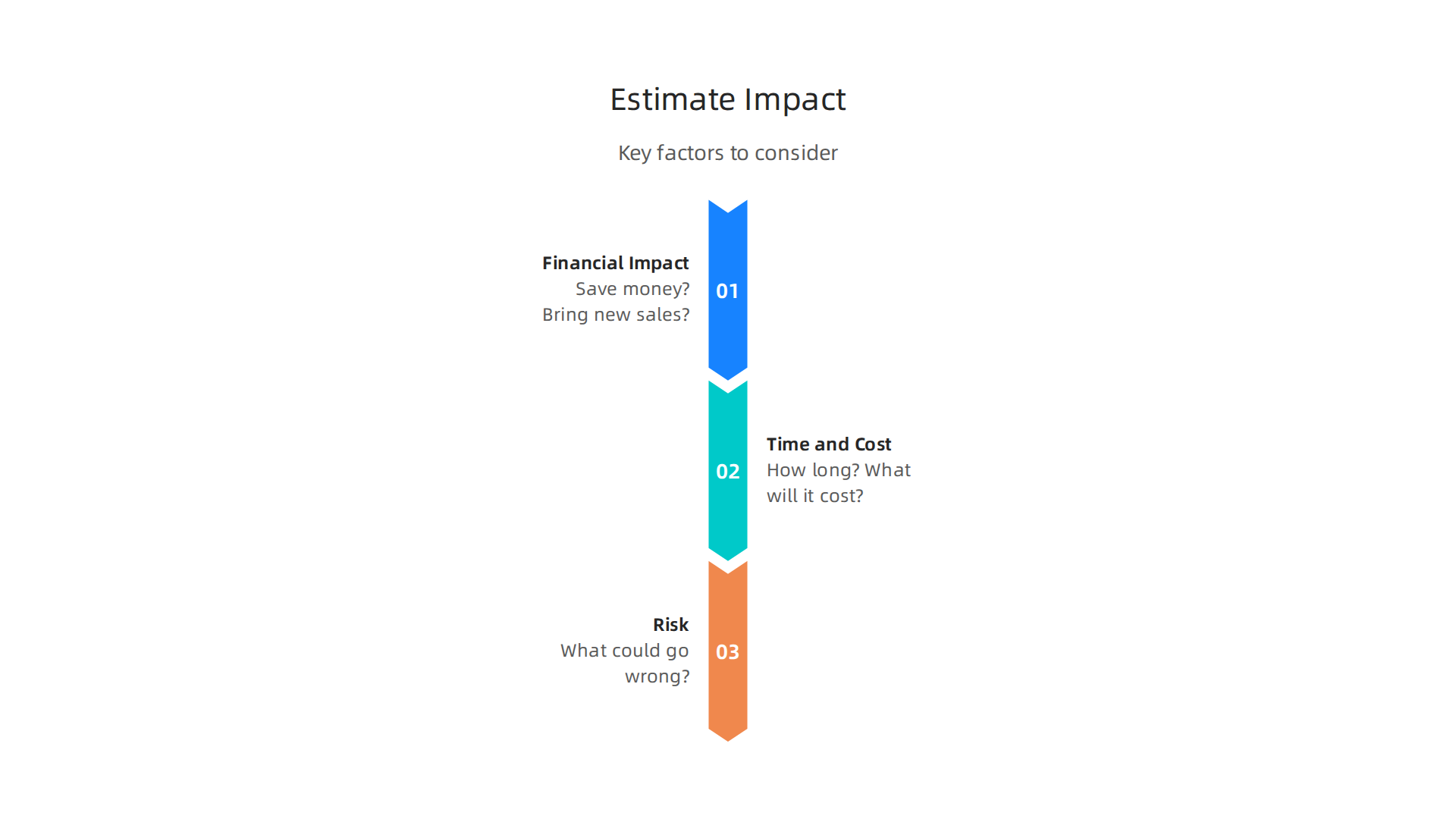
This involves looking at a few key things:
- Financial Impact: Will this tech save money? Will it bring in new sales or customers? You need to put actual numbers on these ideas. This isn’t always easy, but thinking about how the tech will directly affect your finances is crucial. For example, some companies use frameworks to understand the Total Economic Impact (TEI) of new tech, which includes things like avoided costs and reduced errors, minus implementation costs. You can calculate ROI using a simple formula: (Benefit – Cost) / Cost × 100% to see the percentage return on your investment AI ROI: The Business Case for AI.
- Time and Cost: How long will it take to put this new technology in place? What will it really cost? Don’t forget hidden costs like training staff or changing old systems. Knowing the timelines for first value, when you’ll break even, and when you’ll see full ROI helps you plan better. For example, a focused pilot might show first value in 2-3 months, but full ROI could take 12-18 months Enterprise AI Adoption: ROI Framework Guide 2026.
- Risk: What could go wrong? Will this new tech work with your old systems? Are there security concerns? Thinking about these risks ahead of time helps you prepare and avoid costly mistakes.
Many businesses are using comprehensive approaches that go beyond just simple money calculations to understand value. This includes looking at things like how quickly you can innovate, or how well the new tech fits with your company’s big goals Mastering AI ROI in 2026: From Pilot Fatigue to Strategic Value Creation.
Setting Up Smart Pilot Programs
Before you fully adopt a new technology across your whole business, it often makes sense to run a small test, called a pilot program. This is like a trial run. But for a pilot to be useful, it needs clear rules.
- Align with Business Goals: Make sure your pilot is aimed at solving a real business problem or achieving a clear goal. What specific thing do you want to improve? This helps in [framing tech] for direct impact. For example, before starting, identify your top 3-5 business goals and see how the tech can help meet them The 2026 AI ROI Framework: How Growth Companies Turn $50k ….
- Clear Metrics: What will you measure to see if the pilot is working? These are your Key Performance Indicators (KPIs). Instead of just counting "hours saved," think about things like how much faster a process becomes, how many fewer errors happen, or how much customer satisfaction goes up. You need to define these metrics before you start How to Plan AI Investments That Deliver ROI in 2026.
- Decision Gates: These are specific points where you stop, look at the results, and decide what to do next. Should you continue with the tech, change it, or stop using it? Having these "gates" helps you avoid wasting money on things that aren’t working. It’s about having a clear plan for moving from a small test to a full rollout. Knowing where workflows are in their journey from experiment to being a core part of the business helps you make these decisions From Pilots to Production: Measuring Real AI ROI in 2026.
This careful way of [framing tech] choices helps businesses make better decisions. It ensures that new technologies actually deliver real benefits and fit into your existing tech pack without causing more problems than they solve.
To stay on top of the latest advancements that can truly impact your business, consider subscribing to a specialized newsletter.
Get clear daily AI updates from The AI Newsletter Worth Reading.
Understanding how to assess the real business impact of trends is key to smart growth. It turns exciting new ideas into actionable strategies. For a broader view on how to apply AI in practical ways, you might want to learn more about use AI to drive business growth with practical applications in 2026.
To make sure a new technology truly helps your business, it’s wise to use simple plans or "templates." These help you think about how the tech will perform both right away and over a longer time. This process is important for properly [framing tech] decisions.
Simple Templates for Pilots
When you start a pilot program, you should have clear lists for costs and what you want to achieve.
- Cost Buckets: Think about all the money you will spend. This includes the cost of the technology itself, setting it up, and training your team. An easy way is to sort costs into groups like "setup costs," "running costs," and "hidden costs" (like extra support). Businesses use frameworks that include initial investment, licensing, and management costs to get a full picture of economic impact Enterprise AI ROI 2026: CFO Frameworks, Models.
- Outcome Metrics: What results do you hope to see? For short-term success, you might measure things like how much faster a task gets done or how many fewer mistakes are made. For the long-term, think about bigger impacts, such as how the technology helps your company be more creative or meet its main goals. Measuring innovation speed and how well the tech aligns with your company’s bigger picture are good metrics for long-term value AI ROI in 2026: From Pilot to Measurable Business Value.
Decision Gates and Time-Bound Milestones
Think of "decision gates" as checkpoints along the way. At these points, you look at the pilot’s progress and decide if it’s working.
- Short-Term Gates: These might be set for 2-3 months after starting. You’d check if the tech is solving the immediate problem it was meant for. Is it saving a little time or fixing a small error? If not, you might stop the pilot or change how it’s being used.
- Long-Term Milestones: For bigger goals, set milestones further out, maybe at 6 or 12 months. At these points, you’re looking for bigger changes, like if the technology is truly improving your whole business process or helping you win new customers. A good approach involves a three-phase adoption plan: research & pilot, integrate & iterate, and then scale & automate 2026 Tech ROI: A 3-Phase Adoption Framework.
By using these clear steps, you can better manage your new matter technology and make smart choices for your budget technology, ensuring it fits well within your overall tech pack. Learning how these different types of AI work can further help you in this process; you can read more about types of artificial intelligence explained understanding ai taxonomy for business.
When bringing in new technology, it’s not just about how well it works or how much it costs. We also need to think about whether it is fair, safe, and follows the rules. This part of framing tech solutions means looking at governance, ethics, and legal checks very early on.
Key Governance Questions to Ask
Before you even start a pilot, you should ask important questions about your new matter technology:
- Privacy: How will this technology handle private information? Will it keep people’s data safe from others? Companies in 2026 are putting a lot of effort into technologies that make privacy stronger, especially as more sensitive data is used.
- Security: Can bad actors break into this new tech? Is it protected from cyber attacks? Making sure your
tech packis secure helps avoid big problems later. - Explainability: Can you understand how the technology makes its decisions? This is extra important for advanced AI tools, where knowing "why" helps build trust and fix mistakes. New guidelines for AI aim to help make sure these systems are used in a way that is responsible and fair, emphasizing things like public trust and good governance Accelerating Responsible Use of Artificial Intelligence at GSA.
- Compliance: Does this technology follow all the laws and rules? There are many rules about data and new tech today, and you need to be sure your systems meet them. You can read more about how organizations are creating plans for AI compliance in 2026.
Folding Legal and Compliance Reviews into Early Framing
It’s a smart move to bring in legal and compliance experts right at the start when you are framing tech ideas. Waiting until later can cause big delays or force you to redo work.
- Early Discussions: Talk about the potential risks and legal issues with your team and legal experts. This helps everyone understand the boundaries and build solutions within them.
- Regular Check-ins: Have set times to review progress with your legal and ethics teams. This way, any new issues that pop up can be handled quickly. Many businesses are looking at ways to improve AI governance in their planning.
- Budget for Compliance: Remember that making sure your
budget technologyfollows all the rules might cost money for reviews or special tools. It’s better to plan for these costs upfront than to be surprised later. Thinking about a clear technology strategy, including these checks, helps you manage all your systems better for business success. If you want to dive deeper into how to manage your overall tech strategy, you might find it helpful to learn about how to master your tech systems.
By paying close attention to these important checks from the very beginning, you can ensure your new technology not only works well but is also used in a safe, fair, and legal way.
Get clear daily AI updates from The Deep View Newsletter. The AI Newsletter Worth Reading
Once you have a new technology that’s safe, fair, and follows all the rules, the next big step is telling others about it. This is where framing tech in an easy-to-understand way becomes super important. You need to turn complicated tech ideas into simple stories that make sense to everyone, from your team to important leaders.

Techniques for Clear Tech Stories
Imagine you have a great new matter technology or a whole tech pack ready. How do you explain it so people get excited, not confused? You need to tell a clear story. Think about what your audience cares about most. What problem does this tech solve for them? How will it help their part of the business?
Good communication means being clear and to the point. Pilots, for example, use very exact terms to avoid mistakes and make sure everyone understands quickly. This helps prevent confusion, especially in important situations, as seen in how leaders can learn from How Pilots Communicate and What Leaders Can Learn. You can also use simple frameworks to explain situations, actions, and results, much like pilots do when communicating in the cockpit Cockpit Wisdom: Episode 1 – How to Communicate Like a Pilot.
Messaging for Different Groups
Different people need to hear different things about your new budget technology. You can’t talk to an investor the same way you talk to someone who will use the tech every day.
- For Investors: They want to know how the tech will make or save money. Focus on things like how it will help the company grow, make more sales, or cut down on costs. You need to show how the technology fits with the company’s big plans for growth and how to How to Build Messages That Build Buy-In.
- For Operations Teams: These are the people who will actually use the new tech. They need to know how it will make their jobs easier, safer, or more efficient. Talk about how it changes their daily tasks and helps them get work done.
- For Product Teams: They care about how the tech improves the products customers use. Explain new features, how it makes the product better, and what benefits customers will see.
- For the Board: The board needs a big picture. What are the main benefits? What are the biggest risks? How does this tech help the company’s overall direction? Your messages should be clear and show understanding for each group’s unique interests, helping you with Speaking the Right Language to Enroll Stakeholders in ….
Always aim for clear and honest communication that continues over time. This helps everyone stay on the same page and feel good about the changes, especially when Communicating for change. To make sure your words are always clear, you might find it helpful to unlock precision master technology synonyms for clear business communication.
When you’re ready to ask for money or support for your new idea, especially for a pilot program, a clear one-page brief is your best friend. This short document helps you explain your budget technology idea quickly to busy leaders. It’s all about framing tech in a way that shows big value and little risk.
Think of it like this: executives need to understand the main points right away. They want to see what’s in it for the company and how you’ll make sure it works. A good one-page brief typically has four key parts:
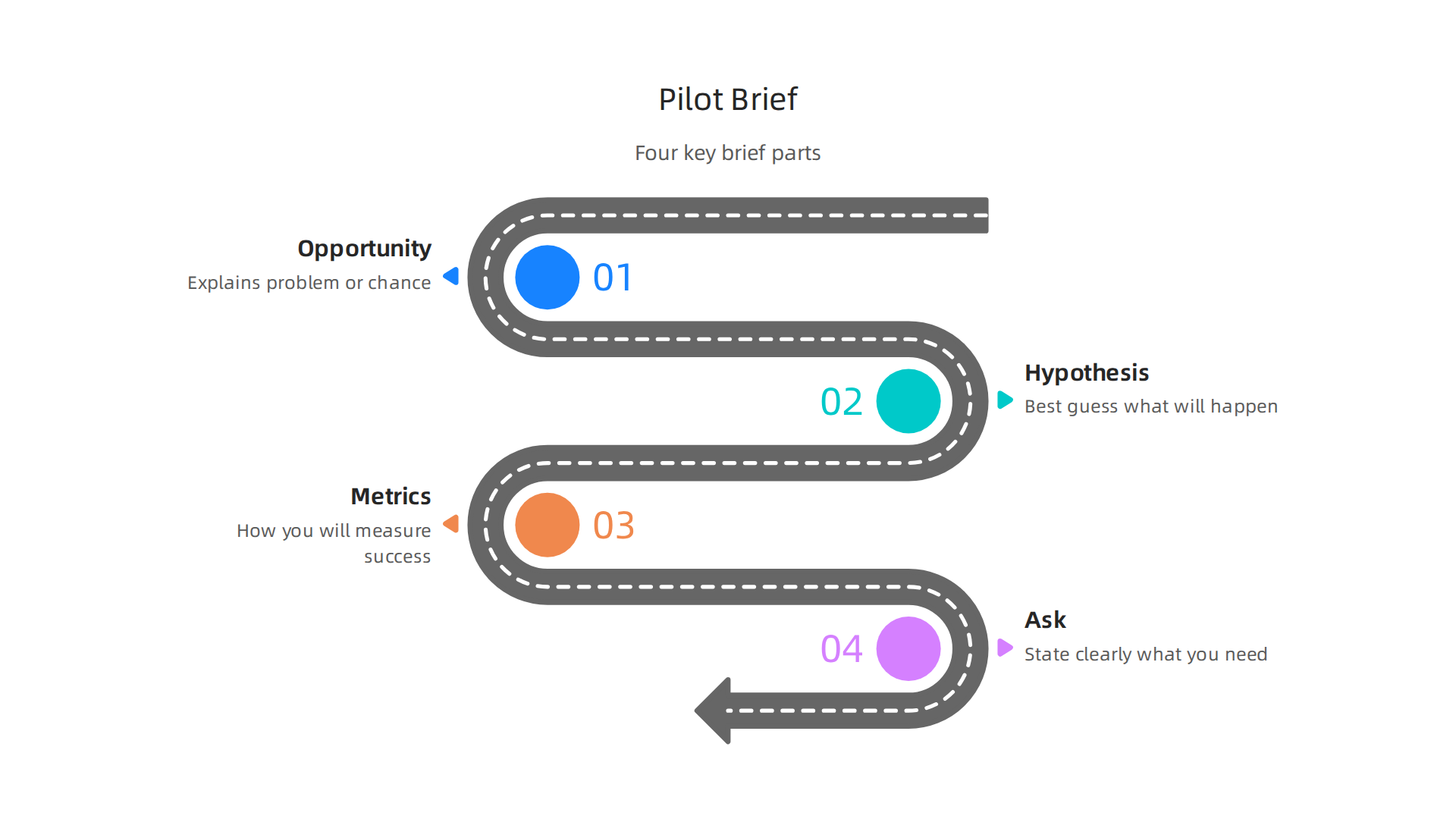
Opportunity
This part explains the problem you want to solve or the big chance you see for the company. Maybe there’s a new matter technology that can help customers a lot, or a new way to save time and money. Clearly explain why this is important right now. What will happen if the company doesn’t try this?
Hypothesis
Here, you share your best guess about what will happen if your idea moves forward. For example, "We believe that if we test this new tech pack with a small group, it will make our work 10% faster." This shows you’ve thought about the possible results.
Metrics
This section is super important. It tells leaders how you will measure if your pilot project is working. What numbers will you look at? Will it be faster work, happier customers, or more sales? You need clear ways to track success so everyone knows if the budget technology is making a real difference.
Ask
Finally, state clearly what you need to make the pilot happen. Is it a certain amount of money? Do you need a special team to help? Be direct and specific. This is your chance to ask for that pilot budget.
By keeping your brief clear and to the point, you help leaders make decisions faster and get excited about your new ideas. If you want to keep up with the latest advancements in technology that could shape your proposals, consider staying informed. Get clear daily AI updates by signing up for The AI Newsletter Worth Reading. Also, understanding how to Master Behavioral Tech: Unlock Strategic Business Advantage can give you an edge in framing your technology proposals.
Once your pilot project gets the green light and shows good results, the next big step is to make it bigger, to "scale" it across the whole company. This is where framing tech for wider use becomes very important. Moving from a small test to a large operation can be tricky, and many good ideas get stuck here.
Common Scaling Traps and How to Prepare
Scaling up a new technology, even a successful tech pack from a pilot, has its own set of challenges. One common trap is not thinking big enough from the start. A solution that worked for a small group might not work for thousands without some changes. This means you need to get your company’s operations, people, and buying processes ready.
- Operations: Are your daily operations set up to handle the new
matter technology? This includes making sure all systems can talk to each other and that workflows are updated. For example, if your pilot showed great results in faster work, you need to make sure the entire team has the right training and tools to keep that speed. A strong adoption framework can help, often including phases like "Integrate & Iterate" before you "Scale & Automate" 2026 Tech ROI: A 3-Phase Adoption Framework. - Talent: Do your employees have the right skills? You might need to train current staff or hire new people with specific knowledge. Think about who will manage the new tech day-to-day and who will fix problems if they come up.
- Procurement: Can you buy enough licenses, equipment, or services to support everyone who needs it? You might need new contracts with vendors or a bigger
budget technologyfor ongoing costs. Without proper planning, these areas can slow down or even stop a successful scale-up.
Decision Milestones for Go/No-Go and Scaling Investments
Deciding when and how to fully roll out a new technology is key. You need clear checkpoints, or "decision milestones," to make sure you’re investing wisely. These milestones help leaders say "go" or "no-go" based on solid facts. Companies often look at several things to decide if an investment is worth scaling:
- Proven Return on Investment (ROI): This is about showing that the technology will bring more money or savings than it costs. For instance, some companies aim to see a full ROI within 12 to 18 months for a focused pilot before committing to a wider rollout, which might take longer to show full returns for Enterprise AI Adoption: ROI Framework Guide 2026. Experts say you need to move beyond just tracking "hours saved" and look at many different ways the tech adds value, like how quickly new ideas can be put into action or how well it supports company goals AI ROI in 2026: From Pilot to Measurable Business Value.
- Operational Readiness: As mentioned, this means operations, talent, and procurement are ready. Can the tech handle more users? Are there enough skilled people? Can you afford to run it at scale?
- Scalability: Is the technology itself built to handle a larger workload without breaking down or becoming too expensive?
- User Adoption: Are people actually using the technology and finding it helpful? High user adoption in the pilot phase is a good sign that it will be used widely.
To truly understand the bigger picture, it’s helpful to explore different perspectives on technology and its impact. You can learn more by checking out the Definition of Technology: History, Dimensions, and What It Means for You.
Making these decisions carefully helps ensure that a successful pilot leads to a successful company-wide change, instead of becoming a project that never quite makes it. Understanding how to measure these outcomes is crucial for demonstrating the real value of new initiatives, especially for enterprise AI solutions, by building a clear financial case for multi-year investments in technologies like AI.
Summary
This article explains how to use a repeatable "framing tech" approach to turn the flood of new technologies into clear business decisions. It describes practical frameworks—like horizon scanning, STEEP/PEST analysis, and Technology Readiness Levels (TRLs)—to spot meaningful signals, filter out hype, and judge technical maturity. You’ll learn how to estimate impact and ROI, design short pilots with clear metrics and decision gates, and fold legal, privacy, and security checks into the process early. The piece also covers how to tell simple, targeted stories to stakeholders, write one-page pilot briefs, and prepare operations, talent, and procurement for scale. Read it to gain concrete tools and templates that help you prioritize tech investments, run effective pilots, and scale promising solutions while managing risk and buy-in.