

It’s 2026, and the world of technology news moves faster than ever. Every day, tons of new stories come out about AI, software, gadgets, and more. It can feel like trying to drink water from a fire hose! The sheer volume of information makes it tough to keep up, even for smart professionals.

You want to know about important news, like the big announcements from "reuters tech," but how do you find those key stories amidst all the chatter?
Think about it: newswire services send out countless stories each day. For example, professional newswires can reach over 500 media outlets with a single press release, and millions of people see these stories every month, according to a Press Release Distribution Report. This means a lot of news is out there, making it hard to tell what’s truly important for your business. It’s like having a big pile of puzzle pieces and trying to find the few that actually fit together to show you the full picture.
This problem is what we call "information overload." You need to separate the important "signals" from all the "noise." You might see updates from sources like "site news techmeme" or read "online-tech-tips" from various "tech brothers" blogs. While these can be helpful, knowing which ones give you reliable, in-depth coverage, especially for major wire stories like those from Reuters, is key. Many people get their news from social media and video networks these days, even more than from traditional TV or news websites, as shown in the Reuters Institute Digital News Report 2026. This mix of sources adds to the challenge of finding trustworthy information.
That’s why this guide is so important. We will show you how to look at news aggregators and blogs in a smart way. You will learn how to set up easy ways to keep track of news, called "workflows." Most importantly, we will help you figure out how to verify if you are getting top-level coverage, like the kind you expect from "reuters tech," so you can make strong strategic decisions for your business. Our goal is to help you cut through the noise and evaluate incredible technologies for business growth and truly turn data overload into strategic insight.
Ready to get clearer insights into the tech world? Get clear daily AI updates from The Deep View Newsletter.
The AI Newsletter Worth Reading
How Reuters-style wire coverage differs from independent blogs and aggregators
When you’re trying to understand important tech news, it helps to know where the information comes from. Not all news sources are the same. There’s a big difference between a service like "reuters tech" news and what you might find on independent blogs or news aggregators.
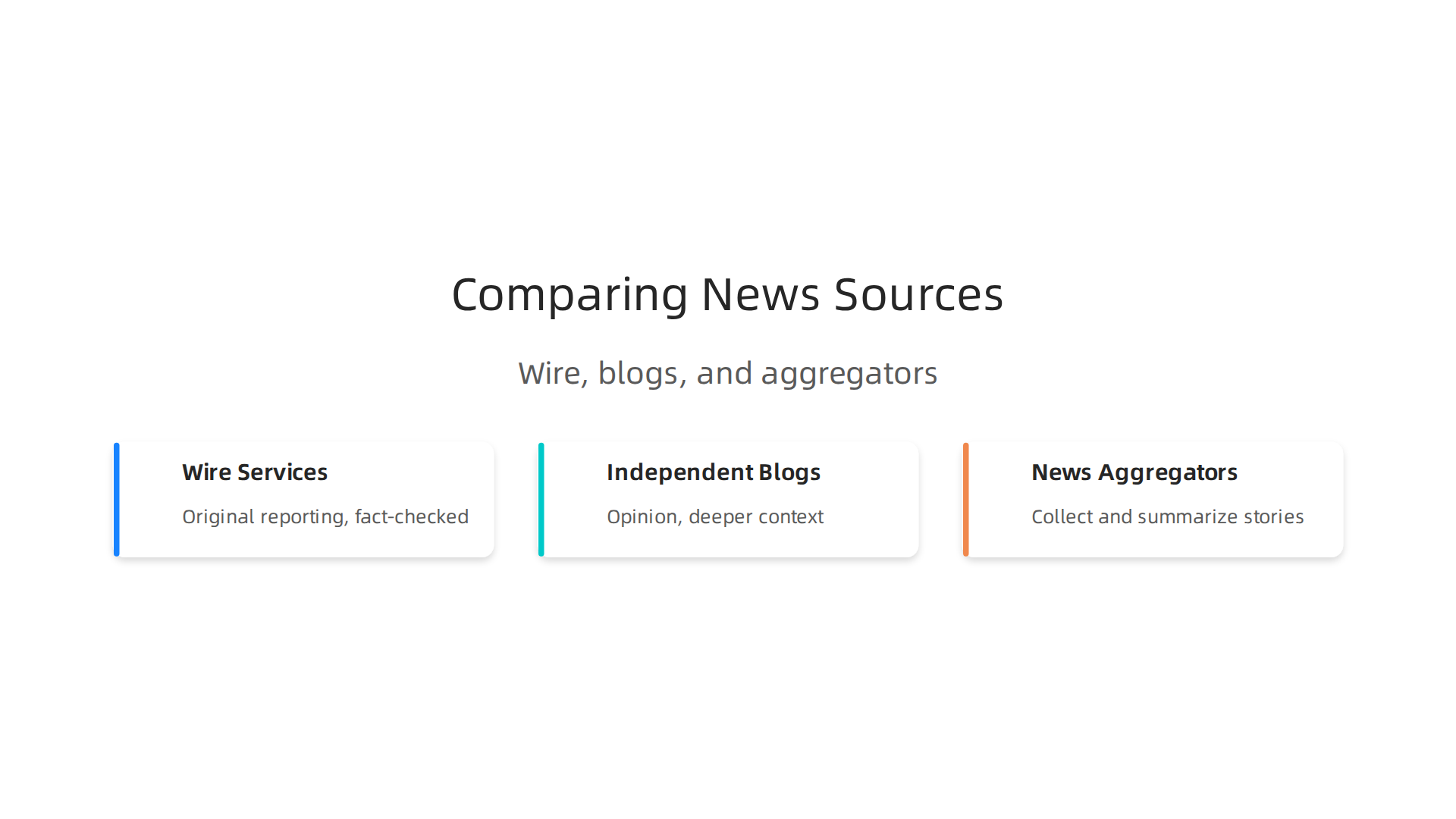
Think of it like this: wire services are the original reporters for big news. They have teams of journalists all over the world. These journalists find news first, check their facts very carefully, and then write stories. Their stories are usually short, clear, and just about the facts. News wire services gather original reports and send them out to many other news companies that pay for them, as explained by News Wire Services: AP, Reuters, and How They Work. This means a lot of newspapers, TV stations, and websites get their first news from places like Reuters.
When a wire service like Reuters puts out a story, it’s often the very first report of something important. These stories come with a special "dateline" that tells you where the news happened. They also have timestamps to show exactly when the story was released. This helps everyone know it’s fresh and official Newswires and Press Releases. Wire services aim to be super fast and accurate because so many other news outlets depend on them. In 2026, newswires often reach more than 500 media places with each news story, including many international ones Newswire Industry Statistics | Fact-Checked 2026.
Now, let’s look at independent blogs and news aggregators. These are different.
- Independent Blogs: Blogs like those written by "tech brothers" often share opinions, personal views, or deeper dives into certain topics. They might get their basic facts from a wire service and then add their own thoughts or analysis. For example, "online-tech-tips" might take a Reuters story about a new AI gadget and then write about how to use it or what they think about it. The speed of news from blogs can vary greatly. Some are fast, but their main goal isn’t always to be the first to report breaking news. Their sourcing might not be as strict as a wire service, and sometimes it’s hard to tell where their information really came from.
- News Aggregators: Websites like "site news techmeme" are like digital scrapbooks. They collect news stories from many different sources, including wire services, big news sites, and smaller blogs. They don’t usually create their own news. Their job is to show you a lot of news in one place, making it easier to see what’s being talked about. However, they rely on others to do the original reporting.
So, what does this mean for you?
When you see "reuters tech" news, you can generally trust it for solid facts and fast reporting. It’s the base of many other news stories. Blogs and aggregators can be great for getting different views, understanding more deeply, or seeing what others are saying. But for critical business decisions, always look for the original, fact-checked source, especially when dealing with major announcements or new technologies. Knowing where your information comes from is a key step in picking the best news sources for your business strategy. To learn more about picking the right places for your tech information, check out our guide to the best tech publications for business strategy in 2026.
After learning about the different kinds of news sources, a big question comes up: how do you choose a good tech news aggregator? These tools gather news from many places. It’s important to pick one that helps you cut through all the information and find what matters most for your business. The market for news aggregation is growing a lot, which means more options but also more to sort through The market for news aggregation such as Google News and media monitoring is substantial for B2B decision-makers and is growing significantly.
Here is a simple checklist to help you choose the best tech news aggregator in 2026:
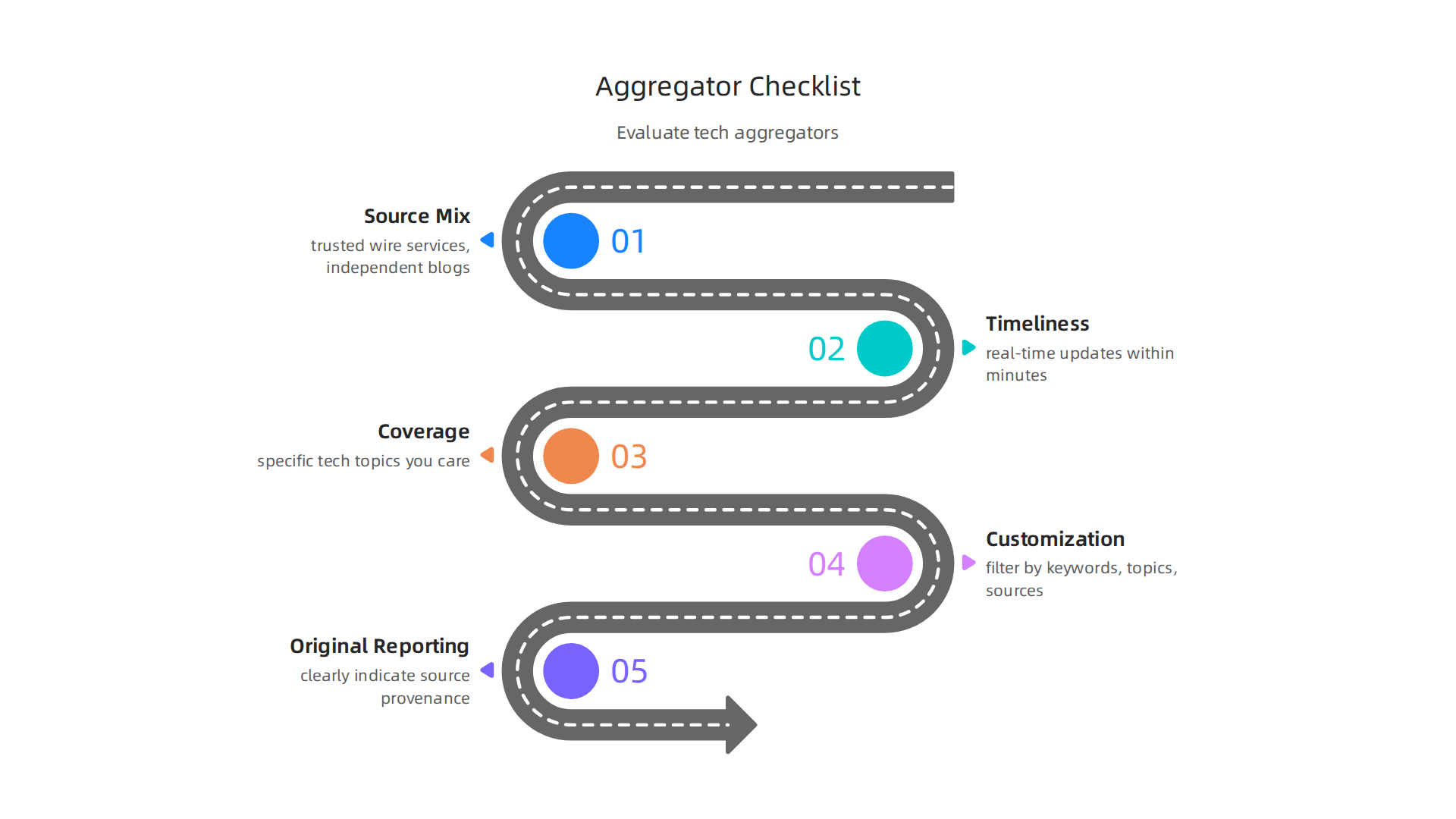
Practical Checklist for Evaluating News Aggregators
- Look at the Source Mix: A good aggregator should pull news from many places. This means having stories from trusted wire services, like the solid reports you’d expect from reuters tech. It should also include articles from independent blogs, like those by "tech brothers" or "online-tech-tips," to give you different viewpoints. A varied mix helps you get a full picture.
- Check for Timeliness: How fast does the aggregator show new stories? For tech news, especially breaking news, speed is very important. The best sources for tech news in 2026 often use AI to give real-time updates within minutes Best Sources for Breaking Tech News 2026: Real-Time Updates.
- See What It Covers: Does the aggregator cover the specific tech topics you care about? Some might focus on AI, others on gadgets or business tech. Make sure it matches your needs. For instance, "site news techmeme" is known for covering top tech stories, from AI to new companies 2026’s Best News Aggregators for Daily News and Trends.
- Customization Options: Can you make the news feed your own? Being able to filter stories by keywords, topics, or sources helps a lot. Many modern aggregators use AI to help with this, giving you more personalized content Best AI News Aggregators: 7 Tools Tested (2026).
- Does It Show Original Reporting vs. Syndication?: This is a big one. Does the aggregator make it clear if a story is an original report or if it’s been republished from somewhere else? Knowing if a story is original helps you trust the information more. Actually, content that gets shared through syndication can get many more readers than the original article alone Report: The value of content syndication for business news. But for key decisions, you want to know the first source. Look for datelines and timestamps that point back to the original source, especially for important reuters tech level reports.
By using this checklist, you can find a tech news aggregator that truly helps you stay informed without feeling overwhelmed. It helps turn a lot of information into clear insights for your business.
To make sure you’re always getting the freshest and most important AI news and insights, consider adding a reliable newsletter to your routine.
Get clear daily AI updates from The AI Newsletter Worth Reading.
After picking a good tech news aggregator, the next step is to set up a smart way to use it.

This means creating a workflow that helps you turn all the news into useful ideas for your business. It’s about getting the right information to the right people at the right time.
Here’s how to set up an aggregator workflow to prioritize high-impact signals:
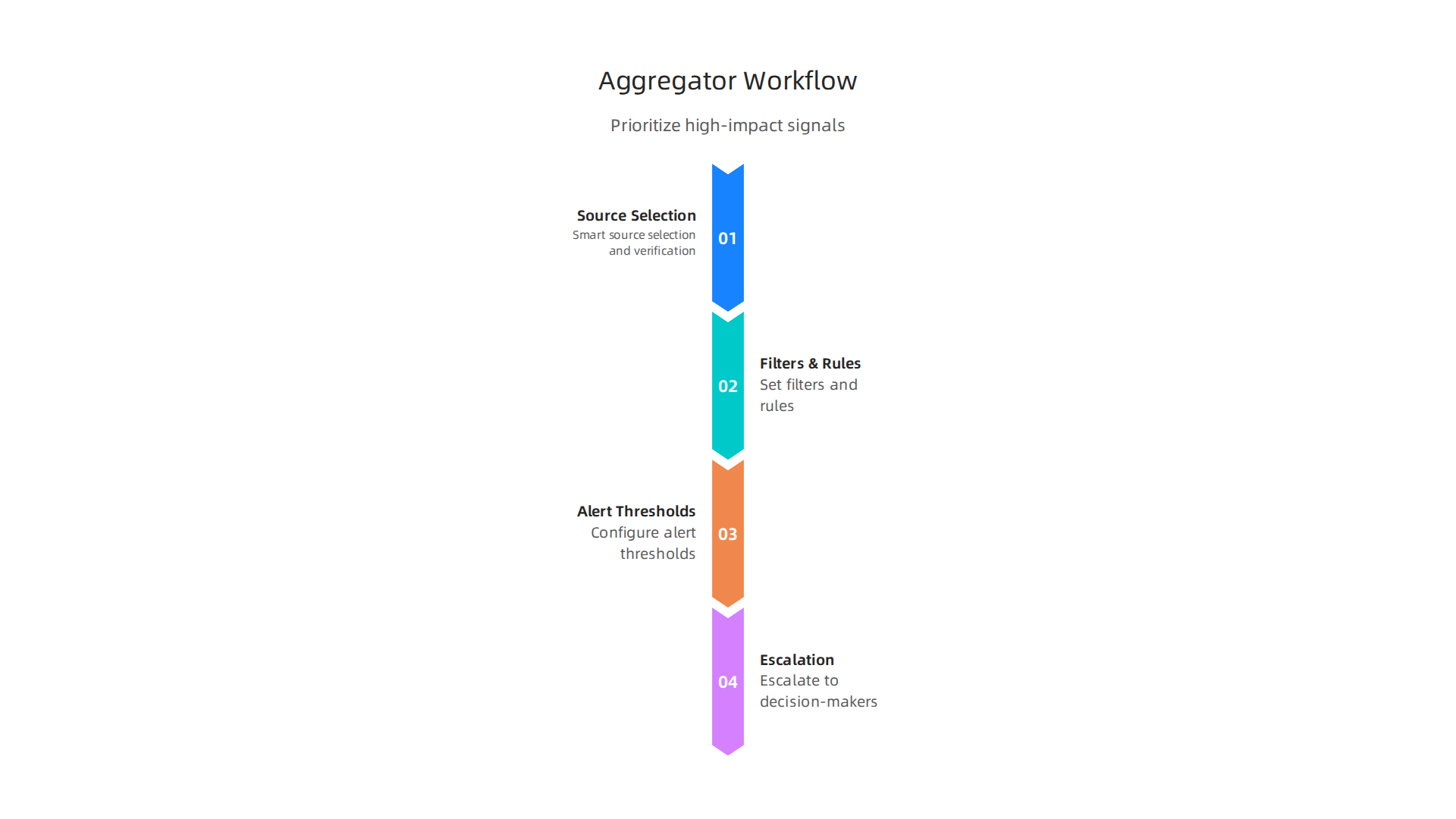
Step 1: Smart Source Selection and Verification
Even with a great aggregator, you need to be smart about which sources you trust most. Think about what kind of information you need. For breaking news that is just facts, you might rely on trusted wire services. For example, Reuters’ technology news is known for clear and direct reports. Newswires are very important for tracking industry trends and checking facts quickly How journalists use newswires.
For deeper thoughts or different views, you might look at independent blogs like online-tech-tips or tech brothers. It’s like having a team of experts looking at the same topic from many sides.
In 2026, it’s also very important to check if content is real and hasn’t been changed. Many news tools now use something called Content Credentials, which follows standards from the Coalition for Content Provenance and Authenticity (C2PA). This helps show where digital content came from and if it has been edited C2PA: Verifying Media Content Sources. This helps you know you’re looking at true information.
Step 2: Setting Up Filters and Rules
Once you have your sources, teach your aggregator what matters to you.
- Keywords: Set up keywords related to your business or projects. For example, "AI advancements," "new cybersecurity threats," or "cloud computing trends."
- Topics: Most aggregators let you pick main topics. Make sure these match what your business needs to know.
- Negative Keywords: Tell the aggregator what you don’t want to see. This helps reduce clutter.
- Source Priority: You can often tell the aggregator to show you news from certain sources, like
reuters tech, first or to give it more weight.
Many modern aggregators use AI to help with these rules, learning what you like over time to make your news feed even better. If you want to make your daily tasks smoother, learning to master your workflow with AI powered productivity tools can be a big help.
Step 3: Alert Thresholds
Not all news needs the same level of attention.
- Immediate Alerts: For very important "high-impact signals" that need quick action, set up instant alerts. This could be major industry shifts, big legal news, or security warnings.
- Daily Digest: For less urgent but still important news, a daily summary can work well.
- Weekly Review: For general trends or background reading, a weekly report is usually enough.
This step helps you respond quickly to critical changes without getting bogged down by every single news story.
Step 4: Escalation for Decision-Makers
The final part of your workflow is getting the important insights to the people who make big decisions.
- Summarize: Don’t just forward a long article. Create a short summary that highlights the key points and what they mean for your business.
- Context: Explain why this piece of news is important. How does it fit into your company’s goals or current projects?
- Actionable Advice: If possible, suggest what steps might be taken based on the news.
By doing this, you’re not just sharing information. You are sharing actionable intelligence. This helps leaders quickly understand complex situations and make informed choices. To truly excel, you need to be able to cut through the noise evaluate incredible technologies for business growth.
When you follow these steps, your tech news aggregator becomes a powerful tool. It helps you stay ahead of trends and make smart business moves in 2026.
In today’s fast-moving world, knowing where your news comes from is super important. With so much information out there, it’s easy to get lost or even fooled by fake stories. This is why checking where a piece of news started, also called its provenance, is a must-do step for any smart business.

It helps you trust what you read and make good choices based on true facts.
Finding Out Where News Comes From
When you see a news headline, especially about tech, you need to quickly figure out if it’s from a trusted wire service, an agency that rewrote a story, or a smaller independent reporter. Here’s how to do it:
- Wire Service Clues: Big news services like
Reuters techare known for sharing facts quickly and plainly. When news comes from a wire service, it usually sounds very factual, without much opinion. They often use "datelines" which tell you where and when the news was first reported. Look for stories that are very similar across many different news sites, often with the same words or very close ideas. This is a good sign it started with a wire service. In 2026, many of these big news groups are very clear about where their content comes from to build trust The Verification Transparency Audit: How AP, Reuters, BBC, AFP …. - Agency Rewrites: Sometimes, a news agency or website will take a story from a wire service and rewrite it to fit their own style or audience. These stories might add more details or local flavor, but the core facts should remain the same as the original. You can often spot these by comparing headlines and the first few paragraphs to see how much they differ from a wire service report.
- Independent Reporting: Blogs like
online-tech-tipsortech brothersoften share unique insights or opinions. Their stories might come from their own research or interviews. These are valuable for different points of view, but you should still cross-check their main facts with other trusted sources.
Quick Tools and Checks
You don’t have to spend a lot of time on this. There are smart ways to check quickly:
- Content Credentials: Remember we talked about Content Credentials? Many tools now use these digital "birth certificates" for photos, videos, and even text. These tell you if the content was changed and where it first appeared. Companies like OpenAI are even adding watermarks to AI-generated images to show their origin OpenAI joins C2PA and adds SynthID watermarks to …. Looking for these credentials helps you know if what you’re seeing is real. Staying up-to-date on what’s real is a big part of business today.
- Timestamp Checks: Look at the time a story was published. If a major event happens, wire services will often report it first. If a smaller site publishes something hours or days before any big news outlet, it might be worth double-checking for facts.
- Cross-Referencing: This is like asking a second and third opinion. If you read something important on one site, quickly check another trusted news aggregator, like
site news techmeme, to see if they’re reporting the same thing. If multiple reliable sources confirm the story, you can feel more confident. The BBC even works on ways to prove the source behind a claim Did they really say that? Proving the source behind a claim …. - AI Detection Tools: For articles that seem a bit too perfect or cover many topics in a generic way, you might want to consider using a tool that can help detect if content was made by AI. Learning how to choose the most accurate AI detector in 2026 can add another layer to your verification process.
By using these simple checks, you can quickly verify your news sources. This helps you focus on high-impact signals and avoid misinformation. Knowing what’s true and what’s not gives your business a real edge in 2026.
Staying informed about AI and other major tech shifts is crucial for your business. For even deeper insights into these trends, consider getting our daily updates.
The AI Newsletter Worth Reading
Knowing where your news comes from is important, but how you get that news also makes a big difference. In 2026, many business leaders choose between relying on news aggregators or going straight to big news sources like Reuters tech. Both ways have their good points and not-so-good points. Let’s look at the differences.
Comparing value: aggregator alerts vs following Reuters tech directly
When it comes to staying informed about tech news, you have choices. Do you want a broad overview, or do you need the exact, fresh details right away? Your answer helps decide if news aggregators or direct wire service feeds are better for you.
What are News Aggregators?
Think of a news aggregator like a smart librarian for all the news on the internet. It gathers stories from many different places like online-tech-tips and tech brothers, then sorts them for you. Many aggregators use AI to summarize articles, find stories that are the same from different sources, and show you what you care about most. This makes it easier to catch up quickly Best AI News Aggregators: 7 Tools Tested (2026) | Blog. The market for these tools is growing fast, offering more and more features to help you process tons of information News Aggregator Tool Market 2026-2032: AI-Powered Content.
Good things about aggregators:
- Breadth: You get news from many sources all in one spot.
- Curation: They often pick the most important stories for you.
- Summaries: AI tools can give you the main points fast.
- Personalization: They learn what you like and show you more of it.
Why Follow Reuters Tech Directly?
Following a wire service like Reuters tech means you are getting the news as it happens, straight from the source. Reuters is known for its quick, factual reports, especially in the technology sector Tech News | Today’s Latest Technology News | Reuters. When you read Reuters tech directly, you are getting the "original copy" before other news outlets rewrite or add their own spin.
Good things about direct feeds (like Reuters tech):
- Original Copy: You get the first version of the story. This is crucial for facts.
- Speed: Wire services are often the first to report breaking news.
- Pure Facts: The stories are usually very plain and focus only on facts, which is how journalists often use them for their own research How journalists use newswires.
Choosing the Right Approach for Your Role
The best way to get your news depends on what you do and what you need to know.
- For Executives (Quick Alerts): If you’re a busy leader, you might prefer aggregator alerts. They give you a broad look at what’s happening and quick summaries without diving deep. This helps you understand the global tech landscape 2026 strategic trends for business without getting bogged down.
- For Investors (Scanning for Opportunities): Investors need speed and raw data. Direct feeds from Reuters tech are great here because you get breaking news instantly, which can affect market decisions. However, some investors also use sophisticated news aggregator market tools that provide real-time updates and sentiment analysis, helping them to unlock smart Sofi technologies investment strategies for 2026.
- For Product/Engineering Teams (Detailed Monitoring): These teams need to understand the details of new technologies. While an aggregator like
site news techmemecan give a good overview, product and engineering staff often need to dig into the original stories from specific wire services or tech publications. This helps them stay ahead in R&D technology trends 2026.
It’s clear that both methods have their place. Aggregators make it easier to deal with lots of information, often leading to more people reading the news Report: The value of content syndication for business news – Memo. But direct sources offer the unfiltered truth as soon as it’s available. You might even find that using both methods together gives you the best of both worlds. It helps you frame tech turn information overload into strategic business insight.
Building on that idea, a truly smart approach in 2026 means putting together a system that uses all kinds of news sources. This is how you gain strategic foresight, which is like having a clear view of what’s coming next for your business.
Long-term strategies: combining aggregators, blogs, and wire feeds for strategic foresight
Imagine you’re trying to see far into the future of technology. You wouldn’t just use one type of telescope, right?

You’d use different tools to get the full picture. That’s exactly what a smart news monitoring system does. It blends quick alerts with deeper insights to help you make better business decisions.
Building a Resilient Monitoring System
A strong system for keeping up with news in 2026 combines three main types of sources:
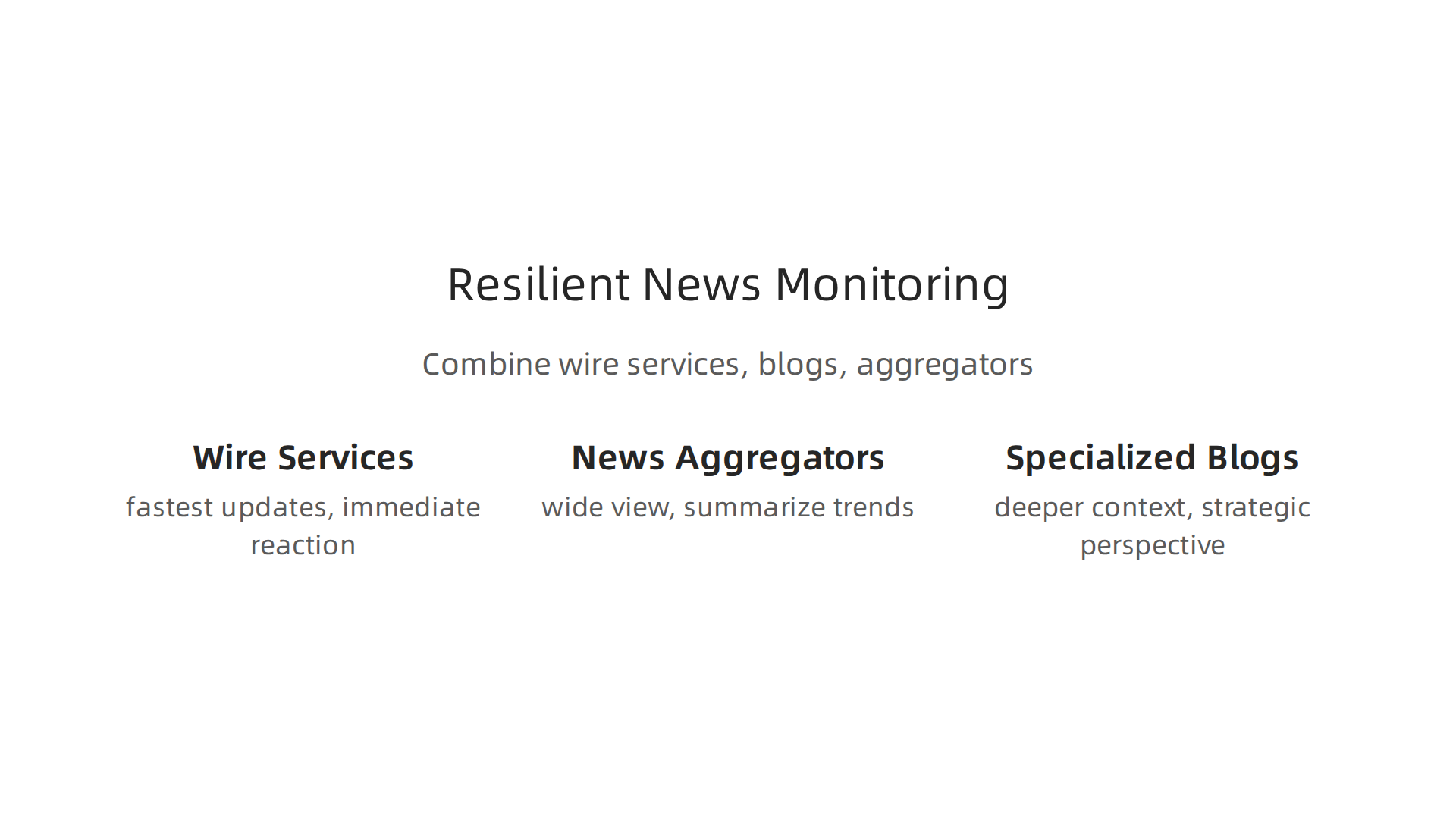
- Wire Service Alerts (like Reuters tech): These give you the fastest updates. When something big happens, like a major company announcement or a new patent, Reuters tech often reports it first. These quick facts are vital for reacting fast, especially in areas like finance or cybersecurity.
- News Aggregators: Tools like those that bring together stories from
site news techmemeoronline-tech-tipshelp you get a wide view. They show you what everyone is talking about and can even summarize trends. Think of them as your daily overview, making sure you don’t miss anything important across many sources. - Specialized Blogs and Analysis: These are where you get deeper context. Blogs from experts and
tech brothersstyle sites explain why something is happening and what it might mean. They help you understand the bigger picture beyond just the facts. This is how you cut through the noise and evaluate incredible technologies for business growth.
By mixing these, you get both the "what" (from Reuters tech) and the "so what" (from blogs and aggregators). This blend helps turn simple information into real business insight. For more ideas on finding good information sources, check out Your Guide to the Best Tech Publications for Business Strategy in 2026.
Ensuring Quality and Trust in Your News
In today’s fast-paced world, knowing if your news is real and trustworthy is more important than ever. With so much information, it’s easy to get confused. This is where "content authenticity" comes in. Many organizations are working on ways to show where content came from and if it has been changed. For instance, the Coalition for Content Provenance and Authenticity (C2PA) offers rules to help trace the origin of digital content. In 2026, tools and standards like these help you verify news and prove the source behind a claim, ensuring you trust the information you’re getting. Understanding The State of Content Authenticity in 2026 is key for any business leader.
Governance, SLAs, and Feedback Loops
To make sure your news monitoring system stays useful, you need a few rules and checks:
- Governance: This means setting clear rules for how your team uses the system. What sources are approved? Who is in charge of checking the news? This ensures everyone is on the same page.
- SLAs (Service Level Agreements): These are like promises about how fast and how well your system will work. For urgent news from Reuters tech, maybe you need an alert within minutes. For a deep dive from a blog, a few hours might be fine.
- Feedback Loops: This is about constantly making the system better. What worked well? What news was missed? By reviewing how you get and use information, you can adjust your sources and tools over time. This helps you master AI and human capabilities for 2026 business advantage.
This way, your system isn’t just a one-time setup; it’s a living tool that helps you stay sharp and make smart choices for the future. You can learn more about turning information overload into strategic insight to improve your business processes.
Stay ahead with clear daily insights into AI and broader technology developments.
The AI Newsletter Worth Reading
Summary
This article explains how to cut through 2026’s tech news overload by understanding the difference between wire services (like Reuters) and independent blogs or aggregators, and by building practical monitoring workflows. It outlines why wire services provide original, fast, fact-focused reporting while blogs and aggregators add context, opinion, and breadth. You get a clear checklist for choosing a tech news aggregator, step-by-step setup for filters, alerts, and escalation so decision-makers receive actionable summaries, and simple verification techniques like timestamps, cross-referencing, and Content Credentials (C2PA). The guide also compares direct Reuters feeds with aggregator alerts, recommends mixing sources for strategic foresight, and shows how governance and SLAs keep your system reliable. After reading, you’ll know how to pick sources, configure rules, verify provenance, and deliver high-impact signals to your team without drowning in noise.