
Why ‘Forefront AI’ Matters for Business Development in 2026
In 2026, the world of Artificial Intelligence (AI) is moving faster than ever before. It’s an exciting time, with new AI tools and ideas popping up every day. This rapid change brings huge chances for businesses to grow and do better. But it also brings a lot of confusion and a feeling of being overwhelmed for leaders and decision-makers.

How do you keep up? How do you know which of these future tools AI offers are truly helpful for your business?
Many companies are already using AI in different parts of their work. Reports show that many organizations are now putting AI to use across their whole business, from simple chatbots to smart systems that can work on their own across many tasks. In fact, most businesses surveyed say they have an AI plan, and a very high number are using AI in at least one part of their operations today The State of AI: Global Survey 2026 | McKinsey. This shows that AI is not just a trend; it’s a key part of how businesses work.
But here’s the thing: while many companies are investing in AI, not all of them are seeing the big results they hoped for. It’s like everyone knows they need to use AI, but figuring out how to use it effectively for real business growth can be tough. This is where understanding ‘forefront AI’ becomes so important. It means knowing about the most advanced and useful AI developments right now and how to use them.
This guide is here to help you cut through the noise. We will give you a clear plan, show you real examples of how to use AI for business development, and give you an easy-to-follow map. You’ll learn how to pick the right future tools AI provides, like smartlead AI, to boost your company. We want to help you turn all these amazing AI changes into real wins for your business.
To stay even more informed on the fastest-moving AI trends, consider getting daily updates.
The AI Newsletter Worth Reading can help you keep up with the latest insights.
The previous section talked about why knowing about forefront AI is important. It also mentioned that many companies use AI but don’t always get the big results they hoped for. This section will show you how to connect what AI can do with what your business needs to achieve.

To really use AI for business, you need to understand its special skills and how they fit your goals. Let’s look at some important AI abilities:
- Natural Language Processing (NLP): This is AI’s ability to understand, interpret, and make human language. Think about smart chatbots that help customers or tools that can read many emails to find key information.
- Recommendation Engines: These are like smart helpers that suggest things. They learn what people like and offer more of it, whether it’s movies, products, or services.
- Predictive Analytics: This skill allows AI to look at old information to guess what might happen in the future. It can predict which customers might leave or which new sales chances are best.
If you want to learn more about these different types of AI, you can read our guide on Types of Artificial Intelligence Explained.
Now, let’s see how these future tools AI offers can help your business grow:
- Finding New Customers (Lead Generation): AI with NLP can search online conversations or social media to find people who need your products or services. Also, tools like
smartlead AIcan use AI to create personalized messages that are more likely to get new customers interested. - Picking the Best New Customers (Lead Qualification):
Predictive analyticscan go through your list of possible customers and point out which ones are most likely to become paying clients. This saves your sales team a lot of time and helps them focus on the best opportunities. - Keeping Customers Happy (Customer Retention): Recommendation engines can suggest new things to your current customers based on what they’ve bought before, making them feel valued. NLP chatbots can also quickly help solve customer issues, making their experience better.
To get the most out of forefront AI and ensure it truly helps your business grow, you need a clear way to pick which AI projects to start. Here’s a simple framework:
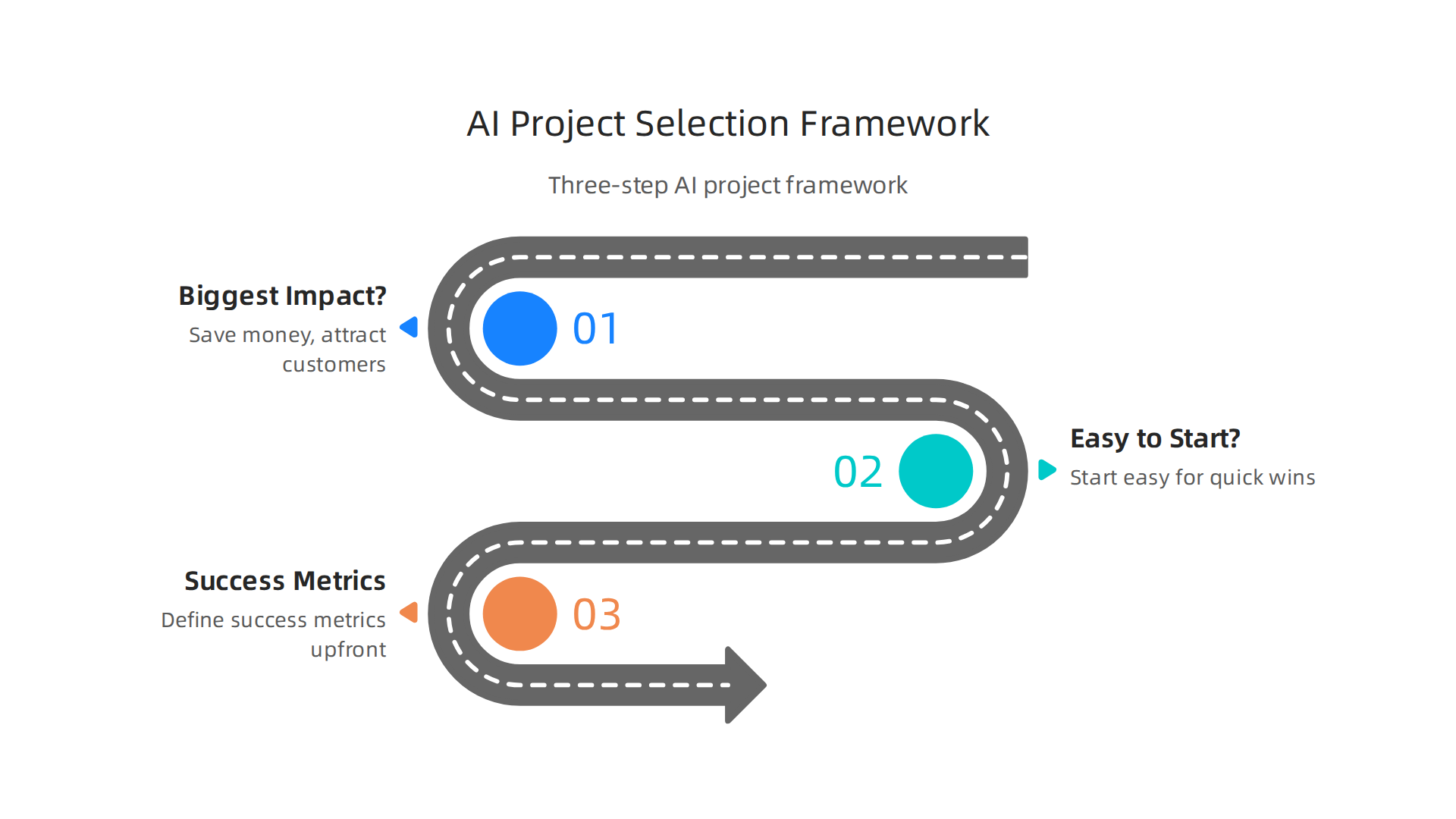
- What’s the Biggest Impact? Think about which AI project would bring the most value. Will it save a lot of money, attract many new customers, or make current customers much happier?
- How Easy Is It to Start? Some AI tools are easier to add to your current business setup than others. It’s often smart to begin with easier projects to see quick results and learn as you go.
- How Will You Know if it Worked? Before you begin, decide how you will measure success. Will you count new leads, track how much time you save, or see how much more money you make? Having clear goals helps you know if your investment in AI is paying off.
Many companies are still working on making their AI investments truly pay off. A 2026 report found that while almost all organizations have an AI plan, only a small percentage report a clear return on their investment Global AI Pulse Q1 2026. This shows why a smart approach to choosing and using AI is so important.
By using this approach, you can pick the right future tools AI offers and use them to make a real difference in your business growth. It helps you move from just exploring AI to making it a strong part of how your company succeeds. For more ways to leverage AI, explore how to Maximize Business Impact with Enterprise AI Platforms.
Moving from just exploring AI to truly making it a strong part of how your company succeeds means putting these smart tools into action. Let’s look at how forefront AI can specifically help your sales and partnership teams get real work done in 2026.
Practical AI Use Cases for Sales and Partnerships
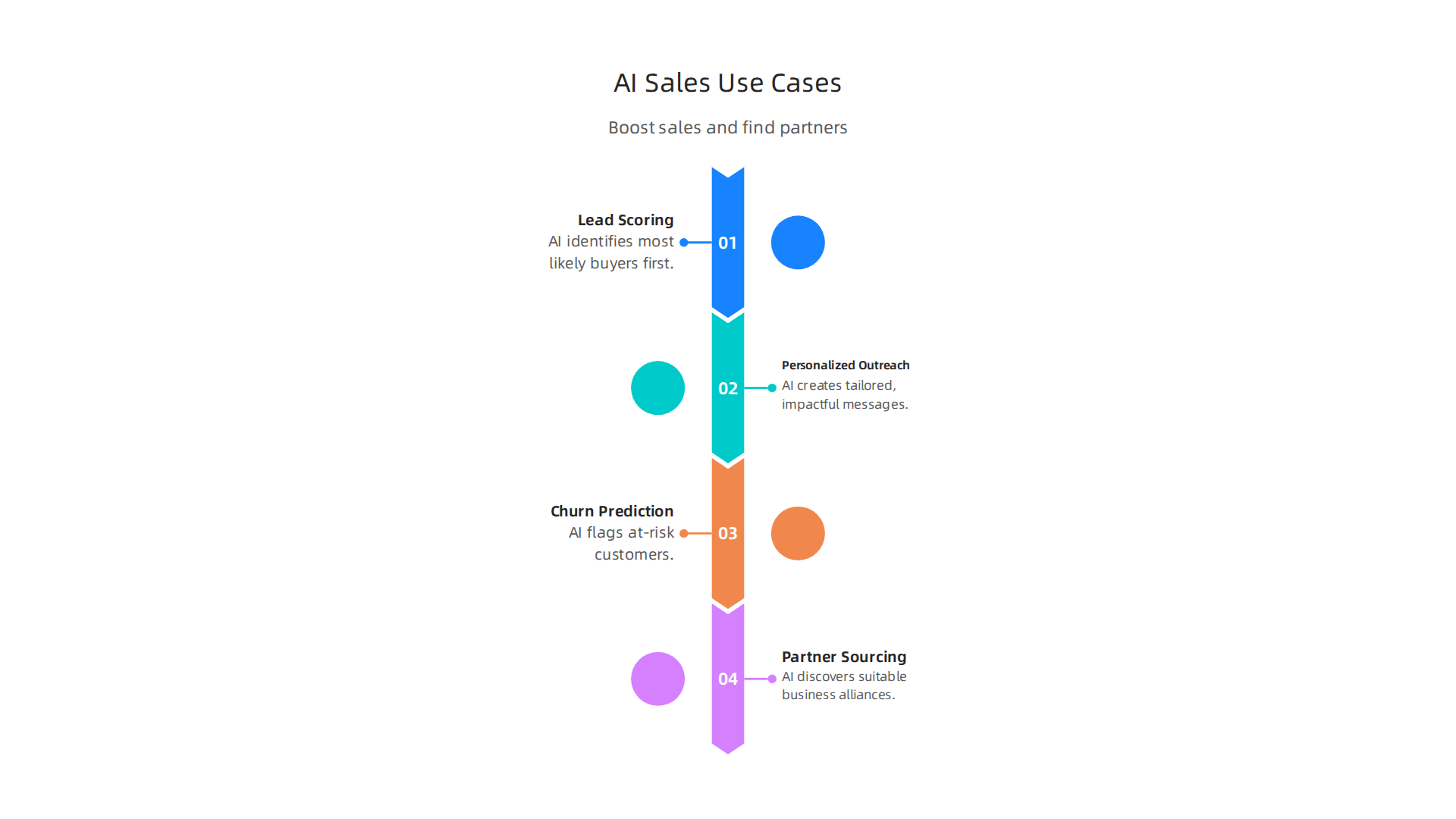
Here are some clear ways AI for business can boost your sales and help you find great partners:
-
Lead Scoring: Find Your Best Customers
Imagine your sales team gets a list of new people who might be interested in your product. How do they know who to call first? AI can help. Usingpredictive analytics, AI looks at past customer information and quickly figures out which new leads are most likely to buy. This is called lead scoring. It helps your team focus on the best chances, saving them time and effort.- Pilot Project Idea: Take 100 new leads. Have your AI tool score them from 1 to 10. Then, ask your sales team to reach out only to the top 20 leads. See if these leads turn into customers faster or more often than usual.
-
Personalized Outreach: Send Messages That Matter
When you reach out to potential customers or partners, a message that feels personal works much better than a general one.Forefront AItools, especially those with Natural Language Processing (NLP), can help here. They can look at public information about a person or company and create a message that speaks directly to their needs. A tool likesmartlead AI, for example, can make many unique messages quickly, making your outreach more powerful.- Pilot Project Idea: Choose 50 potential customers. Have AI create personalized email openers for each. Send these emails and track how many people reply compared to your usual emails.
-
Churn Prediction: Keep Your Current Customers
It costs less to keep a happy customer than to find a new one. AI can help you know when a customer might be thinking about leaving before it’s too late. By looking at how customers use your product, how often they reach out for help, or even how they respond to your emails, AI can predict which ones are at risk. This gives you a chance to talk to them and fix any issues.- Pilot Project Idea: Pick 30 customers who haven’t used your product much lately. Have AI look at their activity and flag 10 customers it thinks are most likely to leave. Have your customer support team contact those 10 people to check in.
-
Partner Sourcing: Discover New Growth Opportunities
Finding the right business partners can open new doors for your company.Future tools AIcan search through huge amounts of data online, like industry reports, news, and social media, to find companies that would be a great fit for a partnership. It can spot companies with similar goals or those that serve the same customers in a different way, helping you find strong alliances. A 2026 report shows that many organizations are now using AI to find new opportunities across different business functions, including partnerships, which is making a real difference in how companies grow The State of AI: Global Survey 2026.- Pilot Project Idea: Give AI a description of your ideal partner. Ask it to find 10 companies that match. Research those companies to see if they are indeed good potential partners.
These pilot projects are easy ways to start seeing the power of forefront AI without a huge investment. They let your teams learn how to work with AI and understand its benefits firsthand. For more ways to make AI work for you, explore how you can Use AI to Drive Business Growth with Practical Applications in 2026.
Want to stay informed about the latest AI breakthroughs and their impact on business?
Get clear daily AI updates. The AI Newsletter Worth Reading
Moving from those pilot projects to fully using AI means changing how your company finds and serves customers. This isn’t just about trying out new tools; it’s about building an "AI-Ready" Go-to-Market (GTM) process. This new way of working helps your sales, marketing, and partnership teams use what forefront AI tells them to get better results.
Building an AI-Ready GTM (Go-to-Market) Process
Making your GTM process ready for AI means looking at how your teams work and what they need to succeed. AI for business changes how sales teams find the best leads, how marketing creates campaigns, and how everyone learns to use these smart tools.
Here’s how AI will change different parts of your GTM:
- Sales Process: AI can help sales teams not just find leads but also figure out the best way to talk to them. It can even help them prepare for calls by giving them key information about the customer’s needs. This means sales people can spend more time building relationships and less time on busywork. Many companies are now using AI to make their sales pipelines stronger and close deals faster, as noted in resources like the eBook The agentic AI GTM playbook.
- Marketing Operations: AI helps marketing teams understand what customers want, create messages that really hit home, and send them at the best time. Imagine
forefront AIhelping you pick the perfect picture and words for an ad that reaches exactly the right person. This makes marketing efforts much more effective. - Enablement: Your teams need to learn how to work with AI. This means training them on how to use new AI tools and how to understand the information these tools give them. It’s about teaching them to be even better at their jobs with AI as a helper. You might want to explore how to best combine mastering AI and human capabilities for 2026 business advantage.
To make sure your GTM teams can use AI well and scale it up, think about this checklist:
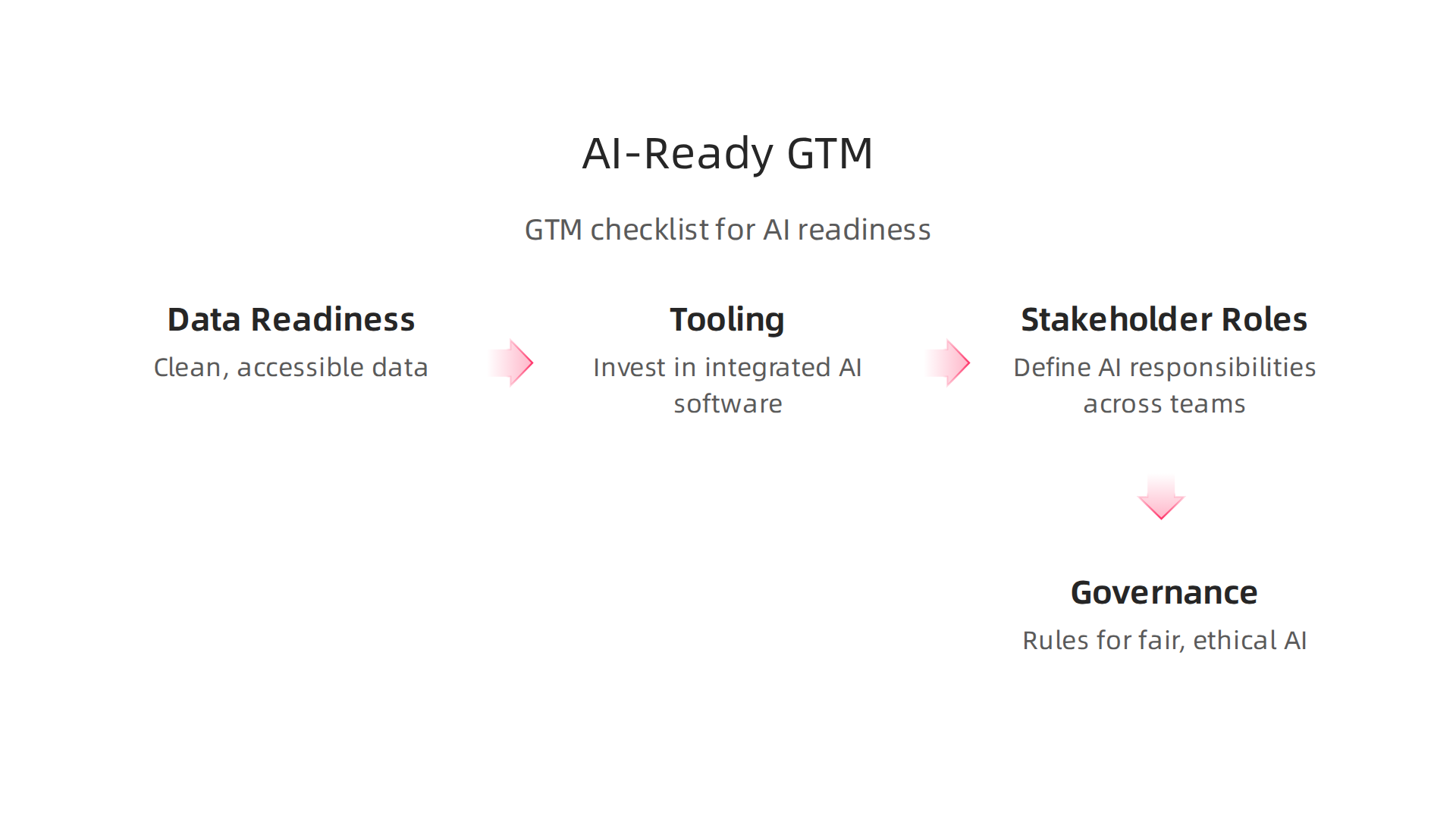
- Data Readiness: AI is only as good as the data it uses. Before you scale up your AI efforts, make sure your company’s data is clean, correct, and easy for AI to use. Bad data will lead to bad AI insights.
- Tooling: Pick the right
future tools AIthat fit your teams’ needs. This might mean investing in new software that helps with tasks like lead scoring or content creation. Make sure these tools can work together. - Stakeholder Roles: Decide who will be in charge of AI within your GTM teams. Who will make sure the data is good? Who will train others? Clear roles help everyone know what to do.
- Governance: This is about setting up rules for how you use AI. It makes sure AI is used fairly, correctly, and ethically. With new rules like the EU AI Act taking full effect in 2026 for many obligations, having strong Data Governance Frameworks for AI Compliance is key. Proper AI Governance & Risk Readiness is very important for handling the possible risks of AI systems and staying on the right side of the law in 2026.
After setting up your teams to be AI-ready, the next crucial step is to know if your efforts are truly paying off. You need a clear way to see if using forefront AI tools is making a real difference. This means choosing the right things to measure, setting up smart dashboards, and trying out new ideas regularly.
Measuring Impact: Metrics, Dashboards, and Experimentation
When you bring ai for business into your daily work, it’s not enough to just hope for the best. You need to look at actual numbers to understand what’s working and what’s not.

This helps you get the most out of your investment in future tools AI.
Key Metrics for Business Growth with AI
For business development, tracking how AI helps your sales and marketing teams is very important. Here are some key metrics to watch:
- Conversion Lift: This metric tells you if more leads are turning into customers because of AI. For example, if
smartlead aihelps sales find better leads, you’d expect to see a higher percentage of those leads close a deal. Many companies find it challenging to show a clear return on investment from AI, often focusing on speed or cost savings instead of direct business growth metrics. However, focusing on growth metrics can help show true value, as highlighted in a PwC AI performance study. - Time-to-Close: How long does it take for a sale to happen? If AI tools help your sales team prepare better or connect with customers more effectively, deals might close faster.
- Pipeline Coverage: This looks at whether your sales team has enough potential deals to meet their goals. AI can help fill the sales pipeline with quality leads, making sure there’s always enough work to do.
- Customer Satisfaction: Happy customers often mean loyal customers. AI can improve customer service or personalize experiences, which can be measured through surveys or feedback. Many organizations in 2026 consider customer satisfaction and loyalty, like Net Promoter Score, as top metrics for AI success, according to an Adobe AI and Digital Trends 2026 report.
Experimentation and Dashboards for AI Success
To really understand how your AI models are doing and how they affect your business, you need to set up a way to test and watch their performance.
- Testing New Ideas: Don’t just set up an AI tool and forget it. You should always be trying new things. This might involve A/B testing, where you compare how two different AI approaches work, or using a "holdout group" to see the true impact of AI. For instance, creating separate groups to test AI’s impact can reveal its true value, as noted in a guide on AI Incrementality: 5 Metrics for 2026 Marketing. More than two-thirds of marketers are using A/B testing in 2026 to see what works best. You can learn more about finding great ways to use AI to drive business growth with practical applications in 2026.
- Smart Dashboards: Think of dashboards as your control center. They show you all the important metrics in one place. These dashboards should display both how well your AI models are performing (like how accurate their predictions are) and the business outcomes (like conversion rates or sales numbers). This way, you can quickly see if your
forefront AItools are helping your company grow.
Staying informed about the latest advancements and practical applications of AI is key to managing its impact effectively.
Get clear daily AI updates from The AI Newsletter Worth Reading.
Using AI tools helps your company grow, but it also brings new rules and things to watch out for.

When you use forefront AI for business development, it’s super important to make sure you are being fair, protecting customer information, and following all the rules. This helps build trust with your customers and keeps your business safe.
Risk, Compliance, and Trust When Using AI for BD
When you use ai for business to talk to customers, like with smartlead ai to find new leads, you’re dealing with their personal information. This means you have to be very careful. Not being careful can lead to problems with privacy, data protection, and even how your AI makes decisions. In 2026, many places have new rules for how businesses use AI. Being ready for these rules, called AI governance, is key for any company, as highlighted in reports on AI Governance & Risk Readiness 2026.
Protecting Privacy and Data with AI
When your future tools AI gathers information about potential customers, you must keep that data private and safe. This means:
- Knowing what data you have: Understand exactly what personal information your AI collects.
- Keeping it safe: Make sure no one can get to it who shouldn’t. This often means using strong security.
- Using it wisely: Only use the data for the reasons you said you would. Best practices for AI show the importance of protecting personal data and making sure AI works fairly. This is key for keeping your AI systems honest and reliable, according to the FPF 2026 Best Practices for AI and WA Tech. You also need to make sure your data management plans are strong to meet compliance rules, especially with new laws coming out in 2026.
Avoiding AI Bias
Sometimes, AI can learn bad habits from the data it’s given. This is called bias. If your AI is biased, it might treat some customers differently or unfairly, like only showing certain offers to one group of people. This can hurt your business and your customers.
To avoid this:
- Check your data: Make sure the data you use to train your AI is fair and reflects all types of customers.
- Test your AI: See if your AI is making fair decisions for everyone.
- Be clear: If your AI helps make a big decision about a customer, make sure there’s a human involved to check it and explain how the decision was made. Experts suggest having clear ways to find and fix bias, as well as being open about how your AI works. This helps build trust and ensures fairness, as noted in The 2026 Privacy Leader’s Operating Playbook. Getting a good grasp of how humans and AI can work together can give your business a big advantage. Learn more about mastering AI and human capabilities for 2026 business advantage.
A Simple Compliance Checklist for AI Pilots
Before you launch any new forefront AI tool for your business development, it’s smart to have a quick check-in. This helps you manage risks and follow rules.
Here’s a minimal checklist:
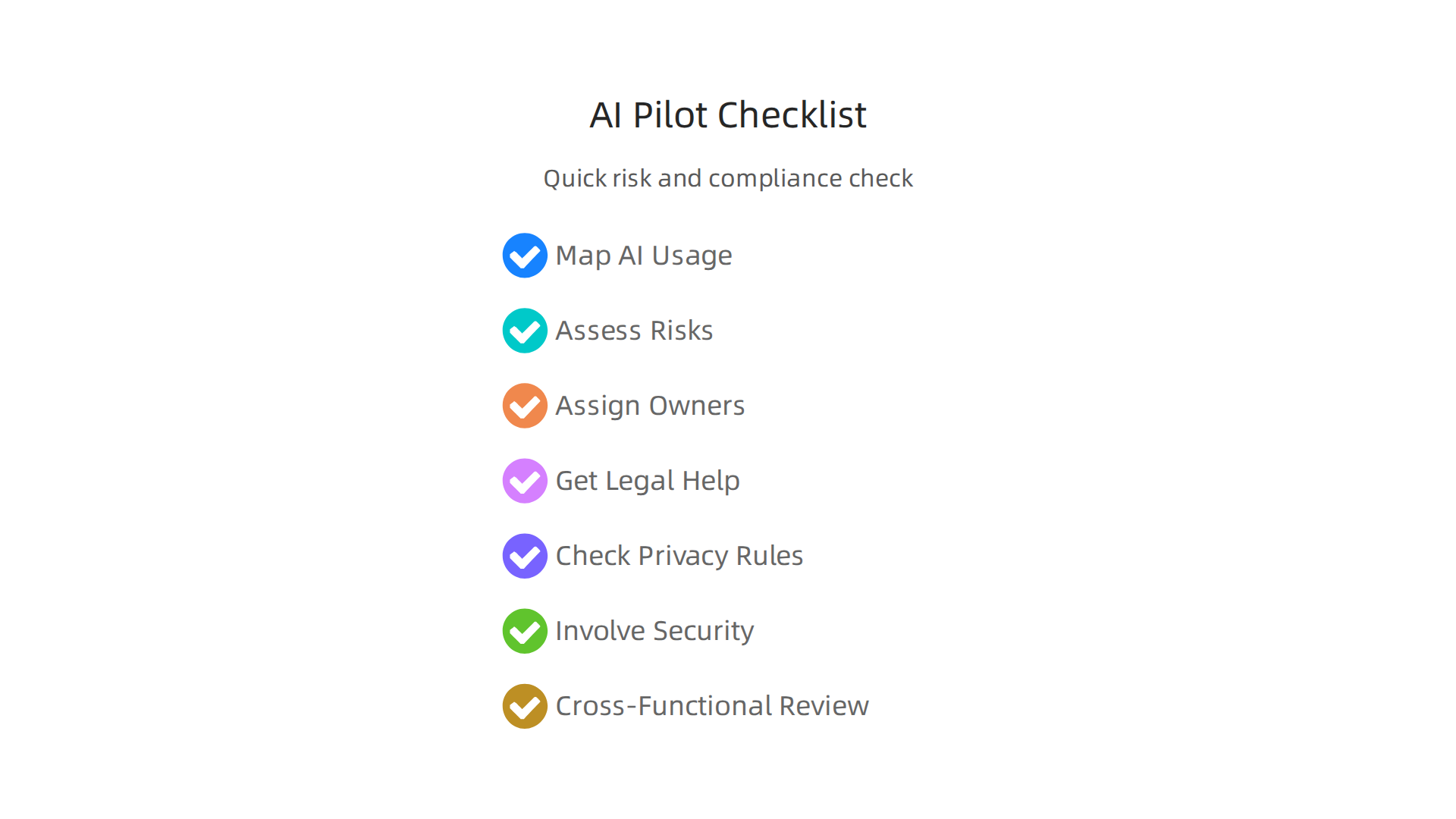
- Map AI Usage: Know exactly where and how AI will be used.
- Assess Risks: Figure out what could go wrong, especially with customer data and fairness.
- Assign Owners: Make it clear who is in charge of managing AI risks and making sure rules are followed.
- Get Legal Help: Talk to your legal team to ensure everything meets the law.
- Check Privacy Rules: Ensure your privacy team has reviewed how customer data will be handled.
- Involve Security: Work with your security team to keep AI systems and data safe.
- Cross-Functional Review: Get people from different parts of your company (like legal, privacy, security, and product teams) to look over your AI plans. Setting up these review groups is key to handling AI risks effectively, according to insights on AI Platform Risk Assessments.
Staying on top of these rules and practices is not just about avoiding problems. It’s about building a strong foundation of trust with your customers and making sure your ai for business tools are used in a way that helps everyone. For a deeper understanding of navigating these critical areas, explore AI policy the 2026 roadmap for business compliance and trust.
Moving beyond just rules, companies need to look ahead and prepare for what’s next. The world of AI for business is always changing. To stay strong and keep growing in 2026 and beyond, smart companies must plan where they will put their money and how they will test their ideas.
Smart Investments for an AI-Driven Future
Thinking about strategic investments means choosing the right future tools AI and making sure your team can use them well. It’s not just about buying the newest thing; it’s about making sure these tools truly help your business grow. For example, reports show that success with AI is not just about making more things, but about getting better results and making a real business impact, as noted in the State of Marketing in an AI-Driven World: 2026 Adobe Report.
When picking AI vendors, look for ones that can show clear growth and a path to better customer satisfaction. It’s important to build a business that is "AI-native," meaning AI is at the heart of how you work, not just an add-on. This helps you get real value from your AI efforts, according to insights on AI Era Business Competition.
Your team also needs to learn new skills to work with forefront AI tools. Investing in people’s training is just as important as investing in the technology itself. This focus on building new abilities helps businesses keep up with fast changes in technology. You can find practical ways to use AI to drive business growth with practical applications in 2026.
Planning for Different AI Futures
Once you know what to invest in, it’s time to think about different futures. This is called scenario planning. It means looking at a few possible ways the world could go and seeing how your business would do in each one. It’s like having a plan B, C, and D for your AI for business strategies. This way, you’re ready for anything, whether AI grows super fast or more slowly. Experts suggest this kind of planning helps companies prepare for many possible futures, as explained in Scenario Planning: Preparing Tech Companies for Multiple Futures.
Leaders can use these questions to stress-test their plans:
- What if smartlead ai becomes even smarter and can do almost all lead generation on its own? How would our sales team change?
- What if new rules about AI come out next year that make some of our AI tools much harder to use? What’s our backup plan?
- What if a competitor creates an amazing new forefront AI tool that changes the whole market? How quickly can we adapt?
By thinking through these scenarios, you can spot weak spots in your plans and find new chances to grow. Understanding the World of AI in 2026 can help you prepare for these changes.
Being ready for the future of AI means making smart choices today. It means picking the right tools, training your people, and planning for different tomorrows. This helps your business stay strong and competitive no matter what happens. To get even more insights on how AI is changing the business world every day, make sure you sign up for The AI Newsletter Worth Reading.
Summary
This article explains why ‘forefront AI’ — the most advanced, practical AI tools and approaches — matters for business development in 2026 and how leaders can turn fast-moving AI into real growth. It covers the key AI capabilities (like NLP, recommendation engines, and predictive analytics), concrete sales and partnership use cases (lead scoring, personalized outreach, churn prediction, partner sourcing), and simple pilot ideas to get started with low risk. The guide shows how to build an AI-ready go-to-market process, prepare data and tooling, assign roles, and set governance so teams can scale AI responsibly. It also explains which metrics to track (conversion lift, time-to-close, pipeline coverage) and how to run experiments and dashboards to measure impact. The article highlights privacy, bias, and legal risks and gives a short compliance checklist for pilots. Finally, it advises where to invest, how to train people, and how to run scenario planning so your business is ready for multiple AI futures.