
Introduction
The speed of research and development in technology has never been faster. In 2026, the numbers back that up. Forrester projects that global technology spending in 2026 will grow by 7.8% to reach $5.6 trillion. That is a huge jump. Companies and governments are pouring money into new ideas and breakthroughs.
But here is the problem. With so much happening, it is hard to know what truly matters. Decision makers face information overload. News, reports, and updates come from every direction. You might wonder which technologies will shape your industry and which are just hype.

The signals get lost in the noise.
That is where this article comes in. We have looked at the data and the trends to give you a clear, evidence-based overview of the most impactful R&D developments in 2026. Whether you are an executive, an investor, or a tech enthusiast, this guide will help you focus on what really counts.
Innovation is not just about money. It is about smart direction. Hubs like Innovation Depot help turn ideas into real products. Companies such as Radiance Technologies and Field AI show how focused r technology research leads to practical tools. Understanding these players gives you an edge. For more on how investment shapes breakthroughs, check out this guide on deep science ventures.
We also know that keeping up takes effort. That is why many professionals rely on trusted sources to cut through the clutter. For clear daily AI updates, consider The AI Newsletter Worth Reading. It is a simple way to stay informed without the overwhelm.
In the sections ahead, we will break down the key R technology trends you need to know. Let’s get started.
Global R&D Investment Trends: Where the Money Flows in 2026
So where is all that R&D money actually going? The short answer is everywhere, but some places are getting a lot more than others. According to the 2026 R&D data release from the UNESCO Institute for Statistics, global investment in research and development has been climbing steadily for years. R&D spending as a share of global GDP went from 1.71% in 2015 to 1.92% in 2023. That might not sound like a big jump, but when you are talking about the whole world economy, every fraction of a percent means billions of dollars.
Three regions lead the pack in 2026: North America, Europe, and Asia-Pacific. Together they account for the vast majority of global R&D spending. The United States and China sit at the very top, followed by Japan, Germany, and other major industrial economies. These countries have built strong ecosystems that keep the innovation engine running year after year.
What are they spending on? In 2026, three areas get the most attention. Artificial intelligence is at the top of the list. AI research is no longer just a lab experiment. It is a practical tool that companies use every day. If you want to understand how this shift happened, our guide on how a technology strategy board drives deep tech innovation explains how leadership teams decide where to place their bets.
Quantum computing comes second. Governments know that the country which cracks quantum first will have a huge advantage in everything from medicine to national security. Biotech is the third big winner. The push for better treatments, longer lives, and sustainable food keeps biotech funding strong.
But here is something interesting. Emerging markets are not sitting still. Countries in Southeast Asia, Latin America, and parts of Africa are speeding up their R&D spending. They see the gap and want to close it. That is good news for everyone. More players in the game means more ideas, more competition, and faster progress for all of us.
AI and Machine Learning R&D: Breakthroughs Reshaping the Landscape
Pause for a second and think about how much AI has changed just in the last year. In 2026, artificial intelligence is not a side project anymore. It is the main event. Companies and governments are pouring money into r technology faster than ever before. And the results are showing up everywhere.
Generative AI leads the charge. Those early models that could write poems or generate basic images have evolved into something much more powerful. Today, we have foundation models that understand context, remember past conversations, and act more like assistants than tools. These systems are not just generating text or pictures. They are designing drugs, predicting protein structures, and helping scientists model climate change. According to the Kersai analysis of AI breakthroughs in 2026, generative AI is accelerating breakthroughs in drug discovery, protein folding, and disease eradication at a pace we have never seen before.
Autonomous systems are the second big wave. Vehicles, drones, and robots are getting smarter because of better r technology in their brains. The innovation depot where these ideas become real products is growing fast. Companies are moving from prototypes to real-world deployments. You can see it in self-driving delivery vans, warehouse robots that work alongside humans, and even autonomous farming equipment.
Next-generation foundation models are the third piece of the puzzle. These are the giant neural networks that power everything else. In 2026, the race is not just about making them bigger. It is about making them smarter and more efficient. Researchers are focusing on models that use less compute power while delivering better results. That is a huge deal because compute costs are one of the biggest barriers to AI research today.
Investment in AI-specific R&D grew by double digits year-over-year through 2026. That is not a small bump. It is a sustained surge. Companies like Nvidia, Microsoft, Google, and a wave of startups are all competing to build the best infrastructure. If you want to understand where this is heading, check out our overview of the world of AI in 2026 for a full picture of the trends and what comes next.
But here is the honest truth. Not everything is smooth. The challenges are real.
Data governance is a mess in many places. Who owns the training data? What can you legally use? Different countries have different rules, and navigating that is hard. Compute costs remain sky high. Training a single large model can cost millions of dollars in electricity and hardware. That creates a barrier for smaller players. And ethical frameworks are still catching up. We have powerful tools but not always clear rules about how to use them responsibly.
Despite these hurdles, the direction is clear. AI and machine learning R&D is not slowing down. It is picking up speed. The breakthroughs we see today are just the beginning.
If you want to stay on top of these changes without getting lost in the noise, getting a daily dose of clear updates can make all the difference. The The AI Newsletter Worth Reading delivers concise, reliable AI news straight to your inbox every day. It is a simple way to keep your finger on the pulse of the fastest moving field in technology.
Cybersecurity R&D: New Frontiers in Defense and Resilience
Staying on top of AI breakthroughs is one thing. Keeping your data and systems safe while those breakthroughs happen is another challenge entirely. That is why cybersecurity R&D is moving faster than ever in 2026.
Here is the thing. Every new AI tool we build also becomes a new weapon for attackers. Hackers are using AI to craft smarter phishing emails, find vulnerabilities faster, and automate their attacks at a scale humans cannot match. So the good guys have to fight back with the same kind of firepower.
Investment in cybersecurity R&D has surged as a direct result. Companies know that a single breach can wipe out millions of dollars and years of customer trust. The money flowing into defense research is not just about patching old problems. It is about building entirely new ways to protect digital infrastructure.
AI-powered security is the biggest change you will see. Security systems today can analyze network traffic in real time, spot unusual behavior, and shut down a threat before it causes damage. These systems learn from every attack they see, getting better over time. According to the Microsoft article on 7 AI trends for 2026, AI is becoming a true partner in security, helping teams respond faster and more accurately than ever before.
Zero-trust architectures are the second major frontier. The old idea was to build a strong wall around your network and trust everything inside. That does not work anymore. Zero-trust means no user, no device, and no application is trusted by default. Every request gets verified. It is a mindset shift that requires deep R&D to implement well.
And then there is quantum-resistant cryptography. Regular encryption methods rely on math problems that are hard for normal computers to solve. Quantum computers will crack those problems open like a nut. So researchers are racing to build new encryption systems that can survive a quantum attack. It is one of the most important R&D efforts happening right now.
Collaboration is also changing. Threat intelligence sharing used to be rare. Companies kept their security secrets close. But in 2026, sharing information about attacks and vulnerabilities across industries is becoming standard. It makes everyone stronger. If you want to understand how tech entities work together on challenges like this, check out this guide on how to identify key tech entities and evaluate them effectively for a deeper look at collaboration in the tech space.
The bottom line is simple. Cybersecurity R&D is not a side project anymore. It is a core part of how we build and trust technology. And in 2026, the teams that invest in defense are the ones that will thrive.
Quantum Computing R&D: From Theory to Early Application
If cybersecurity R&D fights to protect our data, quantum computing R&D is working on a whole different kind of revolution. This is a field where theory is finally turning into something real you can use. And the progress in 2026 is nothing short of stunning.
Here is the big challenge. Quantum computers have been a dream for decades. They promise to solve problems that regular computers cannot even touch. Problems like designing new medicines, optimizing supply chains, and cracking complex encryption. But the hardware has always been the bottleneck. Qubits, the basic units of quantum information, are incredibly fragile. They lose their quantum state at the slightest disturbance.
In 2025 and now into 2026, researchers have made huge progress on exactly that problem. According to a detailed review of Quantum Computing Industry Trends 2025, dramatic improvements in quantum error correction have turned what many saw as a fundamental physics problem into a solvable engineering challenge.

Google’s Willow chip, for example, demonstrated scalable error correction that works in practice. That is a huge deal. It means we can now build quantum computers that actually stay accurate long enough to get useful work done.
The race is on. Major tech corporations and startups are all pushing hard toward fault-tolerant quantum computers. IBM has a clear roadmap that aims for the first examples of quantum advantage in 2026 itself. You can see their full plan on the IBM Quantum Roadmap.
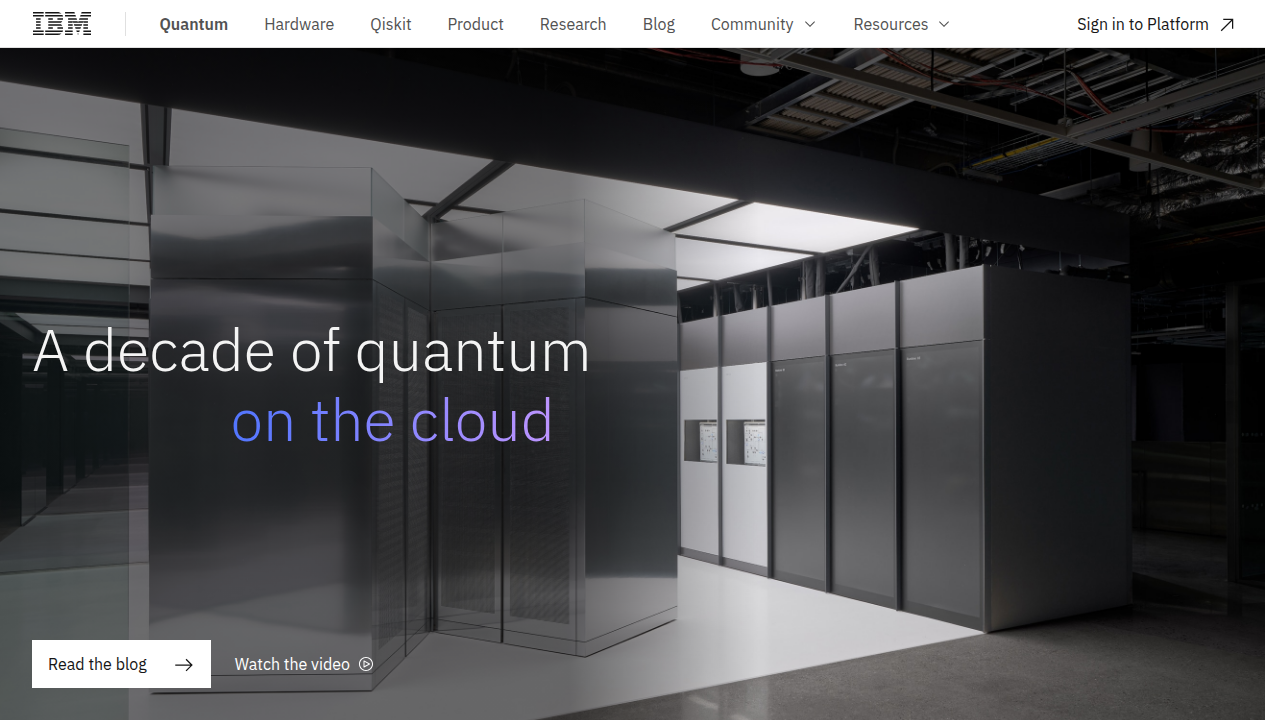
Companies like Google, Microsoft, IonQ, and Quantinuum are all in the mix, each with their own approach. If you want to see which players are leading this charge, check out this list of top quantum computing companies in 2026 for a complete breakdown.
And the money is following. R&D spending on quantum computing reached new milestones in 2025 and is projected to keep climbing in 2026. Governments and private investors alike see quantum as a strategic priority. The US, Europe, and China are all pouring billions into quantum research. The goal is not just to build a faster computer. It is to unlock a completely new kind of capability. Think of it as the difference between a bicycle and a rocket ship.
The term r technology fits quantum computing perfectly. It is a technology that redefines what is possible. And the breakthroughs happening at places like innovation depot facilities around the world are turning abstract theory into something you can touch. Radiance technologies like quantum sensors and quantum communication are also emerging from the same research. The field is widening fast.
Quantum computing will not replace your laptop. But for specific use cases in drug discovery, materials science, and financial modeling, it will change everything. And 2026 is the year that change starts being real.
If you want to keep up with how these fast-moving tech trends will affect your business, get clear daily updates from The Deep View Newsletter. It is the easiest way to stay ahead of the curve.
Advanced Materials R&D: The Foundation for Next-Generation Technologies
All the quantum computing power in the world would be useless without the physical materials to build the chips. That is where materials science R&D comes in. You can think of it as the hidden foundation under every piece of modern technology. Better materials make everything else possible.
And 2026 is a huge year for materials breakthroughs. Researchers are creating new semiconductors that make chips faster and more energy efficient. They are developing batteries that charge in minutes and last for days. They are building composites that are stronger than steel but light enough to float. These are not small improvements. They are the kind of leaps that unlock whole new categories of products. The energy tech revolution of 2026 depends heavily on these advances in battery chemistry and materials.
Here is what is driving this progress. The old way of discovering new materials was slow. You would mix chemicals, test them, and hope for the best. It could take years. Today, researchers use field ai to speed things up dramatically. AI models can predict how a new compound will behave before anyone mixes a single batch. That means scientists can test thousands of virtual materials in the time it used to take to test one. This approach is already leading to breakthroughs in battery chemistry and lightweight alloys.
The investment picture is also bright. Money is flowing into sustainable and bio-based materials in a big way. Companies want materials that perform well and are better for the planet. Think plant-based plastics, recyclable composites, and manufacturing processes that produce less waste. Governments are funding this research too. It is a priority everywhere from university labs to big corporate research centers.
This type of foundational work is what we call an r technology. It does not get the headlines that AI or quantum computing get. But without it, those headline technologies cannot exist. The innovation depot that builds our future depends on materials labs as much as it depends on software engineers. And radiance technologies like advanced coatings and next-generation superconductors are emerging from the same materials research pipeline.
If you want to understand how these building-block technologies affect your business, take a moment to learn about deep science ventures and what investors need to know about funding breakthrough science. The materials we build with today will define the products we use tomorrow.
Biotechnology and Health Tech R&D: Innovations at the Intersection of Biology and Data
Now let’s step into another lab that looks nothing like it did a few years ago. Biotechnology research and health technology development are moving fast. The old way of discovering a new drug could take over a decade and cost billions. In 2026, that timeline is shrinking fast. Why? Because biology and data science are finally working together at scale.
AI is now baked into drug discovery pipelines. Instead of testing thousands of chemical compounds by hand, researchers use predictive models to find the most promising candidates in days. This lets them skip the dead ends and focus on what actually works. According to a recent guide on biotechnology industry trends and innovations to watch in 2026, generative and predictive AI are accelerating discovery across the board. Gene editing tools like CRISPR are also getting smarter, thanks to machine learning that helps design more precise edits. The combination is powerful.
This is where field ai really shines. Hospitals, labs, and even wearable devices generate mountains of data every day. AI models trained on this data can spot patterns no human could see. They flag early signs of disease, suggest personalized treatments, and even predict how a patient will respond to a specific drug. That is the promise of precision medicine becoming real in 2026.
And it is not just about drugs. Digital health platforms and wearable device R&D are exploding. Smart watches that track heart rhythms, rings that measure sleep quality, and patches that monitor blood sugar are all getting better. The data from these devices feeds back into research, creating a loop that improves both the hardware and the algorithms. It is a perfect example of how r technology builds on itself, version after version.
Of course, regulators are working hard to keep up. The FDA and other agencies around the world are updating their frameworks to handle AI-driven diagnostics, software-as-a-medical-device, and gene therapies. This is tricky because the technology moves faster than the rules. But progress is happening. New guidelines are giving companies clearer paths to bring innovations to market safely.
If you work in health tech or simply want to stay ahead of these rapid changes, you might find value in a resource that covers AI breakthroughs daily. For example, you can explore how 81 percent of radiology departments already use AI in medical imaging as a sign of where the whole field is heading.
The bottom line is this: biotechnology and health tech are not separate worlds from data science anymore. They are one and the same. And staying informed about the latest breakthroughs is getting harder every week. To make it easier, consider getting clear daily AI updates from The AI Newsletter Worth Reading. It covers the most important developments across AI, biotech, and other cutting-edge fields so you do not have to hunt for them yourself.
R&D Talent and Workforce: Overcoming the Skills Gap
All the AI models and lab gadgets in the world mean nothing without the people who build and run them. And right now, there simply are not enough skilled professionals to fill the roles that are opening up. The demand for R&D talent in fields like AI, quantum computing, biotechnology, and advanced materials science is growing much faster than the supply. Companies are feeling the pinch across every stage of the innovation pipeline.
Take r technology, for instance. Every organization embracing r technology needs experts who can design algorithms, manage high-performance computing clusters, and interpret complex biological datasets. Yet the talent pool is shallow. According to a recent list of 10 biotech breakthroughs to watch in 2026, the breakthroughs are coming fast, but the specialized workforce required to make them happen is still catching up. Firms like Radiance Technologies are actively expanding their R&D teams, but finding candidates with the right mix of scientific and computational skills remains a top challenge.
Universities are becoming key innovation depots for training the next generation. Many companies are forming deep academic partnerships to co-develop curricula and offer hands-on research opportunities. Reskilling programs inside large organizations are also on the rise. Instead of only hiring externally, firms are investing in upskilling their existing engineers and scientists to work with new tools like AI-driven drug discovery platforms and quantum simulation software. Events like biotech conferences in 2026 often include dedicated workforce development tracks to help bridge the gap.
Immigration policies and remote work are adding new twists to the talent equation. Countries that offer fast-track visas for tech and science professionals are winning the talent war. At the same time, remote and hybrid R&D roles have opened up global hiring possibilities. A quantum researcher in Berlin can now collaborate with a materials scientist in Singapore without either of them relocating. That flexibility helps, but it also means companies face global competition for the same small pool of experts.
The bottom line is that innovation depends on people. Without a strong strategy for attracting, training, and retaining R&D talent, even the most promising technologies will stall. Leaders who treat workforce development as seriously as their product roadmaps will be the ones who pull ahead. If you want to dig deeper into how smart companies are structuring their innovation teams, check out this guide on how a technology strategy board drives deep tech innovation. It offers practical steps for aligning your talent strategy with your technology goals.
Commercialization and Strategy: Turning R&D into Market Advantage
Finding the right talent is only half the story. The real challenge is turning all that research and development into products people actually want. R&D that never leaves the lab is just an expensive hobby. For any company working with r technology, the goal is to move fast from discovery to market without wasting time or money.
That starts with the right metrics. Too many teams track activity instead of results. How many patents did you file? How long did it take to go from concept to launch? And most importantly, how much revenue did each R&D dollar generate? A recent industry report on How R&D ROI separates winners from the pack shows that top-performing companies measure every stage of the pipeline. They do not guess. They use data to decide which projects to fund and which to kill.
Open innovation is another big piece of the puzzle. No single company has all the answers, especially in fast-moving fields like field ai and biotechnology. That is why more organizations are building ecosystems. They partner with universities, startups, and even competitors to share risk and speed up development. These partnerships create what some call an innovation depot where ideas flow freely between different players. The result is faster cycles and lower costs.
Strategy also means knowing when to say no. Not every breakthrough needs to become a product right away. Smart teams align their R&D choices with market demand. They ask: Will this solve a real customer problem? Can we produce it at scale? Does it fit our brand and business model? If the answer is no, they redirect resources to something that will.
For leaders building this kind of commercial engine, the next step is understanding how investors view R&D-heavy companies. For a deeper look, check out what investors need to know about funding breakthrough science. It explains how valuation connects to pipeline strength and time-to-market.
Turning R&D into market advantage takes discipline. But the companies that get it right win big.

If you want to stay ahead of the curve on how AI and r technology are reshaping entire industries, get clear daily AI updates from The Deep View Newsletter. It is a quick read that helps you spot the next big thing before your competitors do.
Summary
This article surveys the most consequential R&D trends of 2026 and explains where money, talent, and attention are flowing across technology sectors. Drawing on global spending data and industry reporting, it highlights why AI, quantum computing, biotechnology, advanced materials, and cybersecurity are receiving the largest shares of investment and how those investments are turning theory into early applications. The piece explains practical breakthroughs—foundation models, autonomous systems, quantum error correction, AI-driven materials discovery—and outlines the major roadblocks such as compute costs, data governance, ethical frameworks, and a tightening talent market. It also covers commercialization challenges, showing how top firms measure R&D ROI, use open innovation, and align pipeline choices with market demand. Readers will come away able to identify priority technology areas, understand the strategic and operational issues for R&D leaders, and adopt concrete approaches to hiring, partnering, and turning lab work into real products.