
Introduction
Industry 4.0 describes the integration of connected digital technologies with industrial operations. It brings data, software, machines, and people into more connected manufacturing systems. An EU publication highlights technologies such as the Internet of Things (IoT), cloud computing, big data, machine learning, automation, and robots, while describing how connected devices can support data-driven manufacturing.
Understanding Industry 4.0 can help manufacturers assess where digital tools may address operational needs, and what changes their adoption could involve. The term covers more than automating a single task: it points to links across equipment, products, systems, and people. This guide explains the concept, its core technologies, and representative manufacturing applications. It also considers potential benefits and practical challenges, without assuming that adopting technology guarantees a particular result. The label does not mean that every facility uses every technology or has reached the same level of integration; the appropriate mix depends on operational needs.
What Is Industry 4.0?
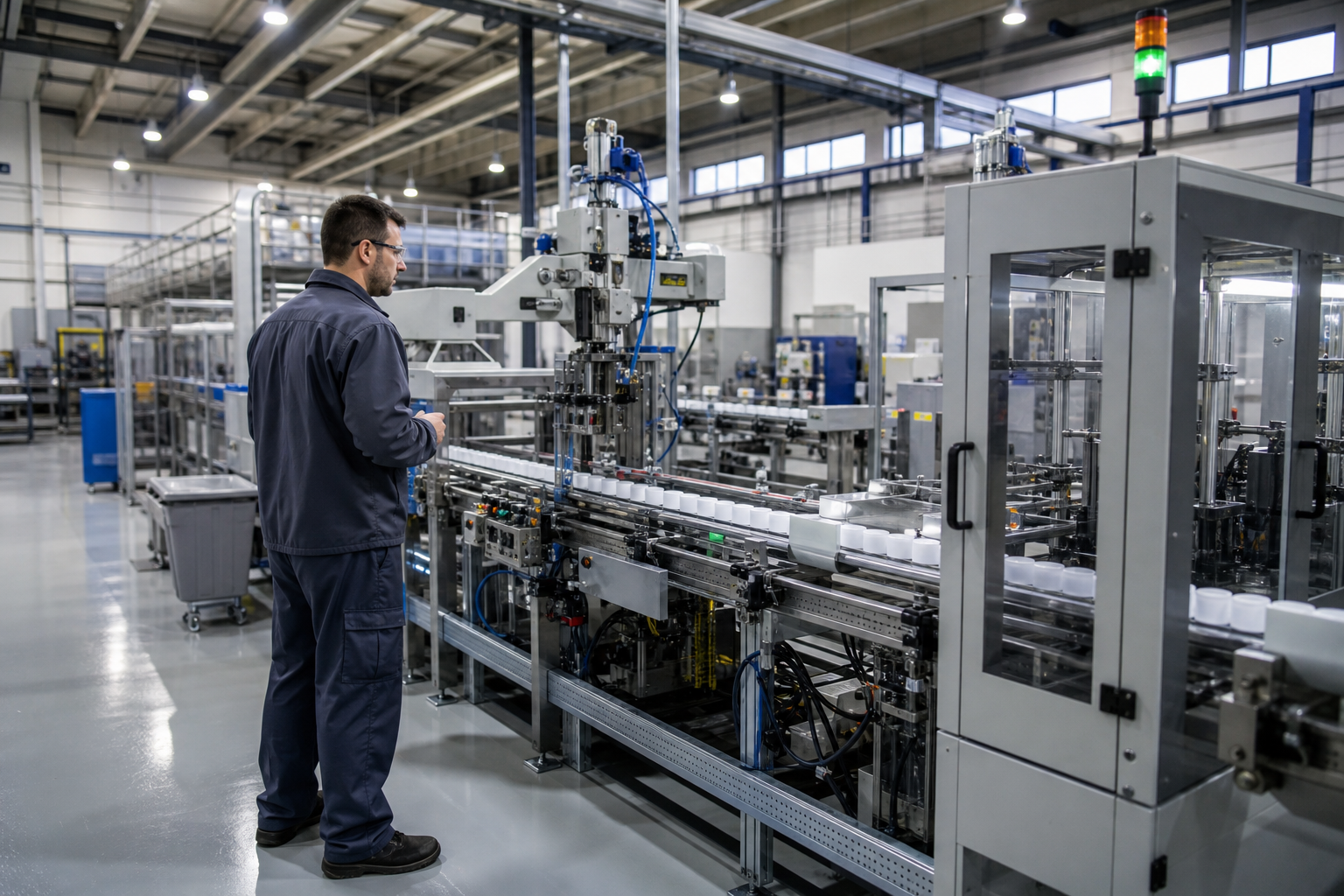
Industry 4.0 is a broad term for connecting physical industrial operations with digital systems, data, and networked equipment. In the EU’s framing, smart factories link machines, products, systems, and people, bringing physical and virtual operations together through cyber-physical systems. This is an intended model of connected manufacturing, not a claim that every factory has reached that level of integration.
In a more connected operation, data from equipment and production processes can be shared with software and people who monitor or coordinate work. This may support real-time visibility and data-informed decisions. NIST’s smart-manufacturing program, for example, focuses on measurement and standards that support interoperability, monitoring, control, and optimization. Its terminology emphasizes smart manufacturing rather than establishing one universal definition of Industry 4.0.
The distinction from simply automating a task is the connection between parts of the operation. A machine that performs a task automatically is not, by that fact alone, evidence of an integrated digital production system. Industry 4.0 is also not one product or a fixed checklist of technologies. The EU describes Industry 5.0 as complementing Industry 4.0, with further emphasis on human-centricity, sustainability, and resilience, illustrating that industrial frameworks can share technologies while setting different priorities.
Key distinction: Industry 4.0 is an umbrella concept for connected industrial transformation, not a single product or guaranteed maturity level.
For manufacturers, the useful question is therefore not whether a facility has adopted every associated technology, but whether digital connections address a defined operational need.
Core Industry 4.0 Technologies
Industry 4.0 brings together technologies that collect, move, process, and act on operational information. The specific combination depends on the production setting; no single facility needs every technology commonly associated with the term.
| Technology category | Role in a manufacturing context | Example application |
|---|---|---|
| Industrial IoT (IIoT) and connectivity | Links equipment, sensors, software, and people so operational data can be shared. | Monitoring equipment status or production conditions. |
| Cloud computing and data platforms | Provide ways to store and work with data from connected systems. | Bringing information from different production systems together for analysis. |
| Edge computing | Places processing and analytics closer to where data is captured, which can support responsive local operations. | Processing sensor information near a machine when local responsiveness is useful. |
| Analytics and machine learning | Help interpret operational data for monitoring, control, or optimization. | Identifying patterns in machine or process data for review. |
| Robotics and automation | Perform or assist with production tasks; they are common components, not mandatory ingredients. | Automating a defined activity within a production process. |
| Digital twins | Provide virtual representations of physical entities, linked to them through data. | Simulating a system or testing scenarios using a digital representation. |
A typical data flow might begin with sensors and connected equipment capturing information. IIoT connectivity transfers that information to software for processing, on the cloud, at the edge, or through a combination of approaches. Analytics can then help people interpret conditions and decide whether an operational response is needed. This is a conceptual flow, not a prescribed architecture. NIST describes IIoT as enabling connections and interactions among hardware, software, and people, with standards supporting interoperable integration in its IIoT smart-manufacturing publication.
Edge computing is an associated capability, not a universal requirement. NIST describes it as placing processing, analytics, and connectivity nearer to data capture; its usefulness depends on the application (NIST’s overview of connected devices). Digital twins also vary in scope and operation. They are virtual representations linked to physical entities through data and may be updated or used in real time, but continuous real-time operation is not universal.
Interoperability and cybersecurity need attention alongside technology selection. Standards can support integration across systems, while security planning should account for industrial requirements such as reliability, latency, safety, and performance. NIST advises assessing cyber risk before introducing new technologies and notes that protections must work within dynamic production environments (NIST’s cybersecurity guidance for Industry 4.0).
Illustrative flow: Connected equipment and sensors → data connectivity → edge or cloud processing → analytics and operational decisions. The design can vary by facility and use case.
Potential Benefits of Industry 4.0
Industry 4.0 can give manufacturers a more connected view of production, from equipment condition to process status. When operational data is accessible and reliable, teams may be better able to spot bottlenecks, investigate quality issues, and make adjustments using current information. The benefit is not automatic: it depends on the systems involved, data quality, and whether staff can act on what the information reveals.
Connected equipment data can also inform predictive maintenance. Rather than relying only on fixed schedules or responding after a breakdown, teams may use condition data to help decide when inspection or maintenance is warranted. This can support planning, but predictions are only useful when data and maintenance processes are fit for the equipment and operating context.
A Siemens case study reports that an automotive manufacturer monitored more than 10,000 machines, identified some issues months in advance, and achieved tens of millions in downtime savings. Siemens also reports a return on investment in less than three months. These are vendor-reported results, not an independent benchmark: the available case information does not provide the manufacturer’s name, baseline, measurement period, counterfactual, or audit method. They should not be treated as typical or expected outcomes. Siemens’ case study provides one example of a potential result, not a forecast for another plant.
Connected records may also help with traceability, while flexible production planning and customization are among the outcomes associated with Industry 4.0 in a 2026 review of 72 studies published from 2015 to 2024. The review reports associations with operational and resource efficiency, but its studies vary and do not establish a uniform effect size. These are potential benefits to evaluate against a manufacturer’s own priorities and measures, not guarantees.
For a plant, the useful question is not whether connected technology can improve performance in general, but which decision it may improve and how that change will be assessed. Teams can define a baseline for the relevant process, use consistent measures over an appropriate period, and check whether observed changes coincide with the intervention. They should also account for data gaps, production mix, and other changes that could affect results. This makes benefit claims more meaningful without assuming that one site’s experience will transfer to another.
Industry 4.0 Manufacturing Use Cases
Industry 4.0 applications connect operational data with decisions on the factory floor.

The right use case depends on the problem a manufacturer needs to address; the examples below describe possible applications, not guaranteed results.
-
Equipment condition and maintenance planning: Sensors and connected machines can provide information about operating conditions for monitoring. Maintenance teams may use those signals to prioritize inspection or plan work before an equipment issue interrupts production. In a Siemens vendor-reported case study, a global automotive manufacturer monitored more than 10,000 machines and identified issues months in advance. Siemens reports tens of millions in downtime savings, but the available account does not identify the manufacturer or provide a baseline, measurement period, counterfactual, or independent audit. The result is an individual vendor case, not a general performance benchmark. See the Siemens account.
-
Production monitoring and control: Data from connected machines can help teams see process status and coordinate operational responses. An LTTS case study reports connecting 22 machines for real-time visibility and proactive control, with claimed reductions of 50% in unplanned downtime and 40% in maintenance costs. These are vendor-reported figures. The available account does not identify the customer or provide geography, baseline, timeframe, measurement method, or independent validation, so the results should not be generalized. Review the LTTS case study.
-
Inspection and quality control: Machine vision, sensors, or analytics could be applied to flag possible defects or variations for review. That describes a potential use, not a verified result for a specific deployment. A manufacturer evaluating it would need to confirm detection performance and how the system fits its inspection process. It can also assess how flagged items are reviewed and how inspection information is recorded, so automated alerts support rather than obscure the quality-control workflow.
-
Planning and material status: Connected production information may support scheduling and help teams track the status of work or materials across operations. The NIST Smart Manufacturing Operations Planning and Control Program identifies operations planning and control, practical use cases, interoperable information, and cybersecurity assessment as relevant areas. A specific material-tracking implementation or result is not verified by the available evidence. In a proposed deployment, teams would need to check whether information from relevant equipment and systems can be shared and interpreted consistently, and whether the resulting view supports the decisions schedulers or floor teams need to make.
NIST also highlights evaluating how security affects operational characteristics such as latency, reliability, safety, and productivity. This matters because connected systems must work within the performance and safety needs of the manufacturing process. A use case should therefore be assessed against its operational purpose and constraints, not just the amount of data it collects.
Challenges and Considerations
Industry 4.0 adoption can involve more than purchasing new equipment. Existing machines may use different interfaces, formats, or control systems, making it difficult to connect them and exchange information consistently. Poor, incomplete, or inconsistent data can also limit the usefulness of monitoring and analysis. Interoperability therefore needs to be considered early, including what information systems must share and how they will do so. NIST identifies interoperable information requirements and cybersecurity assessment among the issues relevant to smart-manufacturing operations.
Connectivity also expands the importance of cybersecurity and operational resilience. A security measure that affects latency, reliability, or safety may have consequences on a production line, not just for information systems. NIST highlights the need to evaluate security impacts alongside operational factors such as latency, jitter, reliability, safety, efficiency, and productivity. Controls and response plans should reflect the facility’s processes and risk profile.
Investment is another consideration, but costs and returns depend on the equipment, integration work, and organizational needs involved. A systematic review of 244 journal papers, indexed through May 2022, concluded that Industry 4.0 requires technological, organizational, and managerial consideration, not technology alone (review summary). Skills, training, ownership, and change management can all affect whether a system is adopted and maintained effectively. A 2026 review of 100 articles also reported publication bias toward positive outcomes and gaps in evidence about workforce transformation and negative trade-offs, a reason to assess benefits critically (review).
Expanding a pilot before its value and operating requirements are understood can lock in avoidable complexity. Suitability depends on a facility’s goals, existing infrastructure, workforce, and risk profile. There is no evidence here for a universal cost threshold or return that applies across manufacturers.
A Practical Approach to Getting Started
A useful starting point is a specific operational problem, not a technology shopping list. Identify what needs to improve, such as visibility into a process or the ability to monitor equipment condition. Record a baseline and decide how progress will be assessed. Measures should fit the use case; there is no universally validated KPI set or return-on-investment benchmark for every Industry 4.0 initiative.
Next, assess what is already in place. Review equipment interfaces, data availability and quality, connectivity, system interoperability, cybersecurity requirements, and the skills needed to operate and support a proposed solution. NIST’s smart-manufacturing program identifies practical use cases, interoperable information requirements, cybersecurity assessment, and measurement of operational impacts as relevant considerations. These are planning factors, not a prescribed universal sequence or guarantee of results.
Then choose a bounded use case and test the assumptions before considering wider deployment. For example, a manufacturer could hypothetically pilot connected monitoring on one production line to examine whether available machine data is reliable and whether alerts give operators useful information. The team could compare agreed measures with the baseline, document integration and security issues, and decide in advance what evidence would justify continuing, changing, or stopping the pilot. This is an illustrative workflow, not a reported case study or promise of a particular result. Before the test begins, write down the decision it is meant to inform, who will review the data, and how often. Specify which conditions make a result usable and which integration or security issues would pause the work. Include expected support requirements and a named owner for follow-up so that findings do not end with the demonstration.
Plan ownership and training alongside the technical work. Specify who will maintain data connections, review alerts, manage access, and address problems. A 2024 literature review concluded that Industry 4.0 calls for technological, organizational, and managerial consideration, supporting an approach that includes people and processes as well as systems (review summary). Review results in the context of the facility before scaling. A pilot’s usefulness depends on local goals, constraints, and risk, rather than on a one-size-fits-all roadmap.
Conclusion
Industry 4.0 describes connected industrial capabilities, not one required tool or a guaranteed set of outcomes. When technologies and operational processes are integrated thoughtfully, they can support applications such as production monitoring, equipment oversight, and better coordination. Their value depends on the problem being addressed, the quality of the available data, integration needs, workforce readiness, and the facility’s risk profile. No single technology defines the approach; the relevant combination depends on process needs, existing systems, and the evidence a manufacturer can collect.
For manufacturers, a measured approach begins with a clearly defined operational need. Establish relevant baseline measures, test a bounded use case, and review both its benefits and trade-offs before deciding whether to expand it. Results from other settings should inform questions, not substitute for evaluation in your own context.
For broader daily AI and technology updates, Subscribe Free to The Deep View Newsletter.
Summary
Industry 4.0 connects digital technologies, data, equipment, and people across manufacturing operations. Learn about its core technologies, potential benefits and use cases, adoption challenges, and a measured approach to testing whether a bounded pilot addresses a specific operational need.