
Why ‘AI Stuff’ Matters: scope, confusion, and what you’ll get from this guide
You hear a lot about "AI stuff" these days, don’t you? It’s a phrase people use for everything from smart speakers to self-driving cars. But what exactly is all this "AI stuff"? It can feel like a big, confusing mess. With so many new things happening in 2026, it’s easy to get lost in all the fast-moving news and research.

This makes it really hard for business leaders and tech fans to understand what’s truly important and how these new tools can help them.
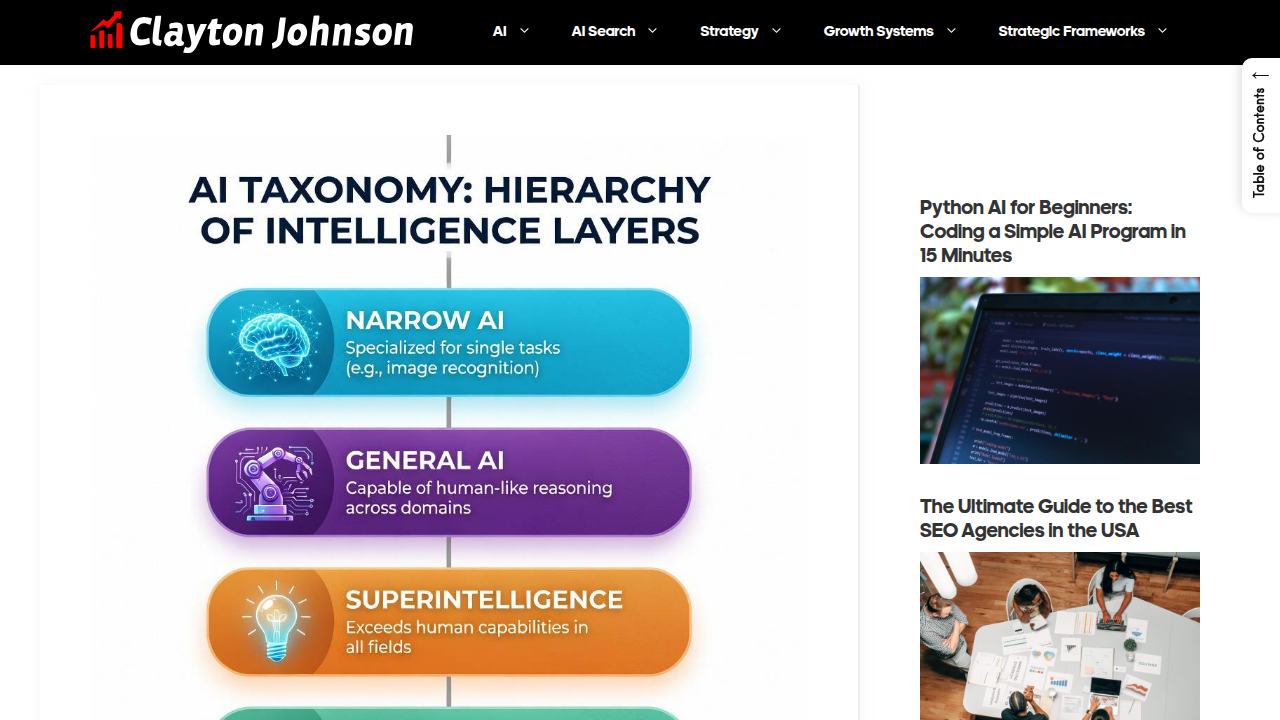
Actually, what we call "AI stuff" is just artificial intelligence. It’s a huge field, and to make sense of it all, experts use something called an AI taxonomy. Think of a taxonomy as a clear way to sort and name all the different parts of AI, like putting books into different sections in a library. This helps everyone, especially people making big decisions, understand the different types of artificial intelligence and how they connect. A good taxonomy creates a shared language for understanding how different tools fit together, such as machine learning, deep learning, and generative AI, which helps explain how an AI brain works behind the scenes What Is AI Taxonomy: Top 5 Frameworks.
This guide is here to help you cut through the confusion. We’ll break down the different parts of AI so you can understand what each piece does and why it matters. We’ll show you how to turn all this cool tech into real results for your business or your personal projects. Instead of feeling swamped by information, you’ll learn how to spot the important trends and use them to your advantage. For a basic understanding of how these smart systems function in everyday life, check out our Artificial Intelligence Basics guide.
Staying on top of "AI stuff" doesn’t have to be a struggle. We aim to give you clear, easy-to-understand explanations so you can make smart choices. Ready to get clear daily updates and deeper insights into AI and other tech developments? Join our community.
The AI Newsletter Worth Reading
What is ‘AI Stuff’? A Clear Taxonomy for Busy Professionals
To truly understand "AI stuff" and use it well, we need a simple way to sort it all out. Think of it like organizing your tools so you know which one to pick for a certain job. This is where an AI taxonomy comes in handy. It’s a structured way to classify all the different parts of artificial intelligence, helping busy professionals like you make sense of the fast-changing world of tech AI Taxonomy: Making Sense of Artificial Intelligence.
At the very top, we have Artificial Intelligence (AI) itself. This is the big idea of making machines smart enough to do tasks that normally need a human brain. Within this large field, there are many important branches.
One of the most important branches is Machine Learning (ML). This is how many AI systems learn. Instead of being told exactly what to do, machine learning systems look at lots of data to find patterns and make decisions on their own. It’s like teaching a child by showing them many examples until they figure it out. Machine learning has different ways of learning:
- Supervised Learning: This is when the system learns from data that is already labeled. For example, showing an AI many pictures of cats and dogs, with each picture clearly marked as "cat" or "dog," so it learns to tell them apart.
- Unsupervised Learning: Here, the system finds patterns in data that isn’t labeled. It’s like giving the AI a pile of mixed toys and asking it to sort them into groups that make sense, even if you don’t tell it what the groups should be.
- Reinforcement Learning: This is when the AI learns by trial and error, like playing a game. It gets rewards for good actions and "punishments" for bad ones, slowly learning the best way to reach a goal. You can find more details about these learning types in The Taxonomy of Machine Learning.
Next, we have Deep Learning, which is a special part of machine learning. Deep learning uses very complex "neural networks" that are inspired by the human brain’s structure. These networks are great at handling huge amounts of data and can do things like recognize faces, understand speech, or power advanced generative AI models Artificial Intelligence (AI) Taxonomy.
And then there’s Generative AI. This is the exciting type of AI that can create new things, like writing stories, making images, or even composing music. It’s a type of "AI brain" that doesn’t just recognize patterns but makes new ones.
How to Use This Taxonomy for Your Business
Understanding these core categories helps you figure out which "AI stuff" can solve your specific business problems. If you need to predict future sales, you might look at supervised machine learning. If you want to automatically sort customer feedback, unsupervised learning could be your answer. If you need to create unique marketing content, generative AI is key. For more on how these different types of AI apply in business today, check out Types of AI in Business: The 2026 Categories Guide.

By knowing these different parts of AI, you can ask better questions and focus your research, instead of feeling lost in all the buzz. This clear view helps you choose the right tools to boost your company’s success or your own projects. Want to learn more about how to make AI work for you? Our Maximize Business Impact with Enterprise AI Platforms guide can help.
Now that we understand the different types of AI stuff, let’s talk about how these clever systems actually work behind the scenes. Think of it like a recipe. Every good dish needs ingredients, a cooking method, and the right kitchen tools. AI is similar, relying on core models, lots of data, and strong computing power.

The AI Brain: Models
At its heart, an AI system is built around a "model." You can imagine this model as the AI’s brain. It’s a special program designed to learn from information and then make decisions or create new things. For instance, the machine learning models we talked about earlier use mathematical rules and patterns they’ve learned to do tasks. Deep learning models, with their neural networks, are more complex "AI brains" that can spot very tiny patterns in huge amounts of data. And generative AI models? Their "brain" is built to imagine and create.
These models, no matter how simple or complex, need clear instructions or examples to learn. For a deeper dive into the basic building blocks, you might find our Artificial Intelligence Basics guide helpful.
The Food for AI: Data and Labels
Just like humans need food to learn and grow, AI models need data. This data is the information they "eat" to understand the world and learn how to perform tasks.
- Raw Data: This can be anything from pictures, sounds, text, or numbers. It’s the unprocessed information.
- Labeled Data: For many types of AI, especially supervised machine learning, this raw data needs "labels." For example, a picture of a cat needs the label "cat" so the AI can learn to recognize it. Getting good, clean, and well-labeled data is super important for an AI to learn correctly. Poor data means poor learning, and sometimes the AI won’t work well at all. Companies often need to gather or buy specific datasets to train their AI, and the costs can vary, as seen in available AI Datasets & Benchmarks for 2026.
The Energy Source: Compute Power
Training an AI model, especially a big one like those used in deep learning or generative AI, takes a lot of computing power. This is the "energy" that lets the AI model process all that data and learn. Think of it as a super-fast computer doing billions of calculations every second. Without enough compute power, advanced AI stuff wouldn’t be possible. The more complex the model and the more data it has to learn from, the more powerful the computers need to be.
Making Choices: Trade-offs in AI
When you’re thinking about using AI, you often have to make some choices. There are trade-offs between different factors:
- Accuracy vs. Interpretability: Some of the most powerful AI models, especially deep learning ones, can be incredibly accurate. But sometimes, it’s hard to understand why they made a certain decision. This is called interpretability. Simpler models might not be as accurate but are easier to understand. For business, knowing why an AI suggests something can be just as important as the suggestion itself.
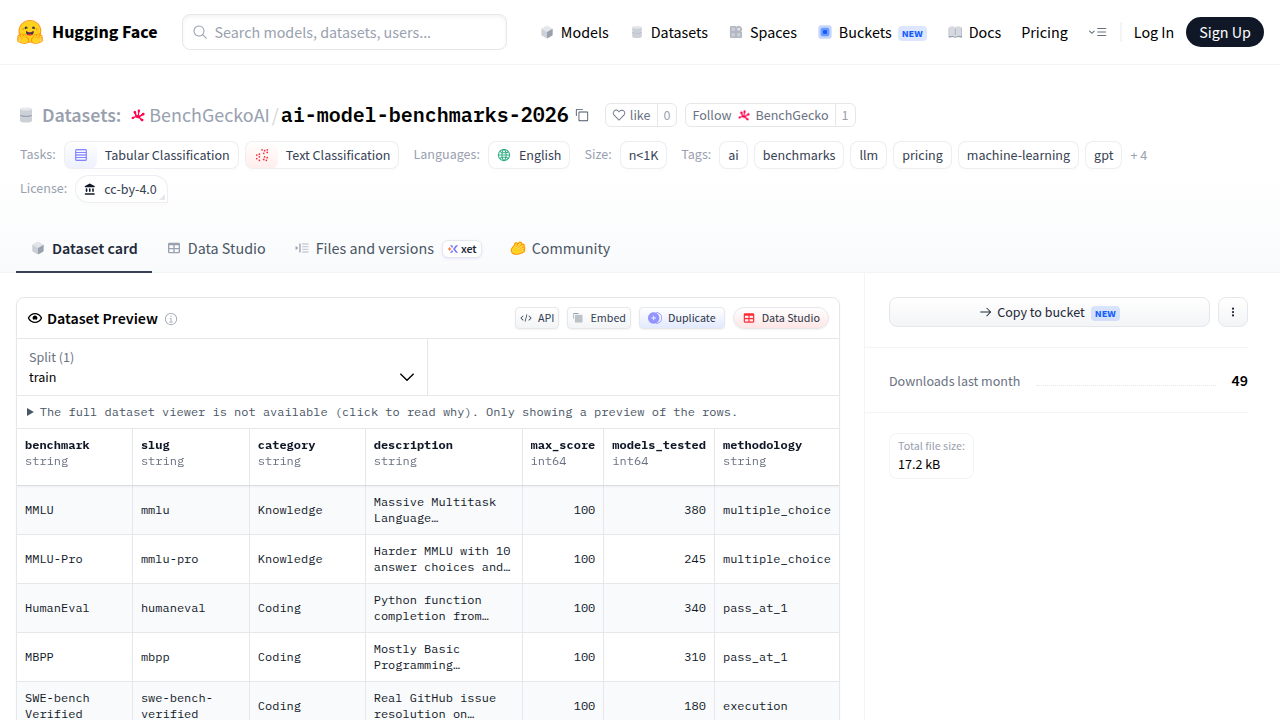
- Cost: Building and running AI costs money. This includes the cost of data, the computing power, and the experts who design and manage the AI systems. Simpler AI methods usually cost less than complex ones. In 2026, companies often look at benchmarks to compare the performance and economics of different AI models before deciding which one to use for their specific needs AI Model Benchmarks & Pricing Dataset 2026.
- When to Choose Simpler Methods: Not every problem needs the most advanced AI brain. Sometimes, a simpler machine learning model or even a set of basic rules can do the job effectively, with less cost and easier understanding. It’s about picking the right tool for the job.
Understanding these basic parts of how AI works helps you see beyond the buzz. It lets you ask better questions and make smarter choices for your projects or business.
Want to stay on top of the latest AI trends and insights without getting lost in technical jargon? The AI Newsletter Worth Reading delivers clear daily updates to your inbox.
Now, let’s look at where all this "AI stuff" really shines. It’s not just fancy tech ideas anymore. In 2026, AI is making a big difference in many parts of our everyday world and in many businesses. It’s truly creating value.
High-Impact Uses of AI
You can find AI helping out in almost every major industry. It’s used for solving real problems and making things better. Here are some examples:
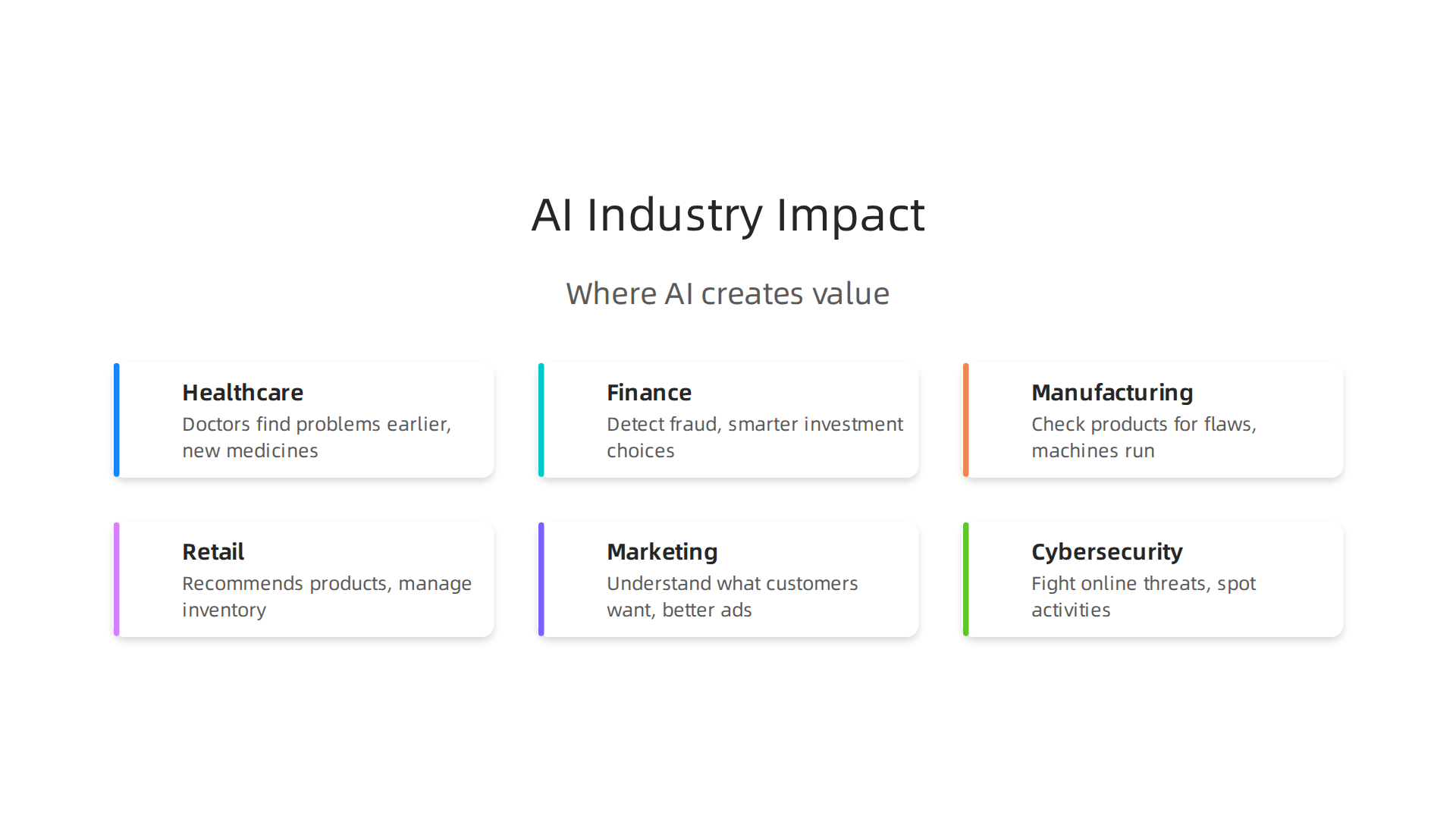
- Healthcare: AI helps doctors find problems earlier, like spotting diseases in medical images. It also helps create new medicines faster and makes hospital visits smoother for patients.
- Finance: In banks, AI can detect fraud, helping keep your money safe. It also helps people make smarter investment choices and offers personalized financial advice.
- Manufacturing: Factories use AI to check products for flaws and make sure machines run perfectly. This means fewer mistakes and better quality goods.
- Retail: When you shop online, AI often recommends products you might like. In stores, it helps manage inventory and makes customer service quicker and more helpful.
- Marketing: AI helps businesses understand what customers want, so they can create better ads and reach the right people. This makes advertising more effective.
- Cybersecurity: AI is a powerful tool to fight against online threats. It can spot unusual activities that might mean a cyberattack is happening, protecting our data.
These are just a few examples. Many businesses are seeing real returns from using AI. In fact, there are dozens of different ways companies are using AI, showing real results and driving growth in 2026, according to a report on 50 AI Use Cases by Industry: Real Examples That Drive ROI.
Choosing the Right AI Projects
When a company wants to use AI, they can’t just jump into any project. They need to pick the right ones.

It’s like picking which game to play: you want one that’s fun, easy enough to learn, and where you have a good chance to win. For AI, businesses look at three main things:
- Expected Value: How much good will this AI project do? Will it save a lot of money, make customers happier, or help the company grow? The bigger the benefit, the better.
- Feasibility: Is it actually possible to build and use this AI? Do we have the right team and tools? Some ideas might sound great but are too hard to do right now.
- Data Availability: Remember how AI needs data to learn? Does the company have enough good, clean data for the AI to work well? Without the right data, even the best ideas won’t fly.
Choosing the best AI projects means thinking about these things carefully. You need to make sure the AI can bring big benefits, is possible to create, and has enough good information to learn from. This way, companies can truly use AI to drive business growth with practical applications in 2026 and avoid wasting time or money. Knowing how to pick these projects is key to making AI a success, and there are frameworks to help businesses find AI Use Cases 2026: A Framework for Impact & Scale.
The smart use of different types of artificial intelligence is changing how industries operate. It’s all about finding those spots where AI can really make a helpful difference.
To really make AI work for a business, it’s not enough to just pick good projects. Companies need a clear plan, a roadmap, for how to bring that ai stuff into their daily operations. This is where a good business strategy for AI comes in, using frameworks and practical steps.
A Smart Way to Adopt AI: The Framework
Think of it like building something new. You wouldn’t just start without a plan, right? The same goes for bringing types of artificial intelligence into a company. Businesses use a step-by-step framework to make sure AI helps them grow and doesn’t cause problems. Here are the main parts of such a plan:
- Identify: First, companies look for problems that AI can solve. What tasks take too long? Where are there too many mistakes? What new things could AI help us do?
- Pilot: Once a good idea is found, they try it out on a small scale. This is like a test run. They make sure the AI works as expected and helps in the way they thought it would. This phase is important for learning and fixing any issues early.
- Scale: If the pilot works well, it’s time to grow it. This means using the AI in more parts of the business or for more people. This step is about making the AI a regular part of how things are done.
- Measure: Throughout this process, companies need to check if the AI is actually helping. Are they saving money? Are customers happier? Are tasks getting done faster? Measuring helps them see the real benefits.
- Govern: This step is about setting rules and making sure the AI is used fairly and safely. It’s also about making sure the AI keeps working well over time and adapts to new needs.
Following a clear path, like the "Assess → Pilot → Prove → Scale" model, helps companies move from just trying out AI to making it a core part of their success. You can find more about this in resources like The Complete AI Adoption Playbook: From Chaos to Control.
Getting Ready for AI: Important Considerations
Beyond the framework, there are a few big things businesses need to think about to make AI a success:
- Data Readiness: AI learns from data. So, having a lot of good, clean, and organized data is super important. Without the right data, even the smartest AI won’t work well.
- Talent: Companies need people who understand AI. This means having folks who can build, manage, and use AI tools. Sometimes, they need to train current employees or hire new ones with special AI skills.
- Change Management: Bringing in new AI can change how people work. It’s important to help employees understand these changes, teach them how to use the new tools, and address any worries they might have. This smooth transition helps everyone get on board with the new ai stuff.
By thinking about these things and using a clear framework, businesses can really harness artificial intelligence to improve what they do and grow in 2026. To explore how to make the most of AI across your operations, you might want to learn how to maximize business impact with enterprise AI platforms.
For professionals keen to stay on top of the fast-moving world of artificial intelligence, keeping updated is key.
Stay informed with detailed updates on the latest in AI and tech. The AI Newsletter Worth Reading delivers clear daily insights right to your inbox.
Even with all the exciting new ideas and ways to use AI, there’s another very important side to consider: how to make sure AI is fair, safe, and follows the rules.

It’s not enough to just know how to make ai stuff work; we also need to understand the risks and manage them well. This is where thinking about risks, ethics, and how to govern AI comes in.
Risks, ethics, and governance: managing harm and compliance
When companies use artificial intelligence, they must think about potential problems. If they don’t, these problems can hurt people, businesses, and trust. Here are some key risks that need careful management:
- Bias: AI learns from data. If the data has old biases or unfairness, the AI will learn those too. This can lead to the AI making unfair choices about people, like in hiring or lending. Making sure AI is fair is a big part of ethical AI use.
- Privacy: AI often works with lots of personal information. It’s super important to protect this data and use it only in ways that respect people’s privacy. Losing private data or using it wrongly can cause big problems.
- Robustness: This means the AI should work well and correctly all the time, even when things are a bit different than expected. An AI that breaks easily or can be tricked isn’t reliable. It needs to be strong and stable in how it makes decisions, like a sturdy ai brain that can handle tough situations.
- Misuse: Like any powerful tool, AI can be used for bad purposes. This could be spreading wrong information or making unfair decisions on purpose. Businesses need to think about how their AI could be misused and try to stop it.
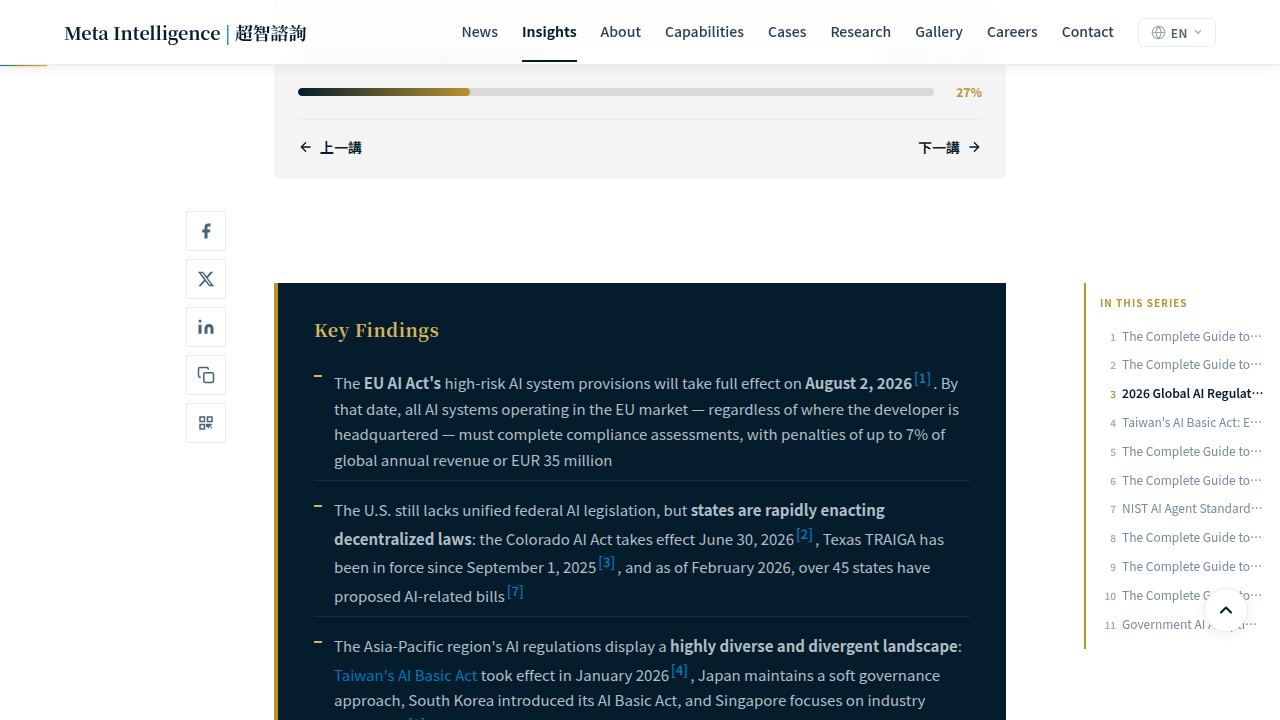
- Regulatory Compliance: This is about following the laws and rules. In 2026, new rules for AI are very important. For example, the EU AI Act has big requirements for companies working in Europe, with many rules taking full effect by August 2026 2026 Global AI Regulations Guide: EU AI Act Countdown.
Also, many US states are putting their own AI laws in place US AI regulations 2026: the state laws you must comply with. Companies must understand these rules to avoid issues and possible fines Top 7 industries with stringent AI compliance needs in 2026. Keeping up with R&D technology trends 2026 helps businesses see where new rules might come from.
To handle these risks, companies need good AI governance. This means setting clear rules, processes, and ways to check that AI is used safely and fairly. It’s about finding a balance between using AI to create new things and being responsible for its impact. Good governance helps make sure that ai is bad only if we let it be, by putting the right protections in place.
With good rules in place, we can focus on the amazing things artificial intelligence can do. In 2026, the world of AI is moving fast. There are some really cool practical trends that businesses and everyday people should keep an eye on. These trends show us where all the interesting ai stuff is headed.
Where ‘AI Stuff’ is headed: practical trends to watch in 2026
It’s exciting to see new kinds of "ai stuff" helping us in many ways. Here are some of the biggest trends in artificial intelligence right now:
- Multimodal Models: Imagine an AI that can not only understand what you say, but also what you show it in a picture or video. That’s what multimodal models do. They can work with many different types of artificial intelligence inputs at once, like text, images, and sounds. This means they can understand our world much better and help us with more complex tasks.
- On-Device AI: Think about having a super smart AI right on your phone or laptop that works even without the internet. This is "on-device inference." It makes AI faster, more private, and uses less energy because the thinking happens locally. This is especially good for things like quick image searches or smart assistants that don’t need to send all your data to the cloud.
- Model Distillation: Sometimes, AI models can be very big and need a lot of power to run. Model distillation is a smart way to make these big, powerful models smaller and simpler without losing much of their smarts. This means we can use advanced ai brain ideas in more places, even on smaller devices.
- Tool-Augmented Workflows: This trend is about AI working hand-in-hand with other tools to get things done better. Instead of just giving an answer, the AI can use other programs or websites to find information, create images, or even run tests. This helps people master your workflow with AI-powered productivity tools and makes AI more useful in daily tasks.
To keep up with all these changes and make good choices about where to put your time and money, it’s key to watch and learn. This means looking closely at new tech and checking if it really helps. You want to focus on trends that have a clear benefit, not just shiny new things. For professionals and anyone interested in how tech shapes the future, staying informed is super important.
To make sure you’re always getting the freshest insights and understanding what these trends mean for you, we have a helpful resource.
Get clear daily AI updates from The AI Newsletter Worth Reading.
Summary
This guide cuts through the noise around what people call