

Introduction: The Era of Converged AI and Network Intelligence
You’ve probably heard a lot about AI in 2026. Chatbots, image generators, virtual assistants — they’re everywhere. But something bigger is happening beneath the surface.
AI is no longer a standalone tool you open in a browser tab. It’s merging with the very networks that power our world. This shift is called convergence AI, and it’s changing how machines think, learn, and act together.
Think of it like this: instead of one smart brain in a box, we’re building a nervous system that spreads across entire organizations.

Devices talk to each other instantly. Data flows without roadblocks. Decisions happen in milliseconds, not minutes.
This is not a futuristic idea. According to the ITU’s report on The Power of AI Convergence for Global Impact, unified models now handle perception, translation, speech recognition, and audio generation all at once.

A single system can see, hear, speak, and reason — capabilities that were separate just a few years ago.
For businesses, this unlocks possibilities we couldn’t imagine before. Factories can predict breakdowns and reroute production in real time. Hospitals can analyze scans while a patient is still in the room. Logistics companies can reroute entire fleets around traffic or weather within seconds.
The key is network AI — a distributed intelligence that doesn’t depend on a central brain but lives across many connected nodes. This is the foundation of the open future AI movement, where systems are designed to share knowledge rather than hoard it.
Understanding this convergence is no longer optional. If you want to stay competitive, you need to grasp how AI and networking are fusing into one seamless layer. The companies that adapt fastest will be the ones that thrive.
And if you’re serious about keeping up with these changes, you need a reliable source of clear, daily updates. That’s why I recommend The AI Newsletter Worth Reading.

It cuts through the noise and gives you the insights you actually need to navigate this new era.
In the sections ahead, we’ll explore the practical ways convergence AI is reshaping industries, the role of expert systems artificial intelligence in this new landscape, and how you can prepare for what’s coming next.
What Is AI Convergence? Defining the Core Concept
So what exactly does convergence AI mean in plain language?

Think of it as the moment when artificial intelligence stops being an add-on and becomes the fabric of everything else.
In simple terms, AI convergence is the deep integration of AI with network infrastructure, cloud computing, sensors, and other technologies.
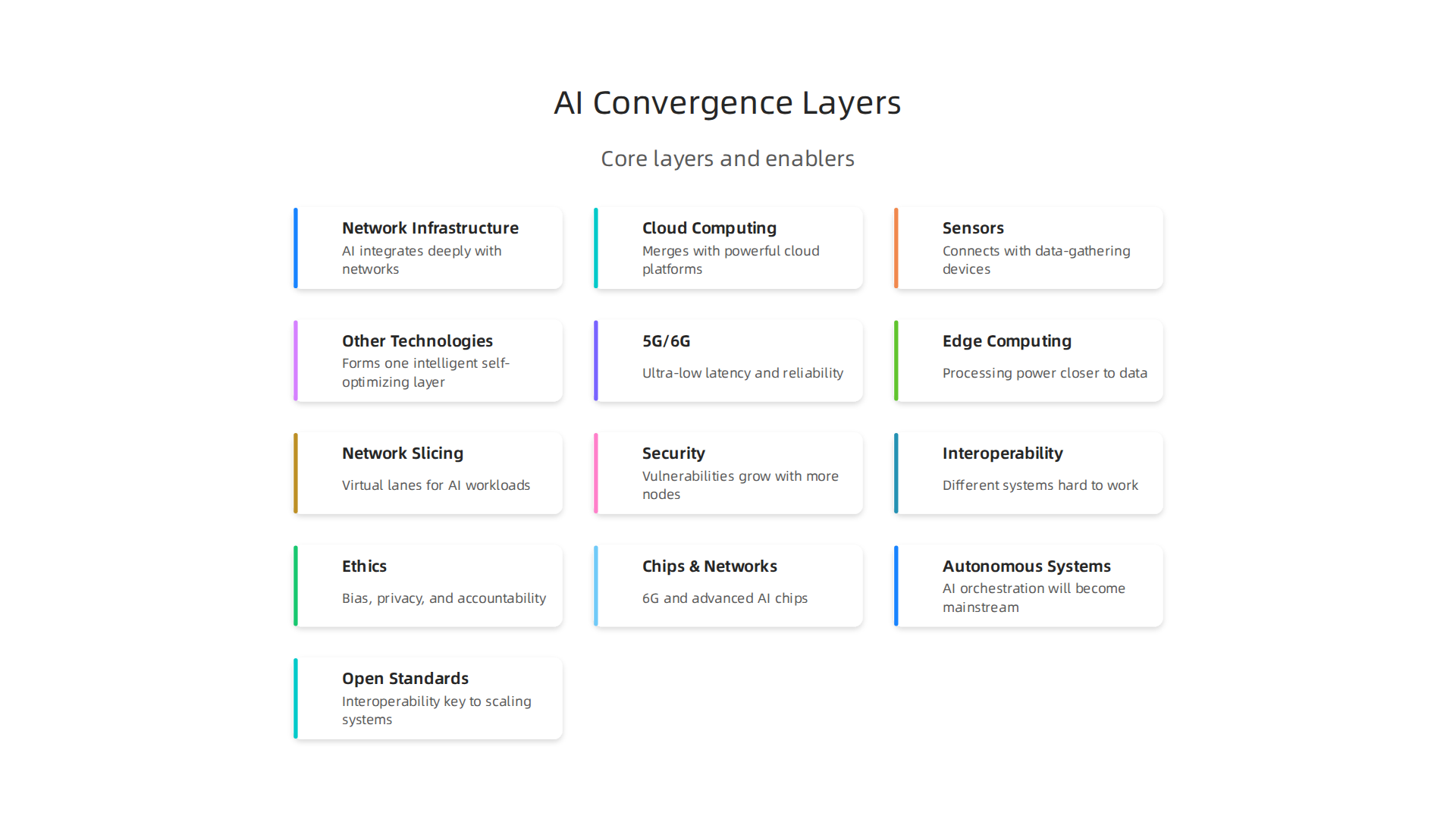
Instead of having separate tools for different jobs, these systems merge into one intelligent layer that can sense, decide, and act across an entire organization.
But here’s the key: it’s not just about plugging AI into existing systems. That’s augmentation, not convergence. Real convergence AI creates something new — a self-optimizing, collaborative intelligence that grows smarter every second.
For example, imagine a factory where AI doesn’t just control one robot arm. The network itself becomes intelligent. Every machine talks to every other machine. The system detects a potential failure, reroutes production, orders replacement parts, and updates the shipping schedule — all without human input. That’s synergy, not simple integration.
This shift is so important that standards bodies like the IEEE and NIST are actively working on formal definitions and frameworks for AI convergence. They want to ensure these integrated systems are secure, interoperable, and trustworthy.
The movement goes hand in hand with network AI, where intelligence is distributed across many connected nodes rather than sitting in one central brain. And it fuels the open future AI philosophy of building systems that share knowledge instead of locking it up.
We’re also seeing echoes of earlier ideas like expert systems artificial intelligence, which tried to capture human expertise in software. Convergence AI takes that concept much further, letting machines learn and adapt in real time from the entire network around them.
Industry experts agree this is a defining moment. As Amy Webb’s 2026 tech convergence insights point out, real convergence happens when we redesign organizations to operate as human-AI systems — not just add AI tools to existing structures.

If you’re still getting comfortable with AI fundamentals, start with our full guide to artificial intelligence basics. It’ll give you the foundation you need to understand what’s coming next.
Network Intelligence: The Nervous System of Converged AI
If convergence AI is the brain of the new intelligent organization, think of network intelligence as its nervous system. It is the layer that connects every sensor, machine, and decision point so data and actions flow instantly.
In 2026, networks are no longer just pipes that carry traffic. They are becoming active, intelligent platforms that sense, learn, and respond on their own. This shift from passive transport to active intelligence is a core part of what makes convergence possible. For a deeper look at this transformation, check out the latest research on AI reshaping intelligent networks in 2026.
Three key enablers make network intelligence real:
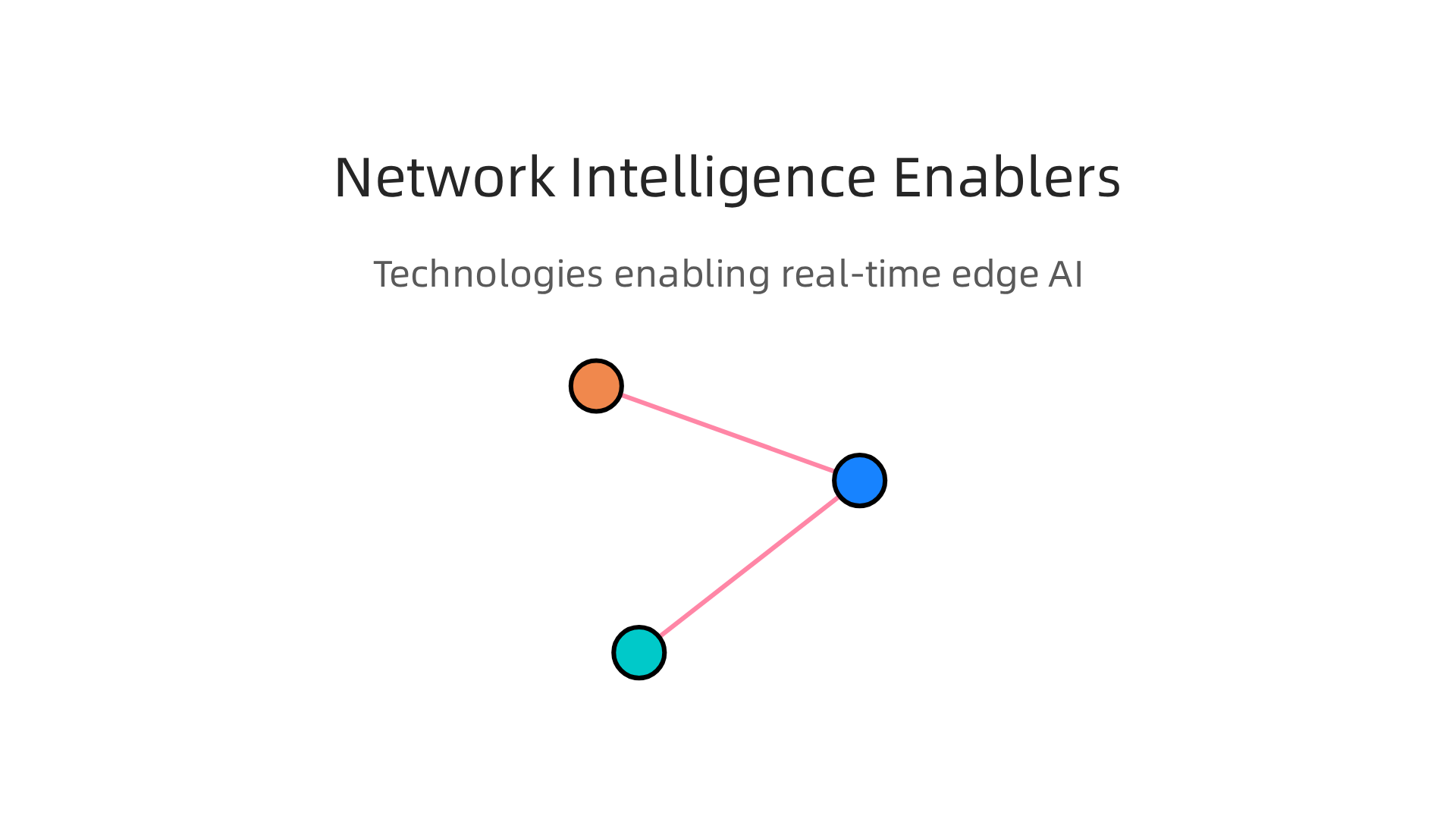
- 5G / 6G connectivity delivers ultra‑low latency and high reliability, so AI models can act in milliseconds.
- Edge computing pushes processing power closer to where data is generated — inside a factory, a retail store, or a hospital. Instead of sending everything to a far‑off cloud, decisions happen locally.
- Intelligent network slicing carves out dedicated virtual lanes for critical AI workloads. This guarantees that real‑time applications like predictive maintenance or autonomous vehicle controls never slow down.
The result? AI inference — the moment a model actually makes a decision — is moving to the edge in a big way. According to Deloitte, inference will account for roughly two‑thirds of all AI compute in 2026. This trend is a key part of AI network trends and challenges in 2026 as organizations build infrastructure that can handle massive, real‑time workloads.
This is where network AI comes to life. Each node in the network contributes intelligence. A single failure doesn’t stop the system because neighboring nodes reroute traffic and adjust priorities automatically. That kind of self‑optimizing behavior is exactly what convergence AI promises.
For a hands‑on look at how organizations are already using this technology to make fast, reliable decisions, explore our guide to real-time AI decision making across industries.
If you want to stay ahead of these rapid shifts, get clear, daily insights delivered straight to your inbox. Subscribe for daily AI updates from The Deep View Newsletter and never miss a trend that matters.
Key Technologies Driving Convergence: AI, IoT, Edge, and 5G/6G
So the nervous system of network intelligence is active. But what actually feeds it? What makes the whole convergence AI picture possible? Four core technologies work together to turn that vision into a working reality.
IoT devices are the senses of the system. Think about a modern factory floor. Thousands of sensors track temperature, vibration, pressure, and power use every millisecond. A single assembly line can produce terabytes of data in a day. Without AI, that data sits unused. But with convergence AI, every reading feeds a model that spots patterns, predicts failures, and adjusts production in real time. This is not science fiction. It is happening right now in manufacturing, logistics, and smart cities around the world.
Edge computing brings AI directly to the action. Sending every bit of sensor data to a distant cloud costs time and bandwidth. Instead, edge devices run AI models locally. A camera at a warehouse gate can identify a damaged package before it even enters the building. A medical sensor can flag an irregular heartbeat without waiting for a server. This shift from central processing to distributed intelligence is a major reason why AI infrastructure is becoming more flexible and efficient in 2026.
The closer the compute power sits to the data source, the faster and more reliable the decisions become.
5G and emerging 6G networks provide the backbone. These networks deliver the speed and low latency that real-time AI demands. A 5G connection can send data with under 10 milliseconds of delay. That makes autonomous vehicle coordination, remote surgery, and instant quality control possible. Private 5G networks inside factories create dedicated, secure lanes for critical AI workloads without interference from other traffic. As 6G develops, even faster and more reliable connections will unlock new use cases we can only imagine today.
When you put all three together, something powerful happens. The IoT generates massive streams of real-world data. Edge computing processes that data with AI models instantly. And 5G or 6G connectivity keeps everything talking to each other with no lag.
This is where network AI really shines. It manages the flow of data and decisions across thousands of connected nodes, rerouting traffic when a sensor fails or prioritizing urgent alerts over routine reports. Over time, expert systems artificial intelligence can be deployed at the edge to handle specialized tasks like diagnosing equipment faults or optimizing energy use. And the rise of open future AI platforms means these capabilities are becoming accessible to more organizations, not just tech giants.
To see how companies are already putting these technologies to work in their daily operations, read our guide on invisible AI transforming business operations. It shows real examples of how edge intelligence creates practical value without requiring a massive data center.
The technologies themselves are powerful. But the real magic happens when they work together seamlessly. That integration is what convergence AI is all about, and it is already reshaping industries from healthcare to manufacturing to transportation.
Real-World Applications and Use Cases of Converged AI
All this technology sounds impressive in theory. But what does convergence AI actually look like on the ground? Three industries show the clearest picture of how this shift is already changing lives.
Autonomous vehicles depend on converged AI completely. A self-driving car does not just point a camera at the road. It fuses data from cameras, radar, lidar, and ultrasonic sensors every millisecond. That data needs to be processed instantly to make life-or-death decisions. Should the car brake, swerve, or accelerate? The answer emerges from edge AI running inside the vehicle, combined with network AI that coordinates with other cars and traffic infrastructure. Companies like Continental are already working with Google Cloud to build in-vehicle AI solutions that make driving safer and more efficient. You can explore more examples from the real-world gen AI use cases from leading organizations to see how automotive giants are deploying these systems today.
Smart manufacturing is another big winner. Factory floors equipped with IoT sensors generate massive streams of data. Edge devices run AI models that detect tiny vibrations or temperature changes long before a human could notice them. This allows for predictive maintenance. Instead of waiting for a machine to break down, the system flags a potential failure days in advance and schedules repairs during planned downtime. The result? Unplanned downtime drops by 30 to 50 percent, and energy savings of 5 to 15 percent happen within just two weeks. That is the kind of impact that makes expert systems artificial intelligence a must-have tool for plant managers who care about their bottom line.
**Healthcare is perhaps the most human use case.

** Converged AI enables remote patient monitoring that keeps people out of the hospital while still catching problems early. A wearable sensor tracks heart rate, blood oxygen, and activity levels. An edge device runs a local AI model that can flag an irregular heartbeat instantly, even if the cloud connection drops. Hospitals are also using AI-assisted diagnostics to improve accuracy. One large platform deployed across 5,000 medical facilities achieved diagnostic accuracy above 90 percent and enabled over 13 million cancer screenings. That is open future AI in action, making advanced care available at scale rather than locking it inside expensive institutions.
These three examples only scratch the surface. As network ai continues to mature, every industry will find its own version of this story. The pattern is always the same: collect more data at the edge, process it with AI locally, and connect everything through fast networks. That is the practical engine of convergence AI.
If you want to see how creative professionals are also benefiting from this technology shift, check out these AI use cases for creative professionals that deliver real results in 2026.
Staying on top of these rapid changes is not easy. That is why thousands of professionals turn to The AI Newsletter Worth Reading every day for clear, practical updates on what actually matters in AI. It takes two minutes to read and keeps you ahead of the curve.
Challenges and Risks of Converged AI Systems
The real world benefits of convergence AI are impressive. But this power does not come without serious problems. When you connect many AI systems across edge devices, cloud servers, and fast networks, you create new weak points that attackers can exploit.
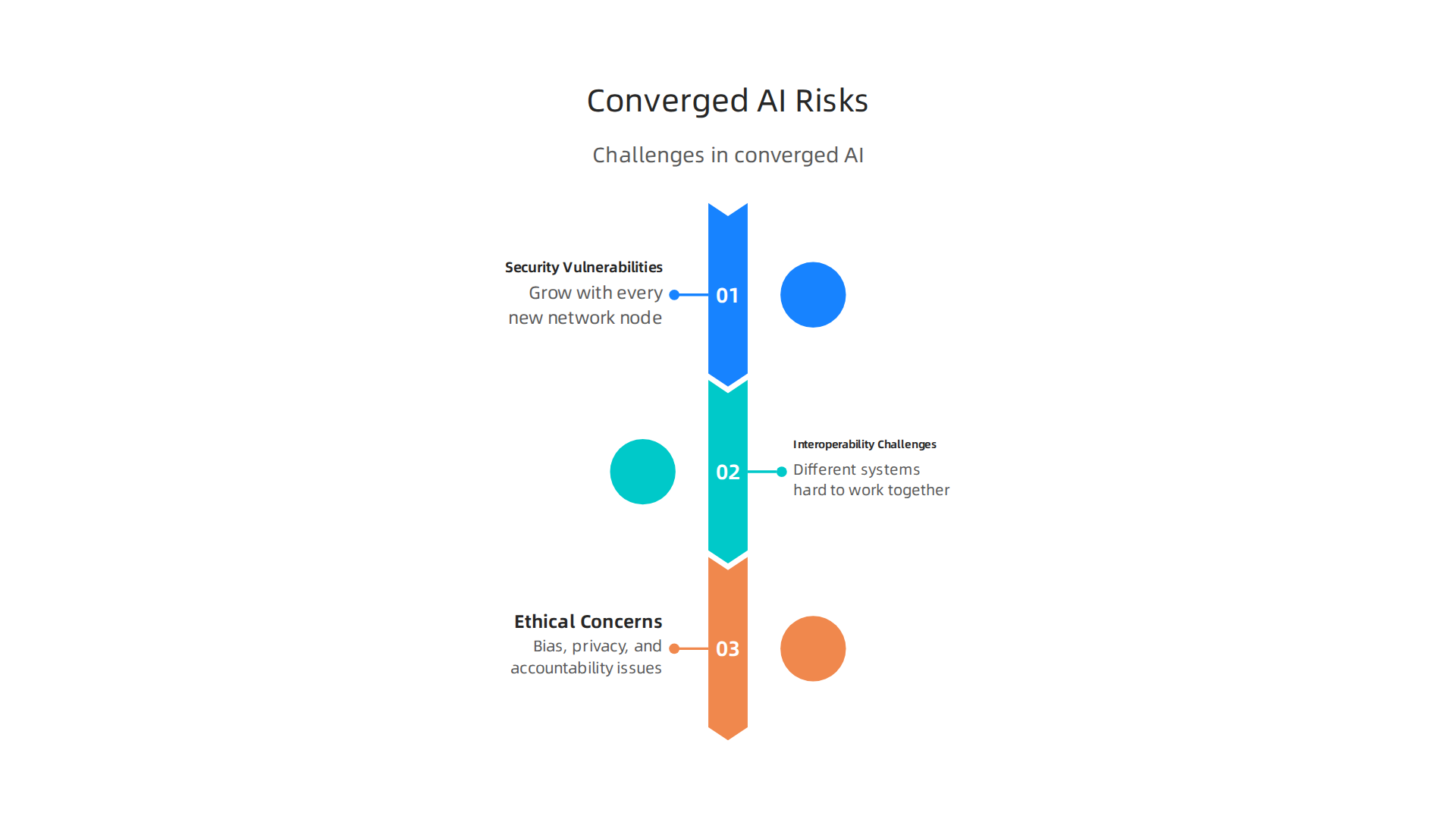
Understanding these risks is just as important as celebrating the wins.
Security vulnerabilities grow with every new node. A converged AI setup might include thousands of edge devices, each one a potential entry point. Attackers can tamper with data flowing between sensors and models, poison training data, or launch evasion attacks that trick the AI into making wrong decisions. According to the latest research on enterprise AI security governance in 2026, organizations must adopt dedicated security teams and continuous monitoring specifically for AI systems. Traditional cybersecurity measures are no longer enough. As the number of connected AI agents rises, the surface area for attacks expands fast. That is a reality every company deploying network ai must face.
Getting different systems to work together is harder than it sounds. Converged AI brings together hardware from different manufacturers, software from different vendors, and data formats that do not always match. Standards are still catching up. Without smooth interoperability, data gets stuck, models cannot communicate, and the whole system slows down. This is why teams need clear protocols and testing before they trust their converged setup in production.
Ethical concerns are the deepest challenge. When AI systems make decisions without human oversight, who takes responsibility for a mistake? Autonomous vehicles, diagnostic tools, and factory robots all raise questions about fairness, bias, and privacy. An AI might learn from biased data and make unfair choices without anyone noticing. At the same time, these systems collect huge amounts of personal and operational data, creating privacy risks that regulators are just starting to address. The International AI Safety Report 2026 outlines how general-purpose AI systems are already causing real harm through errors, malicious use, and unintended behaviors. Converged AI amplifies these issues because decisions happen faster and at a larger scale.
Staying on top of these risks means staying informed. The landscape changes every week. That is why thousands of professionals rely on The AI Newsletter Worth Reading for clear, daily updates on what matters most in AI security and governance. It takes two minutes to read and keeps you ahead of the curve.
If you want to go deeper into how safety frameworks are evolving, check out this overview of AI safety considerations in 2026 to understand the benchmarks and protections being built today.
Strategic Implications for Businesses and Investors
All the risks we just covered are real. But here is the thing: companies are not slowing down. They are betting big on convergence AI because the rewards are too large to ignore. For businesses and investors alike, understanding where this technology creates value is the difference between leading the pack and falling behind.

The competitive advantage comes from speed and automation. When your systems are connected and learning from each other in real time, you make decisions faster than any human team ever could. Supply chains adjust themselves. Customer service handles issues before the customer even notices. Factories detect problems and fix them without waiting for a technician. That is the promise of network AI working at scale. Real examples from 2026 show companies cutting manual report generation time to zero, boosting real time data access by 80%, and improving delivery tracking across millions of shipments. These are not future possibilities. They are happening right now.
Certain industries are moving faster than others. Telecom, manufacturing, and logistics are pouring money into converged systems because they have the most to gain. A factory with thousands of sensors feeding into a central AI model can predict failures and reroute production in seconds. A logistics network that connects trucks, warehouses, and customer data can cut delivery delays and reduce waste. Investors who watch these sectors closely are placing their bets on the companies that have the infrastructure ready to support convergence AI. That means looking beyond the flashy demos and checking whether the underlying systems can actually talk to each other.
For investors, maturity and ecosystem readiness matter most. Not every company that claims to use convergence AI actually has the pieces in place. A successful deployment requires reliable edge devices, fast networks, standardized data formats, and strong security protocols. Investors should ask hard questions about how systems are integrated and what happens when something breaks. The smartest capital is flowing toward firms that have built real partnerships across the technology stack, not just those with a single cool demo.
The landscape shifts quickly. If you want to make smarter business and investment decisions around convergence AI, you need to stay ahead of the news. Get clear daily AI updates from The Deep View Newsletter. It takes two minutes to read and helps you spot the trends that matter before your competition does.
And if you are ready to explore practical steps for your own organization, check out this guide on how to use AI to drive business growth with real applications from 2026.
Future Outlook: What’s Next for Converged AI?
So what comes next for convergence AI? The building blocks are already falling into place.
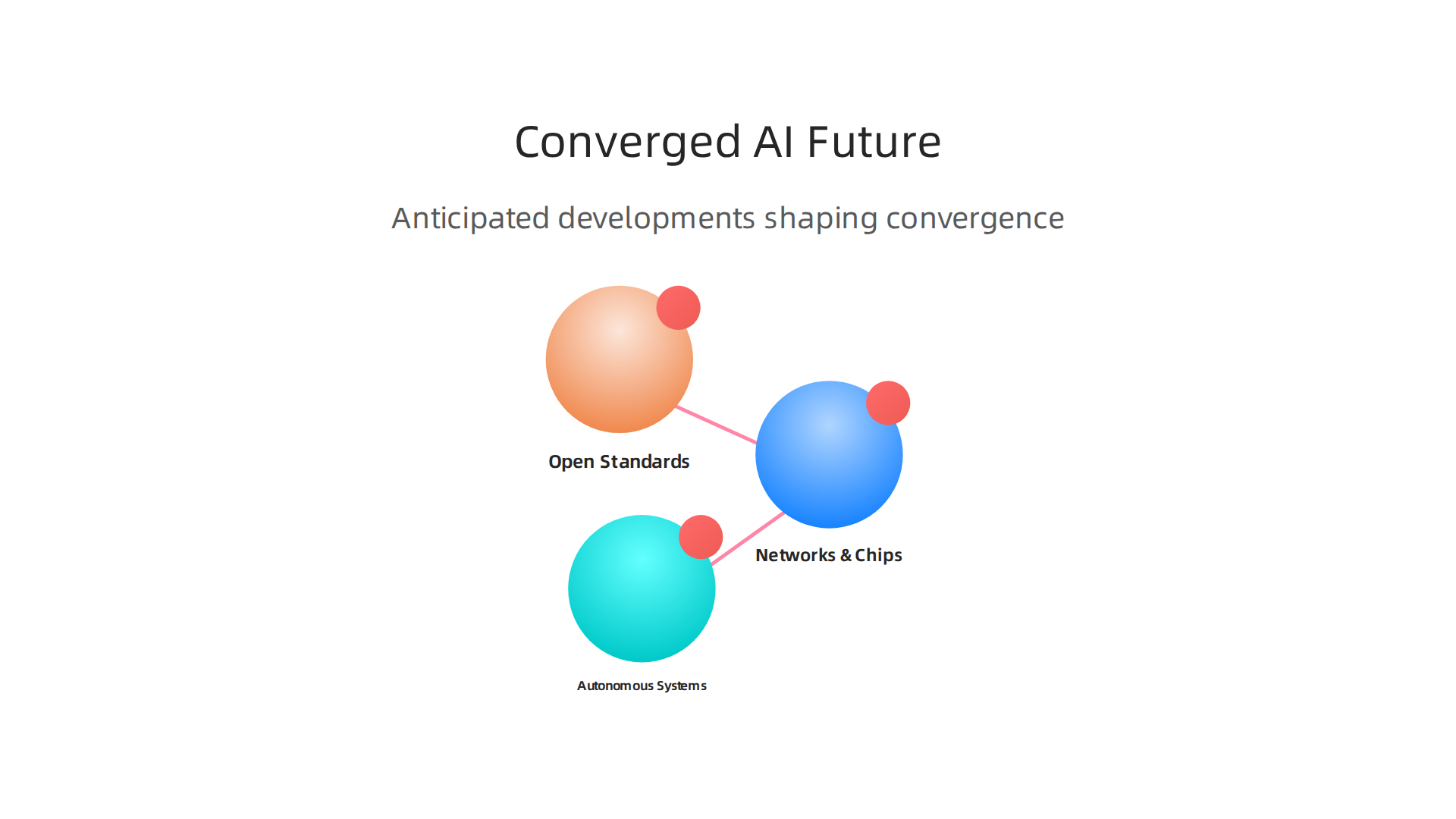
The next few years will bring even bigger changes as the technology matures and spreads into every corner of business and daily life.
Better networks and faster chips will push convergence even further. The rollout of 6G will connect billions more devices with near zero delay. Advanced AI chips will handle massive data work right at the edge of the network, inside your phone, car, or factory sensor. This means your systems can act instantly no matter where they are. Connectivity ensures scale and semiconductors enable performance, as noted in a detailed article on how digital convergence is shaping 2026. Without these hardware upgrades, network AI cannot reach its full potential.
Autonomous systems and AI orchestration will become mainstream. Instead of one AI tool handling a single task, we will see whole networks of AI agents working together in real time. They will manage supply chains, adjust factory lines, and handle customer requests without waiting for human approval. A report from the ITU on the power of AI convergence for global impact explains how integrating AI into robotics and automation is already transforming industries. In the near future, this kind of orchestration will be the standard way companies operate.
Open standards and interoperability will be key to scaling. Right now, many systems still cannot talk to each other easily. For convergence AI to grow, companies and governments must agree on common data formats, security rules, and communication protocols. Without that foundation, even the best chips and networks will hit a wall. The World Economic Forum’s report on technology convergence for competitive advantage outlines why open standards are critical for making convergence last.
If you want to explore what the next few years hold in more detail, read this guide on the world of AI in 2026 covering major trends and what comes next.
Summary
This article explains convergence AI — the fusion of artificial intelligence with network infrastructure so that intelligence is distributed across devices, edges, and clouds rather than isolated in a single model. It covers what convergence AI means in practice, how network intelligence acts as the system’s nervous system, and the core enablers like IoT sensors, edge computing, and 5G/6G. You’ll read concrete industry examples (autonomous vehicles, smart manufacturing, healthcare), plus the major risks around security, interoperability, and ethics. The piece also lays out strategic implications for businesses and investors, practical steps to start pilots, and a forward look at standards and hardware trends that will scale convergence. After reading, you’ll understand why converged AI matters, where value and risk lie, and what concrete actions organizations should take next to adapt and compete.